OECD lifts India FY27 growth forecast 80 bps to 7.1%
Synopsis
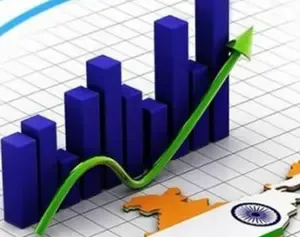
The OECD has handed India one of its largest single-cycle forecast upgrades in this reporting round — an 80 bps jump to 7.1 per cent for FY27. But the same report warns of a purchasing-power squeeze in the second half of 2026 and flags potential RBI rate hikes ahead. India leads major economies in growth, yet the buffers keeping it there may be starting to thin.
Key Takeaways
The OECD raised India's FY27 GDP growth forecast by 80 basis points to 7.1 per cent on 23 September 2026 .
The revision is up from the 6.3 per cent projected in the OECD's June 2026 outlook.
India's FY28 growth forecast was also nudged up to 6.5 per cent from 6.4 per cent .
Headline inflation in India is projected to ease from 4.7 per cent in 2026 to 4.2 per cent in 2027 .
The OECD flagged that India may raise policy rates temporarily to counter inflationary pressures.
Reduced purchasing power is expected to weaken growth in H2 2026 , before a recovery in 2027, the report cautioned.
The Organisation for Economic Cooperation and Development (OECD) on Wednesday, 23 September 2026, raised its FY27 GDP growth forecast for India to 7.1 per cent — an 80 basis points (bps) upward revision from the 6.3 per cent projected in June. The multilateral body cited resilient domestic demand and government policies that shielded households and firms from elevated energy prices as the primary drivers of the upgrade.
Key Revisions for India
Alongside the FY27 upgrade, the OECD also lifted India's FY28 (2027) GDP growth projection marginally to 6.5 per cent, up from the earlier estimate of 6.4 per cent. On inflation, the Outlook projects India's headline consumer price inflation to ease from 4.7 per cent in 2026 to 4.2 per cent in 2027.
Notably, the OECD flagged that India is among the emerging-market economies projected to raise policy rates temporarily to help offset stronger inflationary pressures — a signal that monetary tightening may not yet be off the table for the Reserve Bank of India (RBI).
Headwinds on the Horizon
Despite the buoyant near-term momentum, the report struck a cautionary note. 'Reduced purchasing power is also expected to weaken growth in India through the second half of this year, before a gradual recovery takes place in 2027,' the OECD stated. Government price support measures — particularly on energy — are currently mitigating inflationary pressures, the report noted, but their sustainability beyond the near term remains a question mark.
This comes amid a broader global context where energy price buffers built up during the post-pandemic recovery are wearing thin, adding pressure on policymakers across emerging markets.
What the OECD Said on Global Growth
OECD Secretary-General Mathias Cormann offered a measured but sobering assessment of the global outlook. 'Global growth has held up better than expected, but the buffers that absorbed the energy shock are being depleted. Growth is weaker than last year, and inflation is rising again,' Cormann said. He called on governments to 'target support where it is most needed and get public spending on a sustainable track,' while also investing in 'stronger skills, more diversified energy supplies and faster AI adoption.'
The OECD's baseline global growth projections stand at 2.9 per cent in 2026 and 3.0 per cent in 2027. The United States is projected to grow at 2.2 per cent in 2026, moderating to 2.1 per cent in 2027. The euro area is forecast to expand at a modest 1 per cent in both years, while China is projected at 4.5 per cent in 2026 and 4.2 per cent in 2027.
Geopolitical Risks to the Outlook
The OECD flagged the evolving conflict in the Middle East as a significant source of uncertainty, warning that it 'remains highly uncertain and will continue to pose considerable risks to the baseline projections.' Commodity price volatility tied to the conflict could disproportionately affect energy-importing nations, including India, if support measures are withdrawn prematurely.
India in Context
At 7.1 per cent, India's revised forecast places it comfortably as the fastest-growing major economy in the OECD's outlook — outpacing the US, the euro area, and China by a significant margin. The 80 bps revision is also among the largest single-cycle upgrades the OECD has made for any G20 economy in this reporting round, underscoring the relative strength of India's demand-side fundamentals even as global conditions tighten. All eyes now turn to the RBI's next monetary policy committee (MPC) meeting and whether policymakers will move on rates in response to the inflationary pressures the OECD has flagged.
Point of View
But the OECD's own report contains the caveat the headline will likely bury: purchasing power erosion is expected to slow India's momentum in the second half of this fiscal year. The projection of a temporary RBI rate hike is also significant — if realised, it would tighten credit conditions precisely as household demand is already under pressure. India leading global growth tables is a genuine achievement, but sustaining 7 per cent depends on whether government energy price supports can be maintained without ballooning the fiscal deficit. The OECD does not answer that question, and neither, so far, has New Delhi.
NationPress
23 Sept 2026
Frequently Asked Questions
What is the OECD's new GDP growth forecast for India in FY27?
The OECD has raised India's FY27 (2026) GDP growth forecast to 7.1 per cent, an 80 basis points upgrade from the 6.3 per cent it projected in June 2026. The revision was driven by resilient domestic demand and government measures that cushioned households from higher energy prices.
Why did the OECD upgrade India's growth forecast?
The OECD cited resilient domestic demand and government policies that shielded households and firms from the impact of elevated energy prices as the key reasons for the upgrade. These factors have helped India maintain stronger-than-expected economic momentum through 2026.
What are the risks the OECD flagged for India's economy?
The OECD warned that reduced purchasing power is expected to weaken India's growth in the second half of 2026, before a gradual recovery in 2027. It also flagged potential temporary policy rate hikes by the RBI to address inflationary pressures, and noted that Middle East conflict risks could affect energy prices.
How does India's growth compare to other major economies in the OECD outlook?
At 7.1 per cent for 2026, India is the fastest-growing major economy in the OECD's current outlook. By comparison, the US is projected at 2.2 per cent, the euro area at 1 per cent, and China at 4.5 per cent for the same year.
What is India's inflation outlook according to the OECD?
The OECD projects India's headline inflation to fall from 4.7 per cent in 2026 to 4.2 per cent in 2027. Government energy price support measures are expected to continue mitigating inflationary pressures in the near term.