RBI raises FY27 GDP growth forecast to 6.7% as India leads global growth
Synopsis
The RBI has nudged India's FY27 GDP growth forecast up to 6.7% — a modest but deliberate 10-bps revision that signals the central bank's confidence in domestic resilience even as West Asia conflict re-escalation rattles energy markets and the inflation path stays clouded by monsoon and El Nino risks.
Key Takeaways
RBI revised India's FY27 real GDP growth forecast to 6.7 per cent , up 10 basis points from the previous estimate of 6.6 per cent .
RBI Governor Sanjay Malhotra projected Q1 growth at 7 per cent , Q2 at 6.4%, Q3 at 6.5%, and Q4 at 6.8%.
Re-escalation of the West Asia conflict since early July 2026 has renewed energy price volatility and supply chain uncertainty.
Headline inflation is expected to rise on food and fuel pressures; core inflation to peak in Q3 before declining.
The RBI flagged Southwest monsoon , El Nino , geopolitics, and global trade policy as key risks to the outlook.
Domestic demand, manufacturing expansion, and robust exports continue to underpin India's growth resilience.
The Reserve Bank of India (RBI) on Wednesday, 5 August 2026 revised its real GDP growth projection for FY27 upward to 6.7 per cent — 10 basis points higher than the 6.6 per cent estimate from the previous Monetary Policy Committee (MPC) meeting — reaffirming India's position as the fastest-growing major economy even as global headwinds persist. The revision signals cautious optimism at the central bank despite mounting external risks.
Quarterly Growth Breakdown
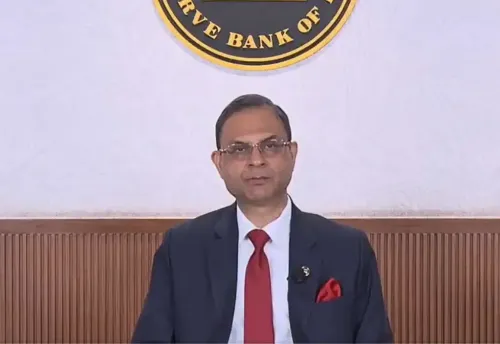
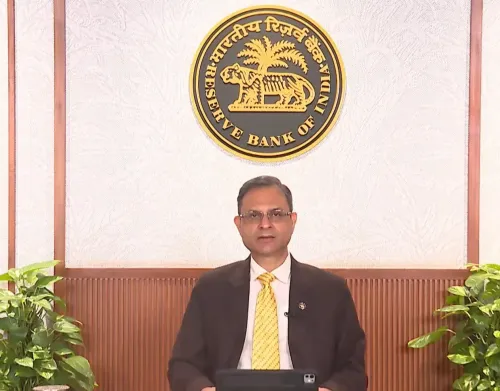
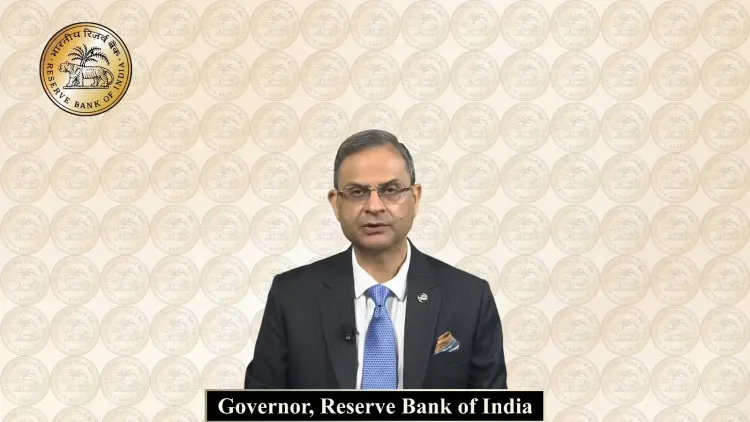
Addressing the media after the MPC meeting, RBI Governor Sanjay Malhotra laid out a quarter-by-quarter growth trajectory for FY27. He projected Q1 GDP growth at 7 per cent, followed by Q2 at 6.4 per cent, Q3 at 6.5 per cent, and Q4 at 6.8 per cent. The Q1 estimate is the strongest of the four quarters, reflecting early corporate results that indicate healthy performance in the manufacturing sector.
Global Risks and West Asia Volatility
Governor Malhotra acknowledged that supply-side pressures stemming from the West Asia conflict had eased somewhat since June 2026. However, he warned that a re-escalation of the conflict since the first week of July has amplified volatility in energy prices and renewed uncertainty around global supply chains. This comes amid a broader environment of persistent global uncertainty driven by geopolitics and shifting trade policy.
Inflation Outlook: Food and Fuel in Focus
On the inflation front, Malhotra projected that headline inflation would rise, primarily driven by supply-side pressures from food and fuel. Core inflation, however, is expected to remain moderate and is forecast to decline after peaking in Q3. Notably, underlying inflation — as measured by core inflation excluding precious metals — has remained benign and is expected to converge with broader core inflation by the end of the financial year.
Malhotra underscored that the outlook remains uncertain due to variables including the Southwest monsoon, the risk of El Nino, geopolitical developments, and global trade policy shifts. He indicated that greater clarity on the inflation trajectory and its composition would be needed before the RBI takes any further policy action.
Domestic Resilience Underpins Confidence
Despite the external turbulence, Malhotra said domestic economic activity has remained resilient, as reflected in high-frequency indicators for Q1. The economy continues to be supported by resilient domestic demand, sustained expansion in manufacturing and services activity, and robust exports. The RBI's upward revision, even if modest at 10 bps, reflects confidence that India's structural growth drivers remain intact.
With the next MPC meeting expected to weigh fresh inflation data and monsoon outcomes, the central bank's tone signals a data-dependent stance rather than an imminent rate move.
Point of View
Not a trumpet blast. The real story is in the conditionality: Malhotra explicitly tied future policy action to greater clarity on inflation composition — which means the rate-cut window is narrower than markets may hope. With El Nino risk layered on top of a re-escalating West Asia conflict, the benign core inflation reading could be overwhelmed by food and fuel shocks that the RBI cannot control. India's fastest-growing-economy tag is real, but the margin for error on the inflation-growth balance is thinning.
NationPress
20 Sept 2026
Frequently Asked Questions
What is the RBI's GDP growth forecast for FY27?
The RBI has projected real GDP growth at 6.7 per cent for FY27, revised upward by 10 basis points from its earlier estimate of 6.6 per cent. The revision was announced by Governor Sanjay Malhotra on 5 August 2026 after the Monetary Policy Committee meeting.
What is the quarter-wise GDP growth projection by the RBI for FY27?
The RBI projects Q1 FY27 growth at 7 per cent, Q2 at 6.4 per cent, Q3 at 6.5 per cent, and Q4 at 6.8 per cent, with the first quarter expected to be the strongest.
Why is the RBI cautious about cutting rates despite the upgrade?
Governor Malhotra stated that greater clarity is needed on the inflation trajectory and its composition before any policy action. Headline inflation is expected to rise due to food and fuel pressures, and risks from the Southwest monsoon, El Nino, and geopolitical tensions remain elevated.
How is the West Asia conflict affecting India's economic outlook?
Supply-side pressures from the West Asia conflict had eased somewhat since June 2026, but a re-escalation since the first week of July has amplified energy price volatility and renewed supply chain uncertainty, adding to the risks the RBI is monitoring.
What is driving India's economic resilience according to the RBI?
The RBI cited resilient domestic demand, sustained expansion in manufacturing and services, and robust exports as the primary drivers. Early corporate results for Q1 FY27 also indicated healthy manufacturing sector performance.