RBI projects 6.6% real GDP growth for FY27, CPI inflation at 5.1%
Synopsis
The RBI has pencilled in 6.6% real GDP growth for FY27 but the inflation path tells a more cautious story — CPI is expected to climb to 5.9% in Q3 before easing, dangerously close to the upper tolerance band. With a sub-normal monsoon forecast and El Nino risks in play, the central bank's comfort zone is narrower than the headline number suggests.
Key Takeaways
The RBI projected FY27 real GDP growth at 6.6 per cent , with Q4 the strongest quarter at 6.8 per cent .
CPI inflation is forecast at 5.1 per cent for 2026-27, peaking at 5.9 per cent in Q3 before easing.
Core inflation is projected at 4.7 per cent for the full year.
RBI Governor Sanjay Malhotra flagged a sub-normal south-west monsoon and El Nino as key upside risks to inflation.
Private consumption, fixed investment, and merchandise exports showed resilience as of April 2026 , despite elevated freight and insurance costs.
Second-round inflation effects through wages and expectations described as a 'distinct possibility, warranting a close vigil.'
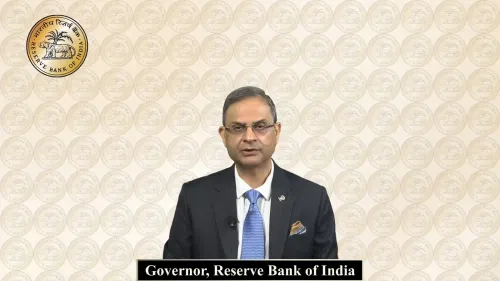
The Reserve Bank of India (RBI) on Friday, 5 June 2026 projected real GDP growth for 2026-27 at 6.6 per cent, even as prolonged global supply chain disruptions, financial market volatility, and weather-related shocks continue to cloud the domestic outlook. The projection was announced by RBI Governor Sanjay Malhotra following the conclusion of the three-day Monetary Policy Committee (MPC) meeting in Mumbai.
Quarterly Growth Breakdown
The central bank's growth forecast is distributed across quarters as follows: Q1 at 6.6 per cent, Q2 at 6.3 per cent, Q3 at 6.5 per cent, and Q4 at 6.8 per cent. Governor Malhotra noted that India's manufacturing and services Purchasing Managers' Index (PMI) indicate continued resilience in both sectors, with business expectations remaining broadly positive.
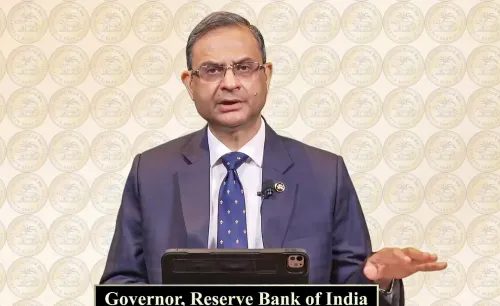
'On the demand side, private consumption, aided by discretionary spending, has remained resilient so far. Fixed investment has also maintained its momentum despite cost pressures. Merchandise exports recorded strong growth in April 2026, notwithstanding elevated freight and insurance costs,' Malhotra said in his address.
Inflation Outlook and Upside Risks
The RBI pegged CPI inflation for 2026-27 at 5.1 per cent, with a quarter-by-quarter path of Q1 at 4.2 per cent, Q2 at 5.1 per cent, Q3 at 5.9 per cent, and Q4 at 5.4 per cent. Core inflation is projected at 4.7 per cent for the full year. Malhotra acknowledged that while headline inflation is expected to firm up toward the upper tolerance level in Q3, the supply shock impact is expected to ease from Q4 onwards.
'The underlying inflation pressures continue to remain benign at this juncture,' Malhotra said, while flagging that second-round effects — through wages and expectations — remain a 'distinct possibility, warranting a close vigil.'
Monsoon and El Nino Concerns
A sub-normal south-west monsoon forecast and El Nino risks add further uncertainty to the inflation trajectory, according to the Governor. However, Malhotra offered a measure of reassurance, noting that adequate foodgrain stocks and satisfactory reservoir levels 'provide some comfort' against the worst-case scenarios.
The forecasts are subject to upside risks from global commodity price shocks and uncertainty about the spatial and temporal distribution of the monsoon, the RBI said.
Services Exports and Global Spillovers
Services exports are holding up despite concerns around artificial intelligence disrupting demand patterns, the Governor noted. 'Overall, the economic situation has broadly exhibited resilience and withstood the conflict spillovers, although the impact of cost pressures is becoming visible,' Malhotra said. This comes amid a broader global environment where trade fragmentation and geopolitical tensions have kept freight and insurance costs elevated — factors that the RBI is closely monitoring for their passthrough effect on domestic prices.
The RBI's next policy review will be watched closely for any revision to these projections as monsoon data and global commodity trends become clearer in the months ahead.
Point of View
But the inflation glide path deserves more scrutiny than it is getting. CPI is expected to approach the upper tolerance band in Q3 — a quarter that coincides with peak monsoon uncertainty and El Nino risk. If the monsoon disappoints, the RBI's room to cut rates further will shrink sharply, putting growth and price stability in direct tension. The acknowledgement of second-round effects on wages is a notable shift in tone; it signals the MPC is not yet done worrying, even if the headline numbers look orderly.
NationPress
27 Sept 2026
Frequently Asked Questions
What is the RBI's GDP growth forecast for FY27?
The RBI has projected real GDP growth for 2026-27 at 6.6 per cent, with quarterly estimates of 6.6% in Q1, 6.3% in Q2, 6.5% in Q3, and 6.8% in Q4. The forecast was announced by Governor Sanjay Malhotra after the June 2026 MPC meeting.
What is the RBI's inflation forecast for 2026-27?
The RBI projected CPI inflation at 5.1 per cent for FY27, rising to a peak of 5.9 per cent in Q3 before easing to 5.4 per cent in Q4. Core inflation is estimated at 4.7 per cent for the full year.
Why is the RBI concerned about inflation despite projecting it below 6%?
The RBI flagged that headline inflation is expected to firm up near the upper tolerance level in Q3 2026-27, driven by global supply chain disruptions, commodity price shocks, and a sub-normal south-west monsoon forecast. Second-round effects on wages and expectations are also identified as a 'distinct possibility.'
How does the monsoon affect the RBI's projections?
A sub-normal south-west monsoon forecast and El Nino conditions pose upside risks to the inflation outlook, particularly for food prices. The RBI noted that adequate foodgrain stocks and satisfactory reservoir levels provide some buffer against the worst outcomes.
What did the RBI say about India's exports and private consumption?
Governor Malhotra said merchandise exports recorded strong growth in April 2026 despite elevated freight and insurance costs, while services exports are also holding up. Private consumption and fixed investment were described as resilient, though cost pressures are increasingly becoming visible.