RBI set to hold repo rate at 5.25% on 5 June amid global uncertainty
Synopsis
With West Asia tensions keeping commodity markets on edge and consumer inflation potentially staying above 5% for three straight quarters, the RBI is set to hold rates at 5.25% on 5 June — but the real story is whether Governor Sanjay Malhotra signals a shift in stance or quietly revises the growth outlook downward.
Key Takeaways
The RBI MPC meets from 3 to 5 June and is widely expected to hold the repo rate at 5.25% .
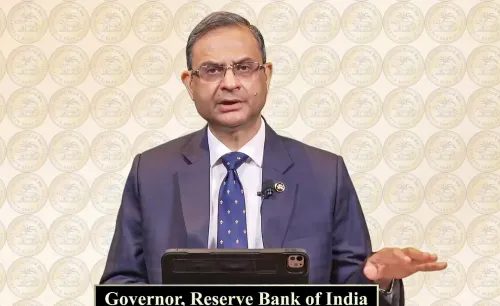
RBI Governor Sanjay Malhotra chairs the six-member committee.
SBI Research projects consumer price inflation above 5% for the next three quarters, with current-quarter inflation at 4–4.1% .
India's real GDP growth is estimated at 7.5% for FY26 and 6.6% for FY27 , per SBI Research .
The RBI may revise inflation forecasts upward and trim growth estimates due to rising crude prices and rupee pressure.
Operation Twist flagged as a contingency tool if inflationary pressures intensify without triggering a rate hike.
The Reserve Bank of India (RBI) is widely expected to keep its benchmark policy rate unchanged at 5.25% when the Monetary Policy Committee (MPC) wraps up its three-day deliberations on 5 June, as policymakers continue to weigh mounting global uncertainties and their spillover effects on domestic inflation and economic growth.
What the MPC is weighing
The six-member committee, chaired by RBI Governor Sanjay Malhotra, convenes from 3 to 5 June to review the monetary policy framework. At its previous meeting in April, the MPC had also held rates steady, citing geopolitical tensions — particularly in West Asia — and their potential to disrupt commodity prices, supply chains, and financial markets. That calculus has not materially changed, according to market participants and economists.
Inflation and growth projections in focus
While a rate hold is seen as the base case, analysts believe the central bank may revise its macroeconomic forecasts. Rising crude oil prices, persistent supply chain disruptions, and external pressure on the rupee could prompt the RBI to nudge its inflation projection higher while trimming its GDP growth estimates for the current financial year.
A research report from State Bank of India's (SBI) economic research department anticipates the central bank will maintain the existing rate amid a volatile global backdrop. According to the report, consumer price inflation could stay above 5% for the next three quarters, even as the current quarter is expected to see inflation in the 4–4.1% range.
SBI Research's growth outlook
The SBI research team projects India's real GDP growth at around 7.2% in the fourth quarter of FY26, with full-year growth for FY26 estimated at 7.5%. For FY27, the team pencils in growth of 6.6%, though it cautioned that prolonged geopolitical uncertainty could force downward revisions as fresh data emerges.
Alternative tools on the table
The SBI report argued that the RBI should continue a data-driven approach while keeping rates unchanged for now. It noted that if inflationary pressures intensify, the central bank retains alternative tools — including Operation Twist, a mechanism that adjusts the yield curve by buying long-term securities and selling short-term ones — without altering the benchmark rate. This is the second consecutive meeting at which such unconventional tools have been flagged as contingency options, underscoring how constrained the conventional rate path has become.
What to watch on 5 June
Beyond the rate decision itself, markets will closely parse the MPC's policy statement for any shift in stance — from 'accommodative' to 'neutral', or any revision in forward guidance — that could signal the direction of future moves. Any upward revision to the inflation trajectory or downward cut to growth estimates would likely weigh on bond markets and the rupee in the near term.
Point of View
Which would expose a widening gap between official optimism and ground-level economic conditions. SBI Research's warning that inflation could stay above 5% for three quarters sits uneasily alongside a 7.5% FY26 growth projection — one of those numbers will likely need revision. The mention of Operation Twist as a fallback also suggests the central bank is running short of orthodox options, a constraint that deserves more attention than the rate decision itself.
NationPress
24 Sept 2026
Frequently Asked Questions
What is the RBI MPC expected to decide on 5 June 2025?
The RBI's Monetary Policy Committee is widely expected to hold the benchmark repo rate unchanged at 5.25% at the conclusion of its three-day meeting on 5 June. Policymakers are prioritising caution amid ongoing global uncertainties, particularly geopolitical tensions in West Asia.
Why is the RBI keeping rates on hold?
The RBI is holding rates steady primarily because of elevated global uncertainty — including West Asia tensions, rising crude oil prices, and supply chain disruptions — that could affect domestic inflation and growth. The committee prefers to monitor incoming data before making any directional move.
What are SBI Research's GDP and inflation forecasts?
SBI Research estimates India's real GDP growth at 7.5% for FY26 and 6.6% for FY27, while projecting consumer price inflation above 5% for the next three quarters. Current-quarter inflation is expected in the 4–4.1% range.
What is Operation Twist and why is it relevant now?
Operation Twist is a monetary tool where the RBI simultaneously buys long-term government securities and sells short-term ones to manage the yield curve without changing the benchmark rate. It has been flagged as a contingency option if inflation intensifies, suggesting the RBI wants to retain flexibility without committing to a rate hike.
Could the RBI revise its macroeconomic projections at the June meeting?
Yes, analysts believe the RBI may raise its inflation forecast and lower its GDP growth estimates at the June meeting, given rising crude prices, rupee pressure from external factors, and persistent supply chain disruptions. Any such revision would be closely watched by bond markets and currency traders.