RBI holds repo rate at 5.25%, projects 5% inflation for FY27
Synopsis
The RBI held the repo rate at 5.25% and flagged a sharp Q3 inflation spike of 5.9% — the highest projected quarter of FY27 — even as core inflation stays muted at 3.9%. With El Niño, crude oil, and geopolitical risk all live, the MPC's neutral stance is less a comfort signal and more a holding pattern ahead of a potentially turbulent second half.
Key Takeaways
The RBI MPC held the repo rate at 5.25 per cent on 5 August , retaining a neutral policy stance .
CPI inflation is projected at 5 per cent for FY27 , with a quarterly peak of 5.9 per cent in Q3 .
Headline inflation rose to 4.4 per cent in June , ending 16 consecutive months below the RBI's 4 per cent target.
Core inflation (ex-food and fuel) held at 3.9 per cent ; excluding precious metals it was 2.3–2.5 per cent , signalling subdued demand-side pressure.
Q1 FY27 inflation came in 30 basis points below the RBI's earlier forecast.
Key risks flagged: El Niño impact on rainfall, global crude oil volatility, and geopolitical developments .
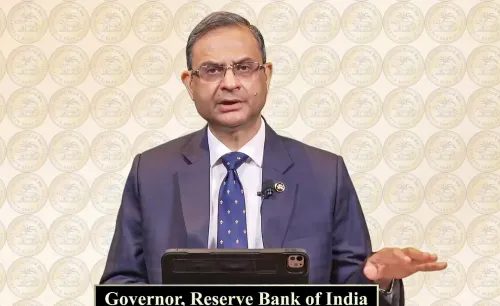
The Reserve Bank of India (RBI) on Wednesday, 5 August projected consumer price inflation at 5 per cent for FY27, even as it warned that headline inflation is set to rise further in the near term. RBI Governor Sanjay Malhotra announced that the Monetary Policy Committee (MPC) voted to hold the repo rate unchanged at 5.25 per cent, citing the need for greater clarity on the inflation trajectory before any further policy action.
Inflation Trajectory: Where It Stands
Headline Consumer Price Index (CPI) inflation climbed to 4.4 per cent in June, ending a remarkable run of 16 consecutive months below the RBI's 4 per cent target. Despite this uptick, Q1 FY27 inflation came in 30 basis points below the central bank's own earlier projection, reflecting limited pass-through of input cost pressures to end consumers.
Core inflation — which strips out food and fuel — held steady at 3.9 per cent in both May and June. Excluding precious metals, core inflation was even more contained, ranging between 2.3 and 2.5 per cent, suggesting that broader demand-side price pressures remain subdued.
Quarterly Inflation Projections for FY27
The RBI has laid out a detailed quarterly inflation roadmap for FY27: 4.7 per cent in Q2, rising sharply to 5.9 per cent in Q3, and moderating to 5.5 per cent in Q4. Inflation for the first quarter of FY28 is projected at 5.3 per cent. The Q3 spike is notable and likely reflects seasonal food price pressures and potential energy cost volatility.
Key Risks to the Outlook
Governor Malhotra flagged three principal risks to the inflation outlook: the impact of El Niño on rainfall distribution and consequently food prices, volatility in global crude oil prices, and broader geopolitical developments. These external variables introduce meaningful uncertainty into the RBI's projections and could force a reassessment of the policy stance sooner than anticipated.
Growth Remains Resilient, RBI Says
On the growth front, Malhotra struck an upbeat tone. High-frequency indicators suggest private consumption remained strong in Q1 FY27, while investment activity was supported by construction activity, capital goods production, and bank credit growth. 'Growth continues to be supported by resilient domestic demand, sustained expansion in manufacturing and services activity, and robust exports, reaffirming India's position as the world's fastest-growing major economy,' Malhotra said.
The MPC's decision to retain the neutral policy stance signals that the door remains open to both a rate cut and a rate hike, depending on how the inflation-growth dynamic evolves over the coming quarters. Markets and analysts will closely watch the Q3 inflation print — the highest projected quarter — as the next critical data point for monetary policy direction.
Point of View
But the quarterly inflation roadmap tells a more uncomfortable story: a 5.9 per cent Q3 print would be the highest in several quarters, driven by food and energy factors the RBI cannot control. Core inflation staying at 3.9 per cent gives the committee cover for now, but if El Niño disrupts the kharif harvest as feared, the RBI may find itself forced into a hawkish pivot precisely when growth momentum needs support. The 16-month run below target was a policy win; whether it holds through FY27 depends less on the MPC's models and more on the monsoon and the price of Brent crude.
NationPress
19 Sept 2026
Frequently Asked Questions
What did the RBI MPC decide on 5 August regarding the repo rate?
The RBI's Monetary Policy Committee voted to keep the repo rate unchanged at 5.25 per cent on 5 August, while retaining a neutral policy stance. The MPC said it needs greater clarity on the future inflation trajectory before considering any change in rates.
What is the RBI's inflation forecast for FY27?
The RBI has projected CPI inflation at 5 per cent for FY27 overall, with quarterly estimates of 4.7 per cent in Q2, 5.9 per cent in Q3, and 5.5 per cent in Q4. Inflation for Q1 FY28 is projected at 5.3 per cent.
Why did India's CPI inflation rise after 16 months below target?
Headline CPI rose to 4.4 per cent in June after 16 consecutive months below the RBI's 4 per cent target, driven by higher food and fuel costs. However, core inflation excluding food and fuel remained steady at 3.9 per cent, indicating that broader demand-side pressures stayed contained.
What are the key risks to India's inflation outlook according to the RBI?
Governor Malhotra identified three main risks: the potential impact of El Niño on rainfall distribution and food prices, volatility in global crude oil prices, and broader geopolitical developments. These factors could push inflation above the central bank's current projections.
What does the RBI's neutral stance mean for future rate decisions?
A neutral stance means the MPC is not pre-committed to either cutting or hiking rates, keeping both options open depending on incoming data. It signals that a rate cut is not imminent but a hike is also not the base case, with the Q3 inflation print likely to be the next key trigger for any policy shift.