RBI Anticipates India's Inflation at 4.6% for 2026-27, Supported by Bountiful Rabi Crop
Synopsis
The RBI projects India’s inflation rate at 4.6% for 2026-27, buoyed by a strong Rabi crop that alleviates some pressure from rising global oil prices due to geopolitical tensions. This outlook highlights the resilience of the Indian economy amidst challenges.
Key Takeaways
RBI projects 4.6% inflation for 2026-27.
Strong Rabi crop boosts food supply outlook.
Geopolitical tensions affect global oil prices.
Core inflation remains contained at 4.4%.
Government measures aim to support economic stability.
Mumbai, April 8 (NationPress) On Wednesday, the Reserve Bank of India (RBI) forecasted the nation’s inflation rate based on the Consumer Price Index (CPI) for the fiscal year 2026-27 to be at 4.6 percent. This optimistic outlook is attributed to the promising food supply brought about by a strong Rabi crop, providing some relief amid escalating oil prices globally due to the ongoing conflict in Iran.
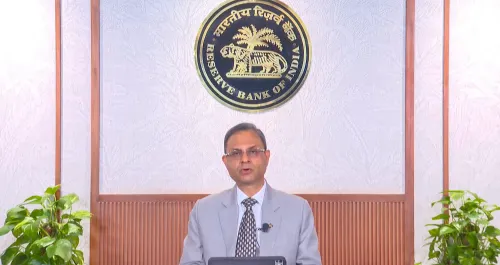
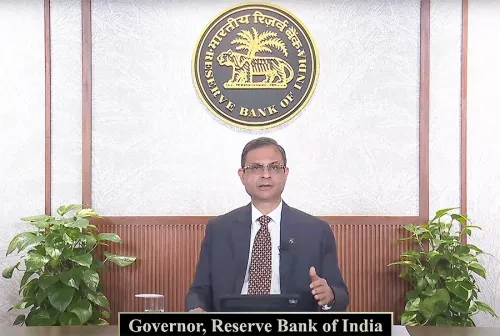
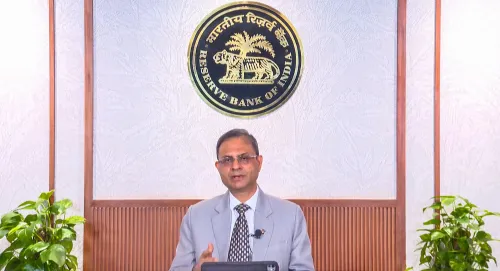
According to RBI Governor Sanjaya Malhotra, “The transmission of higher global energy prices has led to increased costs in certain fuels, including premium petrol, LPG, and industrial diesel. However, the strong Rabi crop has improved the near-term food supply outlook, which offers some reassurance.”
Taking these elements into account, the RBI estimates CPI inflation for 2026-27 at 4.6 percent, with quarterly projections of 4.0 percent for Q1, 4.4 percent for Q2, 5.2 percent for Q3, and 4.7 percent for Q4.
Nevertheless, the consistently high energy prices resulting from the West Asia conflict and potential El Niño conditions, which could negatively impact the southwest monsoon, present risks for inflation, he noted.
Malhotra indicated that India’s core inflation, which excludes food and fuel costs, is expected to be 4.4 percent for 2026-27. When precious metals are excluded, the rate is even lower, suggesting that underlying inflation pressures are likely to remain subdued.
He also highlighted that geopolitical uncertainties have escalated since the last policy meeting. While headline inflation remains below the target and well-contained, the risks to the inflation outlook have risen, driven by higher energy prices and potential weather-related disruptions affecting food prices.
Although core inflation pressures are modest, disruptions in the supply chain and the risk of second-round effects render future inflation trends unpredictable.
The RBI Governor further mentioned that recent high-frequency indicators up to February 2026 signal continued strong economic momentum, supported by robust private consumption and investment.
However, the conflict in West Asia is likely to hinder economic growth. Rising input costs linked to increased energy prices, along with international freight and insurance expenses, could limit the availability of essential inputs for downstream sectors, thus hampering growth.
The government has implemented several initiatives aimed at bolstering exports and safeguarding supply chains, which should help mitigate the conflict's negative effects.
Malhotra added that the monetary policy committee has recognized that the intensity and duration of the West Asia conflict, along with the consequent damage to energy and other infrastructures, pose risks to both inflation and growth outlooks.
Despite these challenges, the fundamentals of the Indian economy are on a more solid foundation, providing greater resilience to withstand shocks compared to previous times. The economy currently faces a supply shock, making it wise to observe how circumstances evolve and the growth-inflation outlook unfolds.
Point of View
It is essential to note the RBI's optimistic inflation forecast, reflecting confidence in India's agricultural performance amidst global uncertainties. The interplay of domestic food supply and international energy prices will be crucial in shaping the economic landscape.
NationPress
15 Oct 2026
Frequently Asked Questions
What is the projected inflation rate for India in 2026-27?
The RBI projects the inflation rate to be 4.6% for the fiscal year 2026-27.
What factors are influencing this inflation projection?
The projection is influenced by a strong Rabi crop improving food supply and rising global oil prices due to geopolitical tensions.
How does core inflation relate to overall inflation?
Core inflation, which excludes food and fuel prices, is projected at 4.4%, indicating contained underlying inflation pressures.
What risks does the RBI identify for future inflation?
Risks include persistently high energy prices and potential weather disruptions affecting food supply.
What measures is the government taking to support the economy?
The government has implemented strategies to support exports and protect supply chains to mitigate the impacts of geopolitical conflicts.