ISI doxxing campaign targets Indians in psychological warfare shift post-Operation Sindoor
Synopsis
Post-Operation Sindoor, the ISI has reportedly abandoned conventional terror in favour of doxxing — publicly leaking personal data of random Indians alongside threat messages to manufacture nationwide panic. What began as a tactic against Kashmiri Pandits and migrant workers in J&K is now allegedly being scaled across India, with law enforcement, military personnel and journalists added to the target list.
Key Takeaways
Pakistan's ISI is allegedly running a doxxing-based psychological warfare campaign targeting Indian citizens, officials, security personnel, journalists, and researchers, intelligence officials warned on 19 September 2026 .
The operation involves recruiting youth and deploying hackers to harvest personal data — phone numbers, addresses, photographs, and bank details — and posting it online with threat messages.
The tactic was first used in Jammu and Kashmir against Kashmiri Pandits and migrant workers; the ISI is now reportedly scaling it nationwide.
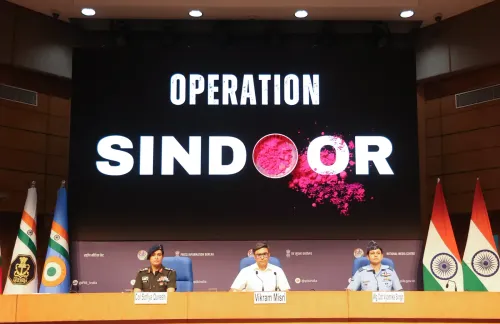
The shift follows Operation Sindoor , after which terror attacks in J&K were 'largely halted' and attempts to build home-grown militant modules reportedly failed.
Beyond inducing public fear, targeting officials and journalists is aimed at discouraging scrutiny of ISI-led activities and Pakistan-sponsored terror investigations, officials say.
India's intelligence agencies have sounded a serious warning over an alleged low-cost psychological warfare campaign by Pakistan's Inter-Services Intelligence (ISI), which is reportedly deploying doxxing tactics to terrorise Indian citizens, public officials, security personnel, journalists, and researchers. The campaign, flagged by senior officials on 19 September 2026, involves extracting and publicly posting personal data — phone numbers, photographs, home addresses, and bank details — accompanied by threat messages designed to spread fear and panic across the country.
How the ISI Doxxing Operation Works
According to intelligence officials, the ISI is actively recruiting youth and deploying hackers to harvest personal information on a wide cross-section of Indians. The harvested data is then posted online alongside threatening messages, with the explicit aim of creating a pervasive climate of fear.
'Doxxing is the new weapon of the ISI, and the agency is spending a good amount of time and money recruiting youth to gather personal information about random people,' a senior official said. A second method involves hacking into personal systems to extract bank account details, which are also intended for public exposure.
'The very fact that a person's personal details and phone numbers are uploaded online with a message is enough to drive panic,' an Intelligence Bureau (IB) official noted, describing the tactic as deceptively simple but psychologically potent.
A Playbook First Used in Jammu and Kashmir
Officials say doxxing is not a new tool for the ISI — it was first deployed in Jammu and Kashmir, initially targeting Kashmiri Pandits and later pivoting to migrant workers, with the goal of stoking an atmosphere of fear in the region. The ISI is now reportedly seeking to scale the same playbook nationwide.
An Intelligence Bureau official described the tactic as part of a broader 'propaganda warfare' strategy. 'What looks like mischief is actually part of a larger psychological warfare intended to scare the people of India,' the official said.
Why Pakistan Has Pivoted to Psychological Warfare
The shift comes in the aftermath of Operation Sindoor, which officials say significantly curtailed terror activity in Jammu and Kashmir and disrupted the ISI's attempts to cultivate home-grown militant modules inside India. With conventional military parity off the table and kinetic terror operations increasingly constrained, Pakistan has reportedly concluded that low-cost, high-impact psychological operations offer a more viable path to destabilisation.
'Pakistan has realised that it cannot win a conventional battle with India,' an official said. 'With multiple attempts to ignite terror in India failing, Pakistan is now making a complete shift to propaganda and psychological warfare.' Unlike organised terror operations, these campaigns require minimal planning and resources, making them difficult to attribute and counter through traditional security channels.
Who Is Being Targeted and Why
Officials warn the ISI's targeting is not random. Beyond ordinary citizens — chosen to maximise generalised panic — the agency is also focusing on law enforcement officers, military personnel, journalists, researchers, and public officials. The intent in targeting these groups goes further than fear: it is reportedly aimed at discouraging them from exposing ISI-linked activities and ongoing investigations into Pakistan-sponsored terrorism.
This dual strategy — mass psychological disruption combined with targeted intimidation of those investigating Pakistan's covert operations — represents a significant escalation in the information warfare dimension of the two countries' long-running security confrontation.
What Citizens and Officials Should Know
Authorities have not yet publicly outlined specific counter-measures or advisories for citizens, but intelligence officials' open warning is itself a signal that agencies are monitoring the threat closely. Cybersecurity experts have long cautioned that strong privacy settings, two-factor authentication, and restraint in sharing personal data online are the first line of defence against doxxing. The government is expected to issue formal guidance as the situation develops.
Point of View
Information warfare offers deniability at near-zero cost. What makes this iteration more dangerous than the J&K precedent is the scale — a nationwide campaign targeting not just civilians but journalists and investigators amounts to an attempt to degrade India's institutional capacity to expose covert Pakistani operations. The intelligence community's unusually public warning is itself a counter-move, designed to inoculate the public against panic before the campaign gains traction. The real test, however, is whether India's cybersecurity and legal infrastructure is equipped to pursue foreign-directed doxxing networks operating through multiple layers of proxies — a challenge that no public statement alone can meet.
NationPress
19 Sept 2026
Frequently Asked Questions
What is the ISI doxxing campaign targeting India?
It is an alleged psychological warfare operation by Pakistan's Inter-Services Intelligence (ISI) in which personal data — phone numbers, addresses, photographs, and bank details — of Indian citizens, officials, and security personnel is harvested and posted online alongside threat messages to create widespread fear. Intelligence officials publicly flagged the campaign on 19 September 2026.
How does the ISI collect personal data for doxxing?
According to intelligence officials, the ISI uses two main methods: recruiting youth to manually gather personal information and photographs from open sources, and deploying hackers to breach systems and extract sensitive data including bank account details. Both sets of information are then published online with threatening messages.
Why has Pakistan shifted to psychological warfare?
Officials say the shift followed Operation Sindoor, after which terror attacks in Jammu and Kashmir were largely curtailed and the ISI's efforts to build home-grown militant modules inside India reportedly stalled. With conventional and kinetic options constrained, Pakistan has reportedly concluded that low-cost, deniable psychological operations are a more viable path to destabilisation.
Who are the specific targets of the ISI doxxing campaign?
The campaign targets two overlapping groups: ordinary citizens chosen to generate mass panic, and a specific layer of law enforcement officers, military personnel, journalists, researchers, and public officials. The latter group is targeted to discourage them from investigating and exposing ISI-linked activities and Pakistan-sponsored terrorism.
Was this tactic used before in India?
Yes. Intelligence officials say doxxing was first deployed by the ISI in Jammu and Kashmir, where it was initially used against Kashmiri Pandits and later extended to migrant workers to create an atmosphere of fear in the region. The ISI is now reportedly replicating the same playbook at a national scale.