Bangladesh gas and power crisis rooted in flawed policy choices, report finds
Synopsis
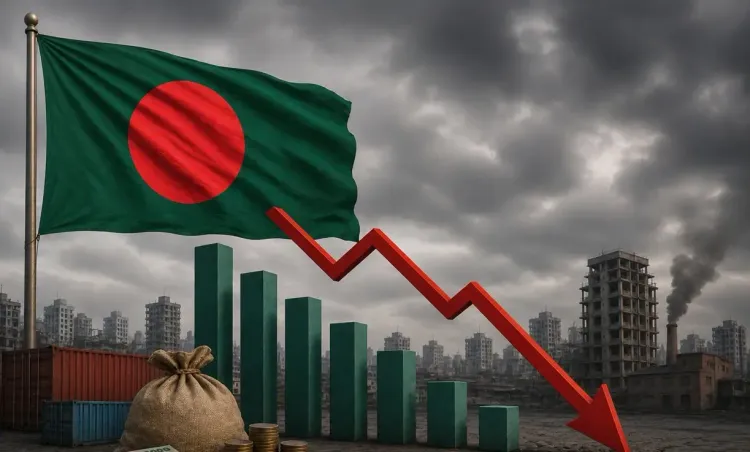
Bangladesh's daily blackouts and gas shortages are not an accident — they are the outcome of three decades of energy policy shaped by global lenders and foreign corporations, leaving the country paying up to 60 times more for imported LNG than it would for its own gas. A new report argues the real deficit is not in resources but in national capacity, deliberately kept weak.
Key Takeaways
Bangladesh faces daily gas shortages and 4–5 hours of load-shedding, a situation economist Anu Muhammad describes as unprecedented.
Energy experts blame policy choices from the 1990s that opened the sector to private players under production-sharing contracts, leaving national institutions underdeveloped.
The World Bank , IMF , ADB , and JICA are identified as key actors in shaping Bangladesh's energy policy framework.
A 2009 deal with ConocoPhillips under the Sheikh Hasina government failed to deliver promised offshore gas production.
Imported LNG costs Bangladesh nearly 60 times more per unit than domestically produced gas.
The 2010 Power Sector Master Plan by JICA, which had no Bangladeshi experts on its committee, steered the country toward LNG, coal, and nuclear — sidelining renewables.
Bangladesh is grappling with severe, recurring shortages of both gas and electricity — a crisis that energy experts say is not a result of resource scarcity but of decades of flawed policy decisions that favoured foreign investment over building domestic energy capacity, according to a new report.
A Crisis Unlike Any Before
Economist and energy activist Anu Muhammad told The Daily Star that the situation has reached an unprecedented low. 'I have never seen a situation where both gas and electricity were in such short supply at the same time,' he said, describing daily realities of no gas supply and four to five hours of load-shedding every day across the country.
Muhammad attributed the deterioration to poor policy architecture and 'vested interests rooted in laxity' that have left Bangladesh heavily reliant on costly imported liquefied natural gas (LNG), making the country vulnerable to global price swings and technical failures at terminals.
Policy Roots: From the 1990s to the Present
According to Muhammad, the crisis has structural origins in policy shifts from the 1990s that opened Bangladesh's energy sector to private players under production-sharing contracts — a move that, he argues, left national institutions chronically underdeveloped. He described the approach as broadly shaped by a neoliberal framework, with the World Bank, IMF, Asian Development Bank (ADB), and Japan International Cooperation Agency (JICA) playing influential roles in shaping both the policies and the ideas behind them.
He specifically criticised a 2009 deal made by the then Sheikh Hasina government with ConocoPhillips as unfavourable to Bangladesh, noting that promised offshore gas production never materialised after parts of the contracted work were subcontracted to a Chinese company.
The JICA Master Plan and Its Fallout
Muhammad also took aim at the 2010 Power Sector Master Plan prepared by JICA, pointing out that no Bangladeshi experts were included in the planning committee. The plan, he said, steered Bangladesh toward LNG imports, coal-fired power plants, and nuclear energy — while keeping renewable energy marginal and neglecting the development of national technical capability.
Following that plan, the government built LNG terminals in partnership with US and other foreign companies, expanded LPG use, added coal-fired capacity, and began work on a nuclear plant — all financed through heavy borrowing, according to the report.
The LNG Cost Trap
One of the most striking figures cited in the report is the cost differential between domestic gas and imported LNG. 'The cost is extremely high compared to our own gas; it costs nearly 60 times as much for the same amount of gas as our own gas exploration,' Muhammad said. Beyond cost, he flagged that LNG infrastructure creates environmental liabilities and exposes Bangladesh to unpredictable fluctuations in global energy markets — risks that domestic gas exploration would have largely avoided.
What Comes Next
The report offers a sobering assessment of Bangladesh's energy trajectory: without a fundamental rethink of its energy policy, dependency on expensive imports is likely to deepen. Experts and civil society groups are pressing for a renewed focus on domestic gas exploration, investment in renewables, and the rebuilding of national energy institutions that were sidelined over three decades of privatisation-led policy. Whether Bangladesh's current government acts on these calls remains to be seen.
Point of View
Slowly, through a series of policy choices that subordinated national energy sovereignty to foreign capital and multilateral lending conditions. The 60-times cost differential between domestic gas and imported LNG is not a market outcome; it is the price of three decades of institutional neglect. The absence of Bangladeshi experts on a JICA-led master plan that shaped the country's energy future for a generation is emblematic of a broader pattern: sovereign decisions outsourced to external actors. The question for Dhaka now is not just how to fix power supply — it is whether the political will exists to rebuild the national institutions that were hollowed out in the first place.
NationPress
19 Sept 2026
Frequently Asked Questions
Why is Bangladesh facing gas and electricity shortages?
Bangladesh's gas and electricity shortages are primarily attributed to policy decisions since the 1990s that prioritised foreign private investment over building national energy capacity, leaving the country dependent on costly imported LNG and vulnerable to global price fluctuations. Economist Anu Muhammad describes it as a crisis driven by 'poor policy and vested interests' rather than a lack of natural resources.
How much more expensive is imported LNG compared to Bangladesh's own gas?
According to economist Anu Muhammad, imported LNG costs Bangladesh nearly 60 times more per unit than domestically produced gas. This massive cost differential has placed enormous strain on the country's energy budget and economy.
What role did international institutions play in shaping Bangladesh's energy policy?
The World Bank, IMF, Asian Development Bank (ADB), and JICA are identified in the report as having played significant roles in shaping Bangladesh's energy policy framework. The 2010 Power Sector Master Plan, prepared by JICA, had no Bangladeshi experts on its committee and directed the country toward LNG imports, coal-fired plants, and nuclear energy while marginalising renewables.
What was the problem with the 2009 ConocoPhillips deal?
Economist Anu Muhammad criticised the 2009 deal made by the Sheikh Hasina government with ConocoPhillips as unfavourable to Bangladesh. Promised offshore gas production never materialised after parts of the contracted work were subcontracted to a Chinese company.
What do experts say Bangladesh needs to do to fix its energy crisis?
Experts and civil society groups are calling for a fundamental rethink of Bangladesh's energy policy, with renewed investment in domestic gas exploration, a serious push into renewable energy, and the rebuilding of national energy institutions that were sidelined over decades of privatisation-led policy.