Bangladesh's Fossil Fuel Import Costs Projected to Surge 40% Amid Middle East Turmoil

Synopsis
Bangladesh faces a staggering increase in its fossil fuel import bill, expected to rise by $4.8 billion due to the ongoing Middle East crisis. This situation mirrors past economic challenges, exposing the country's vulnerability to international energy market fluctuations.
Key Takeaways
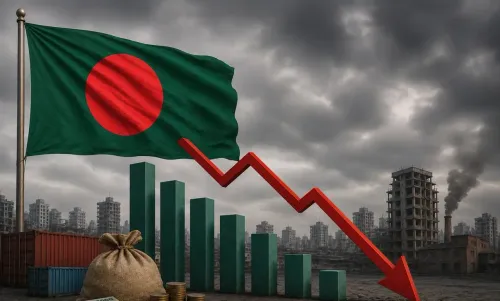
Bangladesh's fossil fuel import bill is projected to increase by $4.8 billion , a 40% rise .
The ongoing crisis in the Middle East is a significant factor behind this increase.
46% of Bangladesh's energy supply is sourced from imports.
Power shortages and blackouts have been a consequence of past conflicts, indicating a need for energy transition.
Delays in LNG shipments are stressing the power sector further.
New Delhi, March 27 (NationPress) Bangladesh's yearly fossil fuel import expenditure is set to escalate by $4.8 billion, marking a 40% increase from 2025 figures, as a result of the ongoing crisis in the Middle East, according to a recent study from Zero Carbon Analytics (ZCA).
The analysts from ZCA noted, "This kind of crisis is becoming a pattern, reminiscent of the price shocks triggered by Russia’s invasion of Ukraine, leading to increased costs for Bangladesh’s reliance on fossil fuels and its sluggish energy transition."
The report highlighted that the conflict between Russia and Ukraine had plunged Bangladesh into an economic downturn, with GDP only beginning to recover in 2025. The price of Asian liquefied natural gas (LNG) surged by 390% in the year prior to Russia's invasion, followed by an additional 48% increase in the five months that followed, resulting in power supply shortages and extensive power outages. In October 2022, 130 million people were affected by blackouts.
This significant financial burden, exacerbated by the continuing turmoil in the Middle East, poses a grave threat to the country's foreign exchange reserves, diminishing its import cover ratio from 5.7 months to 4.9 months.
The crisis underscores Dhaka's profound susceptibility to fluctuating international energy markets, with 46% of the nation's total energy supply sourced from imports in 2023. In the fiscal year 2024-2025, imports are expected to satisfy 65% of its energy requirements.
A substantial portion of this essential fuel transits through the Strait of Hormuz, which is currently experiencing significant shipping disruptions. Bangladesh imports approximately 1.4 million tonnes of crude oil through this route annually, under long-term agreements with Saudi Aramco and the Abu Dhabi National Oil Company.
As highlighted in the ZCA report, a cargo of 100,000 tonnes from Aramco destined for Bangladesh is already facing delays in the Gulf due to the ongoing conflict.
Supply constraints are emerging across various energy sectors. The Bangladesh Petroleum Corporation (BPC) confirmed in early March, "Approximately 60,000 tonnes out of the 293,000 tonnes of diesel scheduled for import in March have been postponed or canceled."
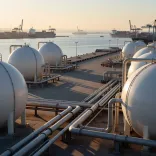
Additionally, Qatar, which supplies 75% of Bangladesh’s LNG imports, has halted production and shipments. This heavy reliance on LNG is causing financial strain throughout the power sector.
According to reports, six out of seven LNG shipments planned for April by the state-owned Petrobangla, responsible for managing oil, gas, and other mineral resources, are projected to navigate through the strait. The delivery of half of the remaining shipments remains uncertain.
Point of View
The need for a robust energy transition becomes more urgent to safeguard against international market volatility.
NationPress
26 Sept 2026
Frequently Asked Questions
What is causing the increase in Bangladesh's fuel import bill?
The increase is primarily due to the ongoing crisis in the Middle East, which has led to higher fuel prices, mirroring previous economic shocks such as those from the Russia-Ukraine conflict.
By how much is Bangladesh's fuel import bill expected to rise?
The fuel import bill is projected to rise by $4.8 billion, which represents a 40% increase from 2025 levels.
How dependent is Bangladesh on imported energy?
In 2023, 46% of Bangladesh's total energy supply came from imports, and this figure is expected to rise to 65% in the fiscal year 2024-2025.
What impact did the Russia-Ukraine conflict have on Bangladesh?
The conflict severely affected Bangladesh's economy, leading to power shortages and significant blackouts, with GDP recovery projected only by 2025.
How is the current situation affecting the power sector in Bangladesh?
The crisis is causing financial distress across the power sector, exacerbated by delays in LNG shipments and the cancellation of diesel imports.