Pakistan's gas sector in structural collapse, industry exodus accelerates
Synopsis
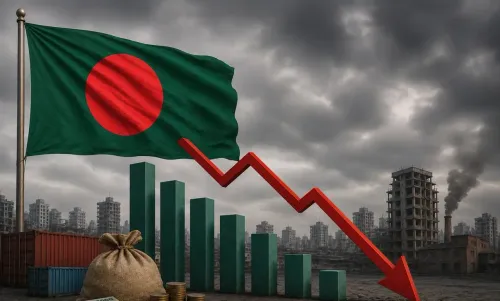
Pakistan's gas crisis isn't a shortage problem — it's a structural collapse. Industrial users are fleeing pipeline gas, fixed costs are being spread over shrinking volumes, and a classic utility death spiral is now in motion. The LNG diversion toward subsidised domestic use is draining the finances of a sector that was already on the edge.
Key Takeaways
Pakistan's gas sector faces a structural collapse , not merely a supply shortage, according to an analysis in Business Recorder .
Industrial consumers are abandoning pipeline gas for solar, coal, biomass, and self-generation as tariffs become unaffordable and unpredictable.
A levy on captive power plants is cited as a key policy error that accelerated the industrial exodus from the gas system.
The Sui companies are caught in a 'utility death spiral' — lower throughput forces higher tariffs, which further reduce demand.
Imported LNG , originally meant for industrial use, is increasingly being diverted to heavily subsidised domestic consumption, worsening sector finances.
Without structural reform, analysts warn that exploration investment will remain deterred and energy security will continue to weaken.
Pakistan's gas sector is experiencing a deep structural collapse that goes far beyond a simple supply shortage, according to an analysis published in Karachi's Business Recorder. The crisis is simultaneously damaging industrial competitiveness, discouraging fresh exploration investment, deepening dependence on costly liquefied natural gas (LNG) imports, and eroding the country's long-term energy security.
The Root of the Crisis
Analysts and the Business Recorder article argue that policymakers have consistently misdiagnosed the problem as a supply shortage, when the fundamental issue is a broken market structure. Pakistan now confronts declining indigenous gas production, unaffordable re-gasified LNG (RLNG) import costs, shrinking industrial throughput, and severe financial stress cascading across the entire energy chain — yet the institutional framework governing the sector has barely evolved.
The most consequential symptom is the collapse in throughput. Industrial consumers have been steadily abandoning pipeline gas as tariffs have become both unaffordable and unpredictable. Businesses are pivoting to solar, coal, biomass, furnace oil, and captive self-generation, as pipeline gas is no longer considered commercially reliable.
How Policy Made Things Worse
The demand destruction has been accelerated by what the Business Recorder analysis describes as misguided policy. A wrongly calculated levy imposed on captive power plants effectively priced large segments of industry out of the gas system entirely. Rather than preserving industrial throughput and export competitiveness, the policy pushed industry aggressively away from gas consumption.
The outcome was predictable: industrial off-take fell, fuel-switching accelerated, and alternative energy investments displaced gas demand. This has inflicted lasting damage on the economics of the pipeline network itself.
The Utility Death Spiral
Pakistan's gas infrastructure carries enormous fixed costs — pipelines, compressor stations, maintenance, debt servicing, and staffing — that do not shrink simply because fewer gas molecules move through the network. Instead, these fixed costs are distributed across a steadily shrinking volume base.
The result is what economists describe as a classic 'utility death spiral': lower throughput forces higher tariffs, higher tariffs suppress demand further, and falling demand pushes tariffs higher still. The Sui companies — Pakistan's primary gas distribution utilities — continue attempting to recover infrastructure costs, unaccounted-for gas (UFG) losses, financing charges, RLNG obligations, and historical shortfalls from an increasingly stressed and shrinking customer base.
Consumers are caught in an absurd bind: service quality weakens, supply reliability becomes uncertain, industrial competitiveness deteriorates — yet bills keep rising.
LNG Diversion Deepens the Crisis
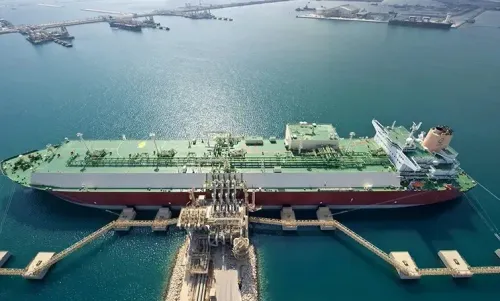
The diversion of imported LNG away from industry toward the domestic residential sector has compounded the financial damage. Pakistan originally imported LNG primarily to support industrial growth, efficient power generation, and broader economic expansion. Instead, according to the analysis, increasingly large LNG volumes are being redirected toward low-paying, heavily subsidised domestic consumption. The financial consequences for the sector's viability are described as enormous.
What Comes Next
Without structural reform — including rationalising the tariff framework, reversing the captive power levy, and redirecting LNG toward higher-value industrial use — analysts warn the death spiral will deepen. Exploration investment will remain deterred, industrial competitiveness will continue to erode, and Pakistan's energy import bill will grow heavier. The sector's trajectory, as things stand, points toward further contraction rather than recovery.
Point of View
Most-subsidised end of the market. That is not an energy policy — it is a fiscal time bomb dressed as social welfare.
NationPress
5 Oct 2026
Frequently Asked Questions
What is causing Pakistan's gas sector crisis?
Pakistan's gas crisis stems from a structural breakdown in the gas market itself, not just a supply shortage. Declining indigenous production, unaffordable RLNG import costs, a shrinking industrial customer base, and misaligned policy — including a levy on captive power plants — have combined to trigger a utility death spiral where falling throughput drives up tariffs, which in turn further reduces demand.
What is the 'utility death spiral' affecting Pakistan's gas sector?
The utility death spiral refers to a self-reinforcing cycle where lower gas throughput forces the Sui companies to spread fixed infrastructure costs over fewer consumers, pushing tariffs higher. Higher tariffs drive more industrial users away from pipeline gas, reducing throughput further and pushing tariffs higher still. The cycle is difficult to break without structural intervention.
Why are Pakistani industries switching away from pipeline gas?
Industrial consumers are switching to solar, coal, biomass, furnace oil, and self-generation because pipeline gas tariffs have become unaffordable and unpredictable. A levy on captive power plants is specifically cited as a policy error that priced many industrial users out of the gas system entirely, damaging export competitiveness in the process.
How is LNG diversion worsening Pakistan's energy crisis?
Pakistan originally imported LNG to support industrial growth and efficient power generation. However, increasing volumes are reportedly being diverted toward low-paying, heavily subsidised domestic residential consumption. This reduces the financial returns on costly LNG imports and deepens the sector's financial stress.
What needs to change to stabilise Pakistan's gas sector?
Analysts argue that structural reform is essential — including rationalising the tariff framework, reversing counterproductive levies on captive power plants, and redirecting LNG toward higher-value industrial use. Without these changes, exploration investment will remain deterred and the death spiral is likely to deepen further.