CM Shivakumar: 'I am your servant, not ruler of the land'
Synopsis
The Chief Minister's Office of Karnataka shared a statement by CM DK Shivakumar on 7 July 2026, in which he declares himself a servant of the people and asserts that the government belongs to Karnataka's citizens, not to him personally.
Key Takeaways
The Chief Minister's Office of Karnataka posted the statement on 7 July 2026 .
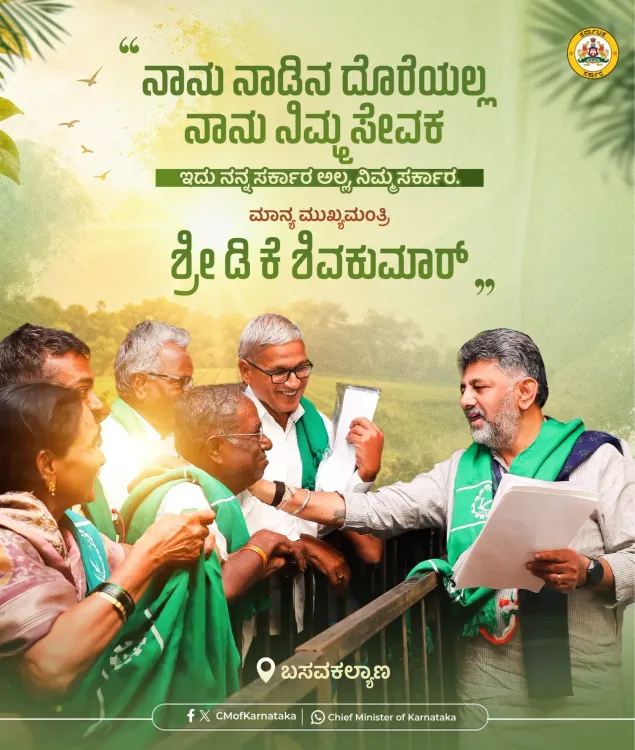
CM DK Shivakumar declared: 'I am not the ruler of the land, I am your servant.' He stated: 'This is not my government, it is your government.' The statement was issued in Kannada through the official CMO account.
The message aligns with the Karnataka Congress government's broader people-oriented governance positioning since the 2023 assembly elections .
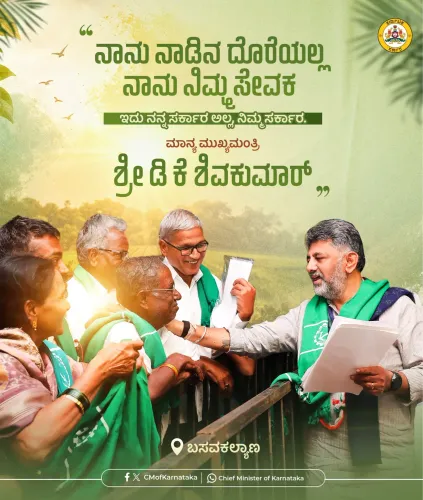
The Chief Minister's Office of Karnataka on Tuesday, 7 July 2026 shared a statement attributed to Chief Minister DK Shivakumar, declaring that he considers himself a servant of the people rather than a ruler, and that the government belongs to Karnataka's citizens.
The post, written in Kannada, quotes CM Shivakumar as saying: 'ನಾನು ನಾಡಿನ ದೊರೆಯಲ್ಲ ನಾನು ನಿಮ್ಮ ಸೇವಕ' — 'I am not the ruler of the land, I am your servant' — and adds: 'ಇದು ನನ್ನ ಸರ್ಕಾರ ಅಲ್ಲ, ನಿಮ್ಮ ಸರ್ಕಾರ' — 'This is not my government, it is your government.'
Context
The statement is a direct articulation of a people-first governance philosophy. By framing the administration as belonging to Karnataka's citizens rather than to the Chief Minister personally, the message signals an intent to position the government as accountable and accessible to the public.
Such declarations carry particular weight when issued through the official Chief Minister's Office account, lending them institutional rather than merely personal significance.
Policy Backdrop
The Karnataka Congress government, which came to power following the 2023 assembly elections, has consistently emphasised welfare delivery and people-oriented administration as its defining approach. Flagship guarantee schemes — covering free electricity, food, and financial support for women — were central to its electoral mandate and subsequent governance agenda.
DK Shivakumar, a senior Congress leader and key architect of the party's 2023 victory in the state, has been a prominent face of the administration. The rhetoric of servant-leadership aligns with the broader Congress positioning of its state governments as responsive to grassroots concerns.
Stakeholders and Impact
For Karnataka's citizens, the statement reinforces a message of governmental accountability. Public communications of this nature are aimed at building trust between the administration and voters, particularly in a large and politically diverse state.
Within the ruling dispensation, such messaging also serves to manage internal optics — projecting unity and a shared commitment to public service ahead of any administrative or political transitions. Indian state-level leaders across parties have periodically used this rhetorical tradition of framing themselves as servants of the people rather than holders of power.
What's Next
Observers will watch for follow-up communications from the Karnataka CMO that translate this stated philosophy into concrete administrative actions — such as public outreach programmes, grievance redressal drives, or announcements of new welfare initiatives.
The tone of the statement suggests the Karnataka government is keen to reinforce its public-service identity, and further policy or programme announcements in the coming weeks could be framed within this servant-leadership narrative.
Point of View
It carries a governance signal beyond mere symbolism — it anchors the administration's public identity in accountability. For a Congress government navigating the pressures of coalition management and internal party dynamics in a large southern state, this kind of messaging helps consolidate public goodwill. The broader pattern across Indian states shows such statements tend to precede or accompany administrative outreach pushes, suggesting Karnataka may be preparing a renewed public-engagement drive.
NationPress
7 Jul 2026
Frequently Asked Questions
What did Karnataka CM DK Shivakumar say about being a servant of the people?
CM DK Shivakumar stated, 'I am not the ruler of the land, I am your servant,' and added, 'This is not my government, it is your government,' in a statement posted by the Karnataka Chief Minister's Office on 7 July 2026.
Who posted the DK Shivakumar servant of people statement?
The statement was posted by the official Chief Minister's Office of Karnataka account on X on 7 July 2026.
What language was the Karnataka CM's statement in?
The statement was posted in Kannada and translates to CM Shivakumar calling himself a servant of the people and describing the government as belonging to Karnataka's citizens.
What is DK Shivakumar's role in the Karnataka government?
DK Shivakumar is a senior Karnataka Congress leader who has been a key figure in the state's administration following the Congress party's victory in the 2023 Karnataka assembly elections.
What does 'nanu nimmaa sevaka' mean in the Karnataka CM's post?
The Kannada phrase from the post means 'I am your servant,' part of CM Shivakumar's broader statement that he is not the ruler of the land and that the government belongs to the people of Karnataka.