PM Modi congratulates DK Shivakumar on oath as Karnataka CM
Synopsis
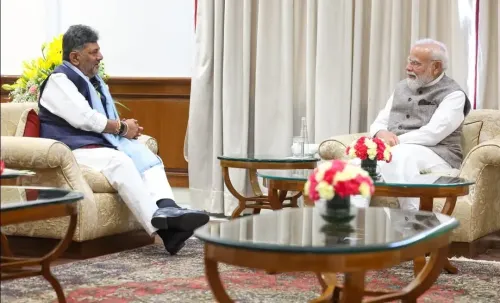
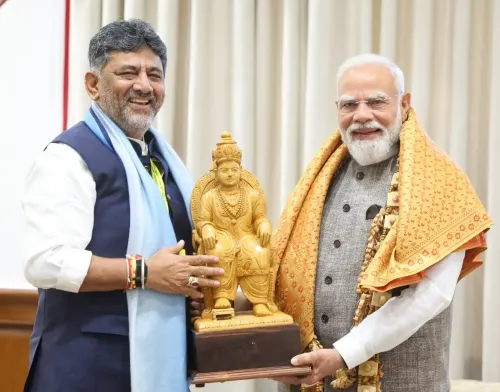
Prime Minister Narendra Modi congratulated DK Shivakumar on assuming office as Karnataka's Chief Minister, posting on X that the Centre would work closely with the state government for public welfare. The message follows India's federal convention of cross-party courtesies during state leadership transitions.
Key Takeaways
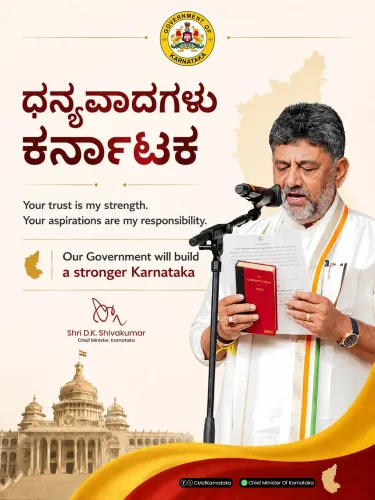
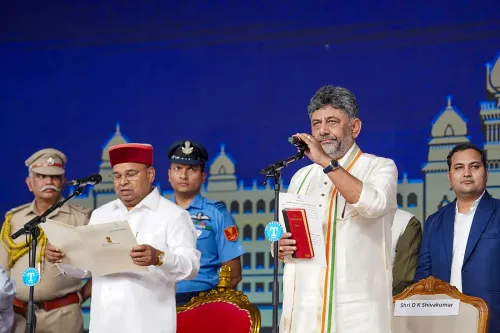
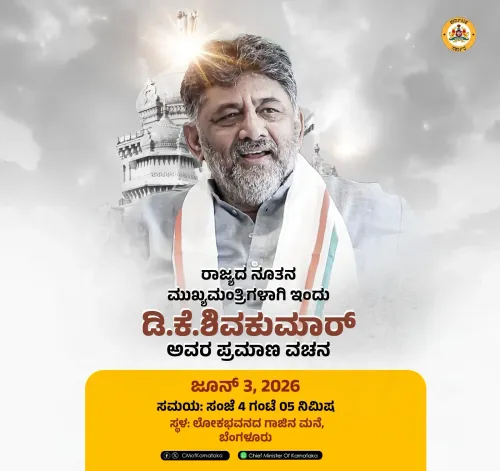
PM Narendra Modi congratulated DK Shivakumar on taking oath as Chief Minister of Karnataka on June 3, 2026.
The Prime Minister pledged that the Centre would work closely with the Karnataka government for public welfare.
DK Shivakumar is a senior Congress leader who earlier served as Deputy Chief Minister of the state.
Karnataka was previously led by a BJP government from 2019 to 2023 before Congress returned to power.
The message reflects the Modi government's stated emphasis on cooperative federalism since 2014.
Focus shifts to cabinet formation and implementation of central schemes such as PM-KISAN and Smart Cities in Karnataka.
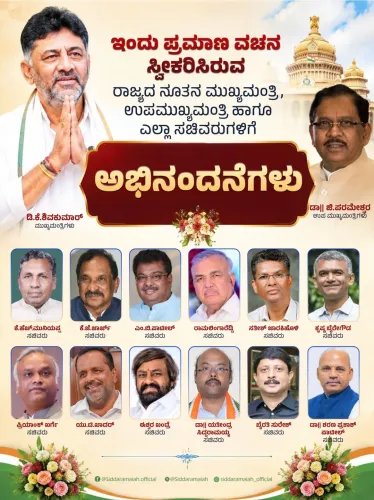
Prime Minister Narendra Modi on Wednesday congratulated DK Shivakumar on taking oath as the Chief Minister of Karnataka, extending best wishes for his tenure and pledging that the Centre would work closely with the new state government. The message, posted on X on June 3, 2026, marks the customary federal acknowledgement of a leadership transition in one of India's largest states.
'Congratulations to Shri DK Shivakumar Ji on taking oath as Chief Minister of Karnataka. Best wishes for his tenure. The Centre will work closely with the Karnataka Government for the welfare of the people,' the Prime Minister wrote, tagging the new Chief Minister's handle.
Context
DK Shivakumar is a senior Indian National Congress leader from Karnataka who previously served as Deputy Chief Minister and has held key portfolios including Energy and Major Irrigation over his long political career. He has been a central figure in the state Congress unit and a key strategist in several of the party's electoral campaigns in the southern state.
Karnataka, home to India's technology capital Bengaluru, alternates between Congress and BJP-led governments and contributes significantly to the country's IT and manufacturing output. The Prime Minister's note, despite the political divide between the BJP at the Centre and the Congress in the state, follows the established convention of cross-party courtesies during gubernatorial and chief ministerial transitions.
Policy backdrop
The Modi government has consistently invoked the principle of 'sahkari sanghvad' (cooperative federalism) since taking office in 2014, framing Centre-state engagement as essential to delivering welfare programmes on the ground. The replacement of the Planning Commission with NITI Aayog in 2015 was positioned as part of this approach, giving state governments a formal platform to shape national development priorities.
In practice, Karnataka's relationship with the Centre has seen both collaboration and friction in recent years, particularly over GST compensation, drought relief allocations and the funding of large infrastructure projects. The Prime Minister's pledge to work 'closely' with the new state administration signals a willingness to keep institutional channels open despite political differences.
Stakeholders and impact
The most immediate stakeholders are the residents of Karnataka, whose access to flagship central schemes such as PM-KISAN, the Smart Cities Mission and centrally sponsored health and education programmes depends substantially on Centre-state coordination. State government officials, Union ministries handling concurrent-list subjects, and Bengaluru-based industry will be watching the early signals from the new administration on policy continuity.
For the Congress, retaining the chief ministerial office is significant in a state that has often served as a bellwether for southern Indian politics. For the BJP, which led the Karnataka government from 2019 to 2023, the Prime Minister's measured note keeps the door open for constructive engagement while the party regroups in the state.
What's next
Attention will now turn to the formation of the new state cabinet, the allocation of portfolios and the first set of policy announcements from the DK Shivakumar-led government. Early meetings between the Chief Minister and Union ministers, as well as the state's participation in NITI Aayog's Governing Council, will offer the first concrete test of how the cooperative federalism framing translates into working relations.
Implementation of ongoing central schemes in Karnataka, along with any fresh requests from the state on pending fiscal transfers, will shape the practical contours of the Centre-state partnership the Prime Minister has flagged in his message.
Point of View
But the choice of words matters in a politically charged Centre-state equation. By promising to work 'closely' with a Congress-led Karnataka government, Modi reinforces his long-standing cooperative federalism pitch while denying the opposition any early grievance narrative. The real test will be in fiscal transfers, GST compensation discussions and project clearances, where rhetoric and delivery have historically diverged. Expect the tone of this message to be revisited each time a flashpoint emerges between Raisina Hill and Vidhana Soudha.
NationPress
17 Oct 2026
Frequently Asked Questions
Who is DK Shivakumar?
DK Shivakumar is a senior Indian National Congress leader from Karnataka who has taken oath as Chief Minister of the state. He has earlier served as Deputy Chief Minister and held key portfolios including Energy and Major Irrigation.
What did PM Modi say about DK Shivakumar becoming Karnataka CM?
PM Narendra Modi congratulated DK Shivakumar on taking oath as Chief Minister of Karnataka and conveyed best wishes for his tenure. He also said the Centre would work closely with the Karnataka government for the welfare of the people.
When did DK Shivakumar take oath as Karnataka Chief Minister?
DK Shivakumar assumed office as Karnataka Chief Minister around June 3, 2026, the day PM Modi posted his congratulatory message on X.
Which party is in power in Karnataka now?
The Indian National Congress is in power in Karnataka. The party had formed the state government following the 2023 assembly elections and now continues under Chief Minister DK Shivakumar.
What is cooperative federalism in the Indian context?
Cooperative federalism refers to the working partnership between the Union government and state governments on policy and welfare delivery. The Modi government has emphasised this approach since 2014, including through NITI Aayog, which was set up in 2015 to coordinate Centre-state development priorities.