Pakistan's Energy Crisis Deepens Amid West Asia Turmoil: Latest Insights
Synopsis
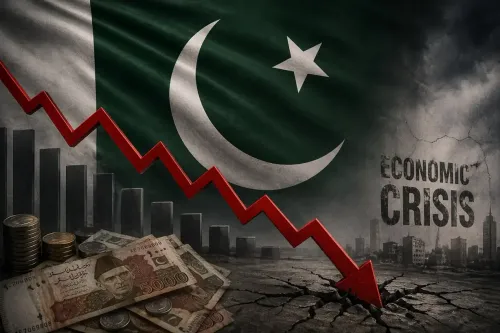
As tensions in West Asia escalate, Pakistan faces an energy crisis that threatens its economic stability. With rising oil prices and a heavy reliance on imports, the country must navigate a precarious situation that could have dire consequences for its economy and citizens.
Key Takeaways
Pakistan's crude production: Limited to 81,000 barrels per day.
Consumption gap: Nearly 480,000 barrels leads to over 100% import dependency.
Strait of Hormuz: 80% of Pakistan's oil imports transit this route.
Inflation impact: Rising energy costs contribute directly to inflation, affecting purchasing power.
Renewable potential: Significant solar and wind resources are underutilized.
New Delhi, March 21 (NationPress) As the geopolitical situation in West Asia reaches its 22nd day, with significant oil fields reportedly affected on both sides, Pakistan—a nation heavily reliant on energy imports—faces increasing risks of economic and financial turmoil, according to a recent report.
The findings presented in The Express Tribune indicate that Pakistan's domestic crude production is limited to approximately 81,000 barrels per day, while consumption stands near 480,000 barrels. This results in a staggering import dependency exceeding 100 percent.
About 80 percent of Pakistan’s crude oil, along with nearly all liquefied natural gas (LNG) imports, pass through the Strait of Hormuz, primarily sourced from Gulf nations. This situation leaves the country significantly vulnerable to external shocks due to such concentrated reliance.
These vulnerabilities are not merely structural; they are deeply embedded and increasingly challenging to navigate.
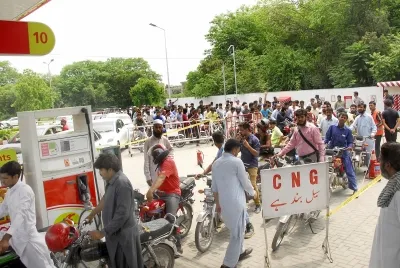
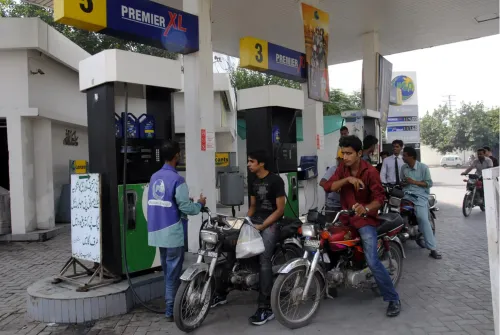
The neighboring nation remains acutely susceptible due to its heavy dependence on imported fuels to support industrial operations, electricity generation, and transportation.
Despite decades of policy awareness, Pakistan has struggled to meaningfully alleviate this dependency.
The report further emphasizes that any disruptions in the Strait would instantly escalate Pakistan's already overwhelming oil import costs.
“Even slight fluctuations in global crude oil prices place immense pressure on foreign exchange reserves, which remain perpetually strained,” it noted.
For Pakistan, the significant uptick in oil prices since February 28 is not just a transient issue but a recurring challenge that exacerbates macroeconomic instability.
The report highlighted that increasing energy costs rapidly influence the economy, underscoring that fuel is essential for transportation, power generation, and manufacturing—thus, rising prices contribute directly to inflation.
In the case of Pakistan, where inflation has continuously diminished purchasing power, these shocks disproportionately impact lower- and middle-income families.
These weaknesses are further compounded by sluggish progress in structural reforms.
Attempts to diversify energy sources, boost domestic production, or invest adequately in renewable energy have been inconsistent and frequently delayed.
While the country possesses considerable solar and wind potential in areas like Sindh and Balochistan, policy inconsistency and financial limitations have obstructed large-scale development.
The report also pointed out that energy inefficiency worsens the situation.
High transmission losses, outdated infrastructure, and weak regulatory enforcement continue to inflate demand and squander resources, heightening reliance on costly imports.
Point of View
It is clear that Pakistan's energy dependence poses significant risks to its economic stability. The ongoing conflict in West Asia exacerbates these vulnerabilities, demanding urgent attention and action from policymakers to mitigate potential fallout.
NationPress
26 Sept 2026
Frequently Asked Questions
What is the current energy situation in Pakistan?
Pakistan is facing a severe energy crisis, heavily reliant on imports to meet its consumption needs, with a domestic production of only 81,000 barrels per day against a consumption of 480,000 barrels.
How does the West Asia conflict affect Pakistan's energy supply?
The ongoing conflict damages oil fields and affects supply routes, particularly through the Strait of Hormuz, which is crucial for Pakistan's energy imports.
What are the implications of rising oil prices for Pakistan?
Increasing oil prices strain Pakistan's foreign exchange reserves and contribute to inflation, disproportionately affecting low- and middle-income households.
What steps has Pakistan taken to improve its energy independence?
Efforts to diversify energy sources and expand domestic production have been inconsistent and often delayed, despite significant potential in renewables.
What role does energy efficiency play in Pakistan's energy crisis?
Energy inefficiency, characterized by high transmission losses and outdated infrastructure, exacerbates the crisis by increasing demand and reliance on costly imports.