Fuel Crisis in Pakistan: An Urgent Call for Action
Synopsis
Pakistan is facing a severe fuel crisis due to Middle East conflicts affecting oil supplies. Citizens are paying significantly more at petrol stations, and the government is considering drastic measures. The country must act swiftly to establish energy reserves and pursue renewable energy investment.
Key Takeaways
Pakistan is experiencing a significant fuel crisis.
Oil supply disruptions are linked to Middle East conflicts.
Citizens are facing increased fuel prices.
The government is considering drastic measures to manage the crisis.
Urgent investment in renewable energy is needed.
New Delhi, March 18 (NationPress) Pakistan is grappling with a significant fuel crisis, largely instigated by the disruption of oil supplies due to the ongoing conflict in the Middle East. The government led by Shahbaz Sharif has struggled to address the repercussions of the disturbances affecting oil traffic through the Strait of Hormuz.
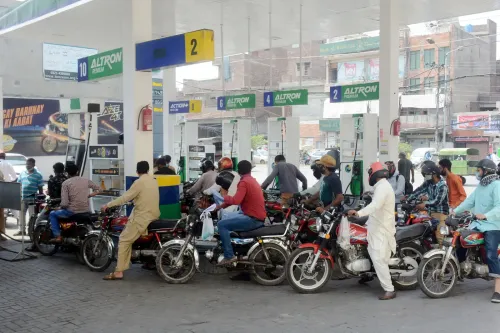
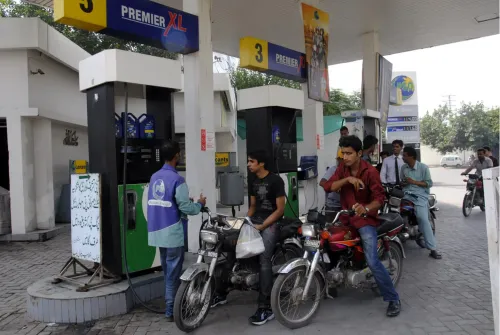
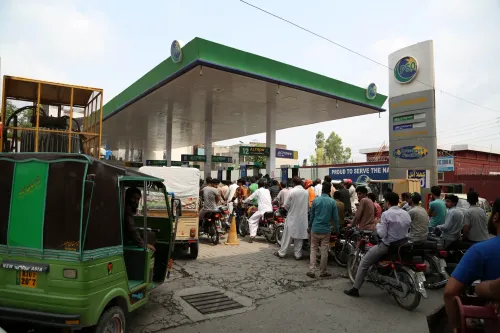
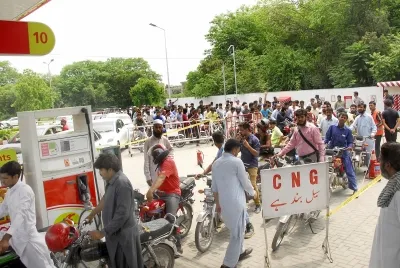
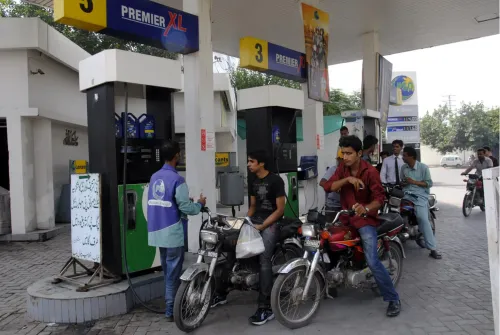
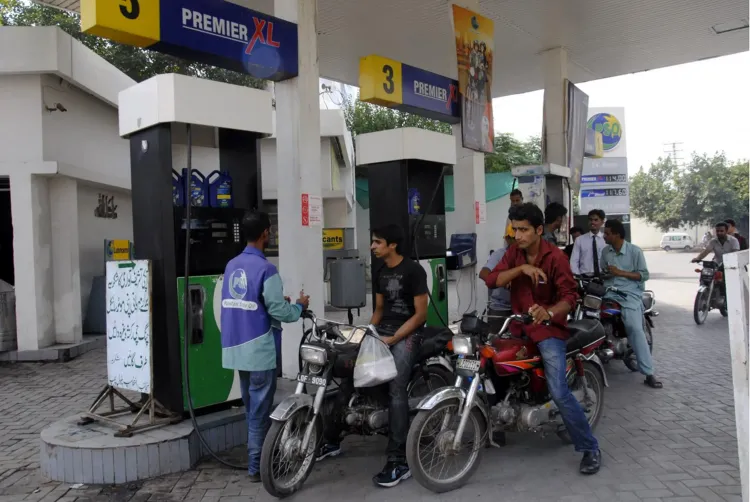
“In various cities across Pakistan, residents are enduring long waits at petrol stations, now paying 55 rupees more per litre compared to just two weeks ago. The government is currently contemplating an ambiguous strategy that includes reducing the workweek to four days, cutting fuel allocations for state vehicles, and mandating online classes for schoolchildren,” as reported by The Nation.
During this period, the US has witnessed its largest increase in crude prices since 1983, with crude futures soaring by 36 percent in just a week. Brent crude prices have also surged by approximately 18 percent, now reaching $109 per barrel. The Strait of Hormuz is crucial, with nearly 20 million barrels of oil, valued at around $500 billion annually in global energy trade, navigating through it. Any disruption significantly impacts economies, with Pakistan feeling the effects sooner than many others, the article highlights.
Furthermore, Qatar and the UAE are responsible for 99 percent of Pakistan’s liquefied natural gas (LNG) imports. The nation’s limited storage capabilities and procurement flexibility render it exceedingly susceptible to supply interruptions. Currently, Pakistan is facing a critical shortage of oil reserves.
In response to the crisis, the Pakistani government has urgently requested Saudi Arabia to redirect crude shipments via the longer and more costly Red Sea ports of Yanbu. With an economy already struggling, it has yet to adjust to this economic shock. The commerce body of Pakistan has called on the government to declare an energy crisis to shield itself from the escalating conflict, as noted in the article.
As a founding member of the Organisation of Islamic Cooperation, Pakistan is at a crossroads: where does it truly stand? While Islamabad publicly adopts a confrontational stance, it is simultaneously reaching out to Riyadh for assistance to mitigate the impacts of war. This situation exposes a stark diplomatic contradiction: publicly opposing the Iranian war while discreetly seeking oil from Riyadh. This situation does not reflect genuine diplomacy but indicates a troubling shift, as the article points out.
In conclusion, Pakistan must urgently declare an energy emergency and introduce equitable and transparent energy rationing. Establishing strategic petroleum reserves is essential, as this crisis has highlighted that Pakistan cannot withstand even a two-week supply disruption, as the article emphasizes.
Moreover, there needs to be a redirection of investment towards renewable energy and the development of domestic gas resources. The question of whether Pakistan requires energy reforms has become moot; the pressing issue is that Pakistan cannot afford any further delays, the article concludes.
Point of View
It is crucial to recognize that Pakistan stands at a significant crossroads amidst this fuel crisis. The government's inability to manage oil supply disruptions poses serious risks to its economy and citizens. Urgent action is necessary to address the vulnerabilities and ensure energy security.
NationPress
7 Oct 2026
Frequently Asked Questions
What is causing the fuel crisis in Pakistan?
The fuel crisis in Pakistan is primarily due to disruptions in oil supplies stemming from the conflict in the Middle East, particularly affecting the Strait of Hormuz.
How much have fuel prices increased in Pakistan?
Fuel prices have risen by 55 rupees per litre compared to two weeks ago.
What measures is the Pakistani government considering?
The government is contemplating reducing the workweek to four days and cutting fuel allocations for state vehicles, among other measures.
Which countries supply LNG to Pakistan?
Qatar and the UAE account for 99 percent of Pakistan’s liquefied natural gas (LNG) imports.
What should Pakistan do to address the energy crisis?
Pakistan should declare an energy emergency, establish strategic petroleum reserves, and invest in renewable energy and domestic gas development.