Pakistan's Surge in Petrol Prices Reflects Deepening Energy Challenges Amid Geopolitical Strife
Synopsis
The recent petrol price spike in Pakistan has ignited public frustration and revealed underlying vulnerabilities in the country's energy sector. This article explores the broader implications of these developments amid escalating geopolitical tensions.
Key Takeaways
Petrol prices in Pakistan rose by Rs 55 per litre.
Long queues at fuel stations indicate public frustration.
Global tensions are influencing local fuel prices.
Pakistan's energy sector faces significant structural issues.
Investment in renewables is crucial for energy independence.
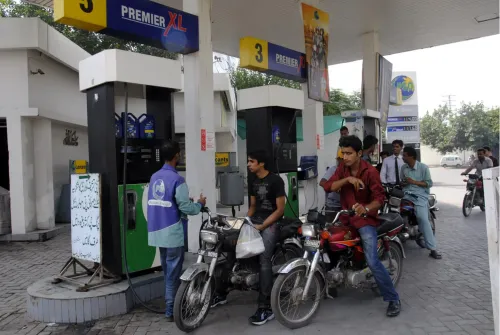
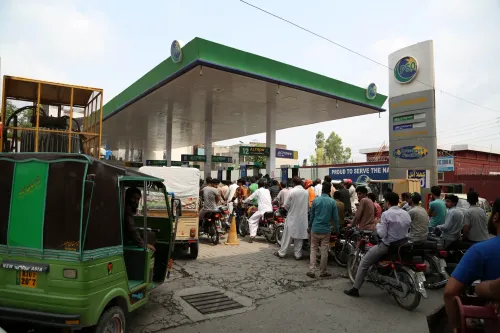
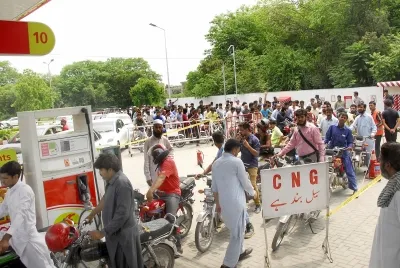
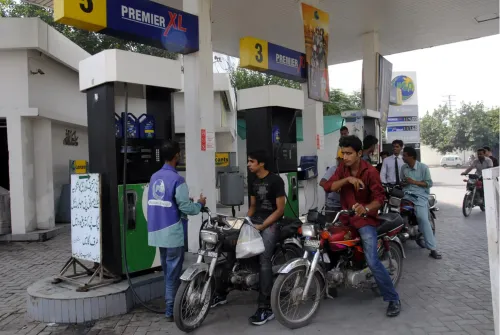
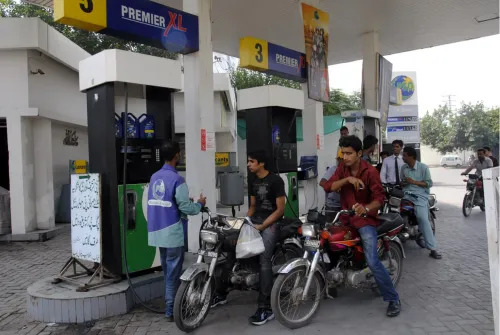
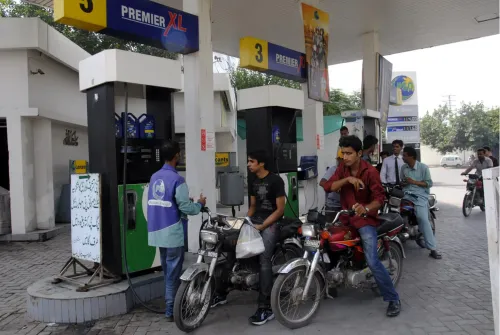
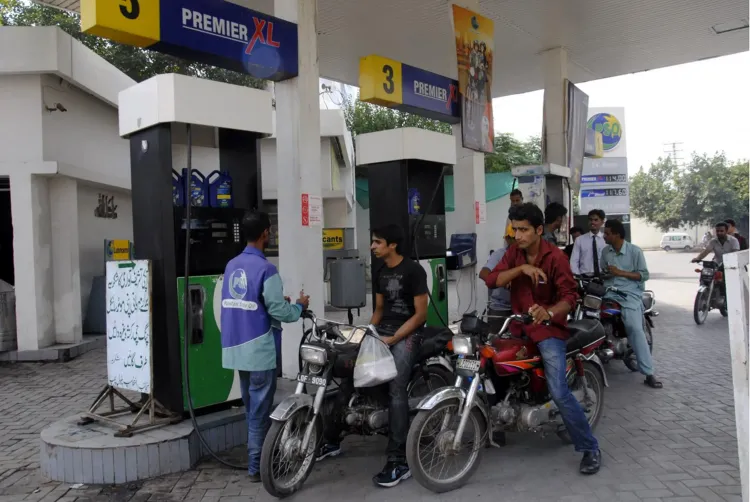
New Delhi, March 10 (NationPress) The abrupt rise in petrol prices in Pakistan during March 2026—an increase of approximately Rs 55 per litre—has led to extensive lines at fuel stations, escalating transport costs, and increasing public discontent throughout the nation, according to a report.
While the authorities have linked this hike to fluctuations in global oil prices and ongoing tensions in the Middle East, the current predicament reveals more profound structural vulnerabilities within Pakistan's energy framework.
A report from Modern Diplomacy points out that the global price pressures stem from intensifying conflicts involving the United States, Iran, and Israel, which have heightened concerns regarding instability in the strategic Strait of Hormuz.
This narrow maritime passage is crucial, with nearly one-fifth of the world’s oil supply transiting through it, rendering it highly susceptible to geopolitical disturbances.
The report further emphasizes that even slight variations in international oil prices swiftly lead to domestic fuel price increases.
As per economic analyses from the Ministry of Finance Pakistan, petroleum imports constitute a significant portion of the nation’s yearly import expenditure.
“However, external factors alone cannot repeatedly impose the same level of fuel crisis severity on Pakistan. The crux of the issue is that the country has failed to modernize and diversify its energy sector,” the report states.
Research conducted by the Institute for Energy Economics and Financial Analysis indicates that Pakistan continues to be heavily dependent on foreign energy sources, despite having substantial renewable energy potential.
This latest petrol price hike is also anticipated to exacerbate inflation.
The report highlights that increasing fuel prices raise transportation costs, consequently driving up the prices of food and essential goods, disproportionately impacting lower-income families.
In spite of the ongoing crises, policy measures have frequently prioritized short-term solutions like subsidies or temporary price freezes rather than implementing necessary structural reforms.
Significant regional energy projects, such as the proposed Iran–Pakistan Gas Pipeline, have also faced delays due to geopolitical and policy obstacles.
Energy analysts assert that Pakistan must adopt a comprehensive strategy to enhance energy security.
Expanding strategic petroleum reserves, modernizing local refineries, and investing in renewable energy sources like solar and wind could significantly reduce reliance on imported oil.
Frequently Asked Questions
What caused the petrol price increase in Pakistan?
The petrol price increase is attributed to global oil market volatility and geopolitical tensions in the Middle East.
How does the petrol price hike affect the public?
The price hike leads to longer lines at fuel stations, increased transport fares, and rising costs of essential goods, disproportionately impacting low-income households.
What are the structural weaknesses in Pakistan's energy sector?
Pakistan's energy sector suffers from a lack of modernization and diversification, relying heavily on imported petroleum despite having significant renewable energy potential.
What strategies could improve energy security in Pakistan?
Strategies may include expanding strategic petroleum reserves, modernizing domestic refineries, and investing in renewable energy sources such as solar and wind.
Are any regional energy projects currently stalled?
Yes, major projects like the Iran–Pakistan Gas Pipeline have faced delays due to geopolitical tensions and policy challenges.