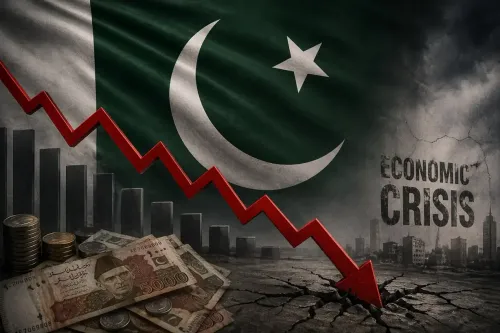
Pakistan's Economy Under Threat as Oil Prices Could Spike to $130 Amid Middle East Tensions
Synopsis
As tensions in the Middle East escalate, a report warns that Pakistan's economy may face serious inflationary pressure if global oil prices reach $130 per barrel. With a heavy reliance on oil imports, the impact on fuel costs and overall inflation could be significant.
Key Takeaways
Pakistan may face inflationary pressures if oil reaches $130 .
Petrol prices could rise to Rs 392 per litre.
Rising oil prices could elevate inflation above 7% .
The country imported $16 billion in petroleum products last year.
Supply of LPG remains stable despite price increases.
New Delhi, March 12 (NationPress) The economy of Pakistan may experience significant strain if global oil prices escalate to $130 per barrel, in light of rising tensions in the Middle East, as indicated by a recent report.
According to Arab News, economists and industry experts are voicing concerns following a recent increase in crude oil prices, which have surpassed $110 per barrel. This surge is attributed to escalating hostilities involving the United States, Israel, and Iran, raising alarms about potential disruptions in shipments through the Strait of Hormuz, a vital waterway responsible for nearly one-fifth of the world's oil supply.
“Experts suggest that ongoing volatility could rapidly lead to higher fuel costs in Pakistan, which relies heavily on energy imports,” the report elaborates.
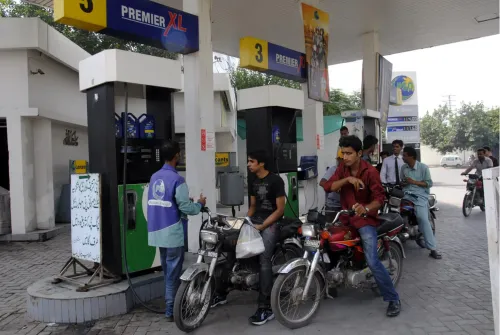
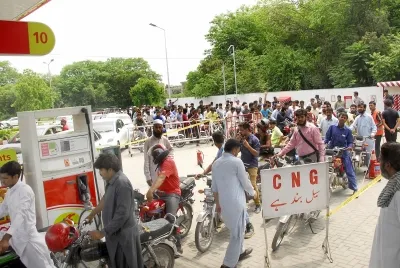
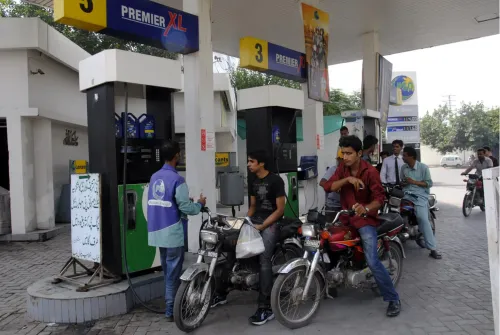
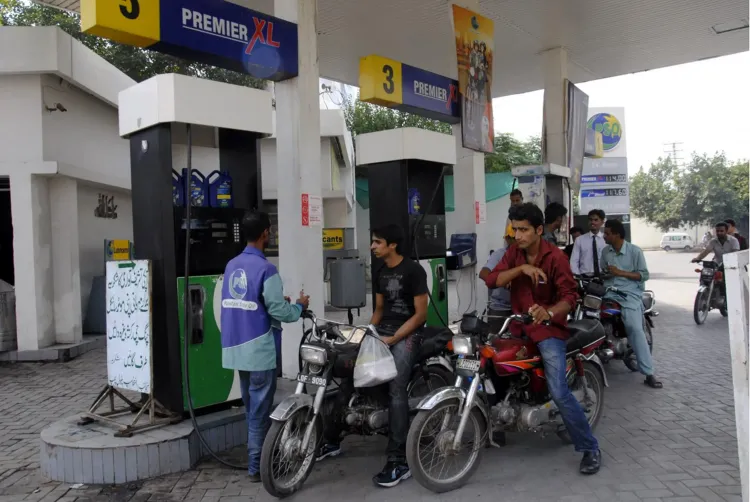
Recently, Pakistan has increased petrol and diesel prices by around 20% due to soaring global oil prices. The central bank has also cautioned that inflation may remain above 7% for the remainder of the fiscal year, ending in June.
According to the advisory firm Tola Associates based in Karachi, petrol prices in Pakistan could potentially reach Rs 392 per litre if global crude prices hit $130 per barrel, which could subsequently elevate overall inflation by 7.11%, the report suggests.
Pakistan's dependency on imported energy makes it susceptible to fluctuations in global prices. Official statistics reveal that the country imported approximately $16 billion worth of petroleum products last year, making it the largest component of its $58.4 billion import total.
Rising global energy prices are already impacting retail markets, especially in the case of liquefied petroleum gas (LPG), a commonly used fuel for households and businesses. Retailers in Karachi have reported an increase in LPG prices from around Rs 310 to Rs 350 per kilogram since tensions heightened.
Nonetheless, industry representatives assert that supply remains stable. The Oil Companies Advisory Council has stated that several LPG shipments, each carrying over 20,000 tonnes, have already docked at Port Qasim, with more expected prior to the Eid-ul-Fitr holiday.
Economists emphasize that Pakistan's significant reliance on imported fuels means that geopolitical conflicts often lead to swift increases in domestic inflation, particularly through heightened transportation and food expenses.
Point of View
It is crucial to highlight the ramifications of global oil price fluctuations on Pakistan's economy. The heavy dependence on imported energy means that domestic inflation is susceptible to external geopolitical conflicts. This situation necessitates urgent attention and strategic planning to mitigate potential economic fallout.
NationPress
24 Sept 2026
Frequently Asked Questions
What could happen if oil prices reach $130?
If oil prices surge to $130, Pakistan could see significant increases in fuel costs and overall inflation, potentially exceeding 7%.
How much does Pakistan rely on oil imports?
Pakistan imported approximately $16 billion worth of petroleum products last year, making it the largest portion of its import bill.
What are the current petrol prices in Pakistan?
Petrol prices in Pakistan have recently increased, and they could approach Rs 392 per litre if crude prices rise to $130 per barrel.
How are rising oil prices affecting daily life in Pakistan?
Rising oil prices are leading to increased transportation and food costs, impacting households and businesses across the country.
What measures are in place to ensure LPG supply?
Industry representatives state that LPG supply remains adequate, with multiple shipments already arriving at Port Qasim.