S. Korea's Lee vows to double chip output in 5 years, courts US investment
Synopsis
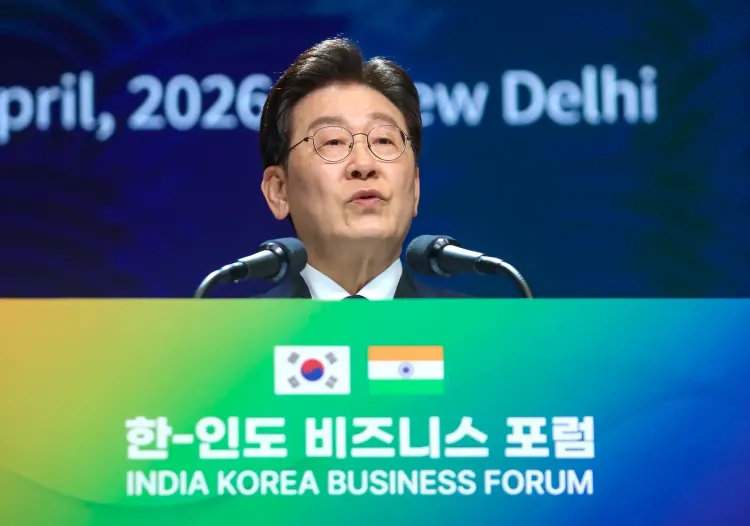
South Korean President Lee Jae Myung used the Korea Investment Summit in New York to make a sweeping bet: double chip output in five years, lock in AI supply chains against global shocks, and open South Korean markets to round-the-clock foreign investment. With Trump talks on military shipbuilding also on the table, Seoul is positioning itself as Washington's most strategically aligned tech partner.
Key Takeaways
South Korean President Lee Jae Myung pledged to double the country's semiconductor production capacity within five years at the Korea Investment Summit in New York on 24 September 2026 .
Lee cited the government's 'three megaprojects' — launched earlier in 2026 — to build a chip production cluster and AI facilities as the foundation of this plan.
A new 'Future Fund' will redirect AI chip boom gains into industrial infrastructure and talent development for emerging sectors.
Market reforms include legal revisions to enhance shareholder value and expansion of the foreign exchange market to round-the-clock operations.
Lee also flagged discussions with US President Donald Trump on shipbuilding cooperation, including construction of US military vessels .
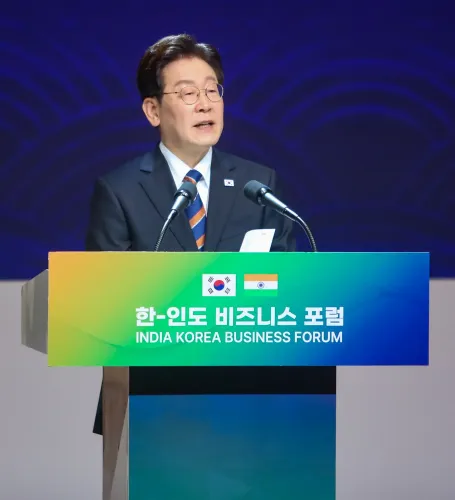
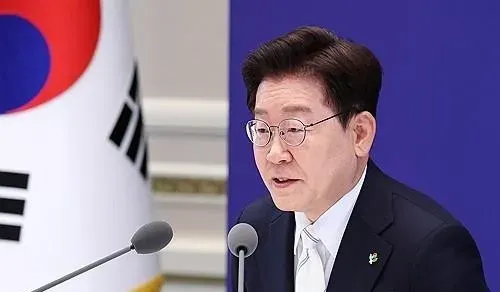
South Korean President Lee Jae Myung on 24 September 2026 unveiled an ambitious roadmap to double his country's semiconductor production capacity within five years and build artificial intelligence (AI) supply chains resilient to external disruptions, while making a direct pitch for fresh US capital at a high-profile investor summit in New York.
Key Announcements at the Korea Investment Summit
Lee made the pledges at the Korea Investment Summit in New York, attended by senior financial and corporate leaders from both South Korea and the United States. The event was designed to promote American investment into South Korea and marked one of the most direct outreach efforts by a sitting South Korean president to the US business community in recent years.
The president pointed to the country's 'three megaprojects' — launched earlier in 2026 — to construct a chip production cluster and related AI infrastructure. He said the government would expand this hub to achieve the doubling of semiconductor output. 'Additionally, (we) will build critical AI supply chains that are not shaken by any shocks,' Lee said.
The 'Future Fund' and Market Reform Push
Lee also highlighted plans to channel gains from the ongoing AI chip boom into a new 'Future Fund', designed to develop industrial infrastructure and cultivate technical talent for emerging sectors. He framed the fund as a mechanism to provide stable, long-term support for industries that will define South Korea's next growth phase.
On the regulatory front, the president pledged sweeping market reforms to attract global capital — including legal revisions to enhance shareholder value and an expansion of the foreign exchange market to round-the-clock operations. 'We will double down on efforts to create market conditions in which global capital can invest freely and at any time,' he said.
Trump Talks and Shipbuilding Cooperation
Recalling summit talks with US President Donald Trump held the previous day, Lee said the two leaders had discussed cooperation in shipbuilding — particularly the construction of US military vessels. 'I expect that more tangible results may be generated in the future,' he told the investor relations event, signalling that defence-industrial ties could emerge as a significant pillar of the bilateral relationship.
Why This Matters
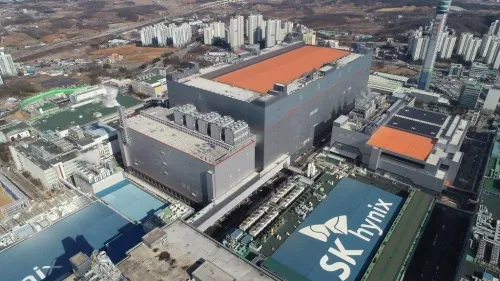
South Korea is home to global chip giants Samsung and SK Hynix, and the country's semiconductor sector is a linchpin of global electronics supply chains. Lee's push comes amid intensifying US-China tech rivalry, which has prompted Washington and its allies to accelerate efforts to nearshore and friendshore critical chip manufacturing. This is the first major foreign investment pitch by Lee since taking office, and signals that Seoul intends to position itself as an indispensable node in the US-aligned chip ecosystem. How quickly these pledges translate into binding investment commitments will be the key test in the months ahead.
Point of View
But the real signal is the explicit courtship of US capital and the framing of AI supply chains as geopolitically shock-proof. The mention of Trump-era military shipbuilding deals suggests Seoul is offering defence-industrial concessions to secure technology and investment goodwill in return. Whether Samsung and SK Hynix's own capital cycles align with the government's five-year timeline — and whether US investors bite — will determine if this summit moment becomes a structural shift or a well-crafted press release.
NationPress
24 Sept 2026
Frequently Asked Questions
What did South Korean President Lee Jae Myung announce at the Korea Investment Summit?
Lee pledged to double South Korea's semiconductor production capacity within five years by expanding an existing chip production hub, and to build AI supply chains resilient to external disruptions. He also announced a new 'Future Fund' to support industrial infrastructure and talent for future industries.
What are South Korea's 'three megaprojects' mentioned by President Lee?
The 'three megaprojects' were launched earlier in 2026 and aim to build a chip production cluster and related AI facilities in South Korea. President Lee cited them as the cornerstone of the country's plan to double semiconductor output and secure critical AI supply chains.
What market reforms did Lee Jae Myung promise to attract foreign investment?
Lee pledged legal revisions to enhance shareholder value and an expansion of South Korea's foreign exchange market to operate around the clock, with the stated goal of allowing global capital to invest freely at any time.
What did Lee and US President Trump discuss ahead of the investment summit?
Lee said he and Trump discussed cooperation in shipbuilding, specifically the construction of US military vessels, during summit talks held the day before the Korea Investment Summit. Lee expressed optimism that more tangible outcomes would follow.
Why is South Korea's semiconductor push significant globally?
South Korea is home to chip giants Samsung and SK Hynix, making it a critical node in global electronics supply chains. The push comes amid intensifying US-China tech rivalry, with allied nations racing to build friendshored semiconductor capacity to reduce dependence on vulnerable supply routes.