Lee Jae Myung vows 'absolute competitiveness' in tech in South Korea's Year 2
Synopsis
A year into office, South Korea's President Lee Jae Myung is betting big — a sweeping advanced-technology investment drive, a push to reclaim wartime military command from Washington, and a politically charged debate over taxing semiconductor windfalls. His second-year agenda is less about consolidation and more about a structural reset of how South Korea grows and who benefits.
Key Takeaways
President Lee Jae Myung outlined his second-year agenda at a press conference in Seoul on 8 June , marking one year since his 4 June inauguration.
He pledged 'absolute competitiveness' in advanced technologies and announced a forthcoming large-scale investment project to drive a 'transformative change' in growth strategy.
Beyond semiconductors , the government will seek new industrial growth engines for future generations.
Lee vowed crackdowns on stock price manipulation and real estate crimes , and committed to dismantling vested interests through structural reform.
On defence, he said the government will pursue nuclear-powered submarines and the return of wartime operational control from Washington.
Real estate tax reforms and a new housing supply plan are expected as early as next month .
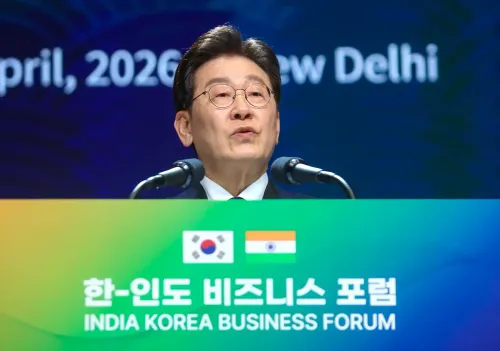
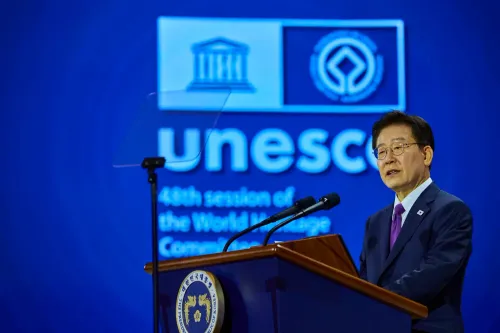
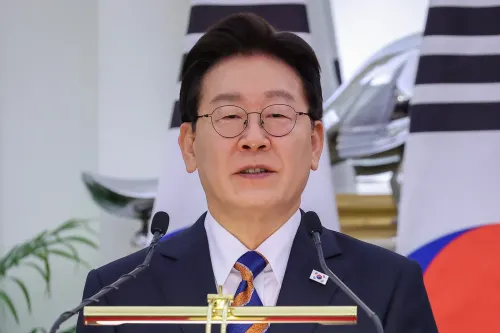
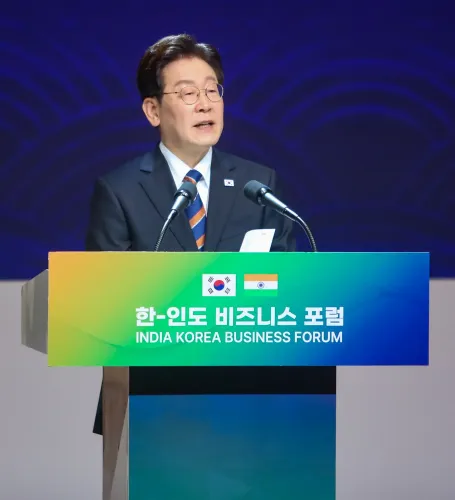
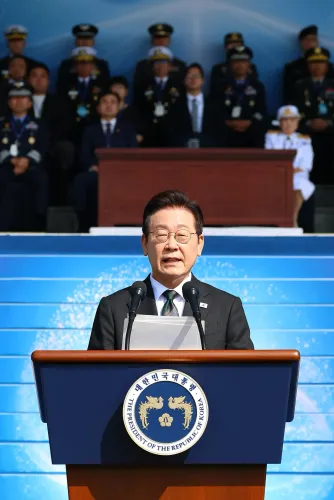
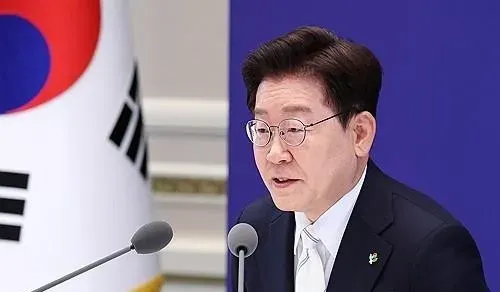
South Korean President Lee Jae Myung on Monday, 8 June pledged that his government would secure 'absolute competitiveness' in advanced technologies, positioning South Korea as a next-generation industrial powerhouse. The remarks came at a press conference in Seoul marking the first anniversary of his inauguration on 4 June last year, where he laid out his policy vision and priorities for his second year in office.
The Technology Push
Lee announced that the government would soon unveil a large-scale investment project aimed at mobilising all government and private-sector resources toward advanced technology leadership. 'By mobilizing all government and private-sector resources, (the government) will secure absolute competitiveness in the advanced technology sector,' he said, adding that the planned project would bring about a 'transformative change' in the country's growth strategy.
Beyond semiconductors — currently South Korea's dominant export engine — the president said his administration would actively identify new sectors capable of serving as growth engines for future generations. This signals a deliberate effort to diversify the country's industrial base rather than rely solely on chip exports.
Inclusive Growth and Structural Reform
Lee stressed that the benefits of economic growth should not be concentrated among large conglomerates, specific regions, or dominant sectors. 'The results and opportunities generated through the resources of the entire community should be broadly spread to small and medium-sized firms, startups, regions across the country and all sectors, leading to changes that can be felt by all people,' he said.
The president also pledged a firm crackdown on financial irregularities, including stock price manipulation and real estate-related crimes, while committing to structural reforms aimed at dismantling entrenched vested interests.
National Security and Korean Peninsula Policy
On defence, Lee said his government would pursue 'concrete results' in efforts to acquire nuclear-powered submarines and regain wartime operational control of South Korean troops from Washington — a long-standing strategic objective for Seoul. He reaffirmed the government's commitment to peace and security on the Korean Peninsula, alongside a policy of peaceful coexistence and shared prosperity with North Korea.
Semiconductor Windfall and Tax Debate
Asked about record profits at semiconductor giants such as Samsung Electronics Co., Lee drew a careful distinction between increased tax revenues stemming from higher corporate earnings and any proposal to levy additional taxes on those profits. He warned that foreign and domestic firms alike could halt investment or relocate if the government imposed extra taxes on their gains, urging a 'cautious approach.'
Lee suggested that windfall tax revenues from the semiconductor boom could be best deployed by investing for future generations, describing both blanket cash handouts and debt repayment as potentially 'dumb' moves. He acknowledged it is 'a difficult issue' that may soon require international discussions. Notably, this comes after a labour union at Samsung Electronics recently secured a substantial wage and bonus agreement for chip employees following months of threatened strike action amid booming AI-driven semiconductor earnings.
Housing and Real Estate Reforms
To address surging home prices, Lee indicated that real estate tax reforms could be introduced as early as next month, alongside a new housing supply plan in the near future. The announcements signal that domestic affordability pressures remain a central political concern heading into the second year of his presidency.
Point of View
Meanwhile, is a perennial ambition that has stalled under multiple administrations; without a concrete US timeline, it risks remaining a rhetorical fixture rather than a policy deliverable. The second year will be defined less by the vision Lee articulated and more by whether the investment project's details hold up to scrutiny.
NationPress
26 Oct 2026
Frequently Asked Questions
What is South Korea President Lee Jae Myung's key priority for his second year in office?
President Lee Jae Myung has identified securing 'absolute competitiveness' in advanced technologies as the central priority for his second year, backed by a forthcoming large-scale government and private-sector investment project. He also flagged new growth sectors beyond semiconductors, structural economic reforms, and national security goals.
What is the debate around taxing South Korea's semiconductor profits?
Lee distinguished between naturally higher tax revenues from booming semiconductor earnings and any proposal to impose additional taxes on corporate profits. He cautioned that extra levies could deter both foreign and domestic investment, calling for a cautious approach while acknowledging the issue may require international discussion.
What are South Korea's national security goals under Lee Jae Myung?
Lee pledged to pursue concrete results on two long-standing defence objectives: acquiring nuclear-powered submarines and regaining wartime operational control of South Korean troops from the United States. He also reaffirmed a policy of peaceful coexistence and shared prosperity with North Korea.
What housing and real estate measures did Lee announce?
Lee said the government may introduce real estate tax reforms as early as next month and a new housing supply plan in the near future, as part of efforts to curb runaway home prices — a persistent domestic pressure point.
How does Lee plan to ensure growth benefits are shared widely?
Lee said the gains from national resources and growth must be spread broadly to small and medium-sized firms, startups, and regions across South Korea, rather than being concentrated among large conglomerates or dominant sectors. He also pledged crackdowns on stock price manipulation and real estate-related crimes.