Bangladesh gas supply hits decade low in August, factories near standstill
Synopsis
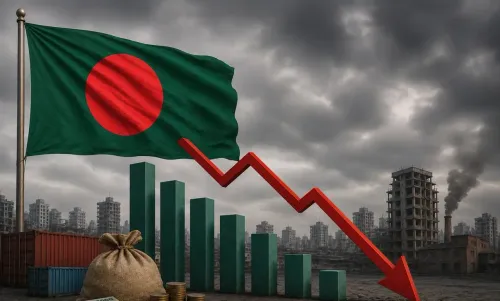
Bangladesh's gas supply hit a ten-year low in August 2026 at just 2,235 mmcfd, triggering a 3,000 MW power deficit at peak and forcing garment factories — the backbone of the country's export economy — to run at as low as zero to 20% capacity on some days. With Qatar withholding contracted LNG volumes and the spot market too costly to bridge the gap, the crisis is exposing a structural fault line in Bangladesh's energy security at the worst possible time.
Key Takeaways
Bangladesh's average daily gas supply in August 2026 dropped to 2,235 mmcfd — the lowest for the month in a decade.
The peak hourly power generation deficit reached approximately 3,000 MW , with gas-based generation at only 5,000 MW against installed capacity of 12,000 MW .
On one Sunday, the Bangladesh Power Development Board generated 12,688 MW against demand of 16,278 MW .
BGMEA vice-president Md Shehab Udduza Chowdhury said factory output has fallen by up to 50 per cent , potentially doubling production costs.
Qatar , a major long-term LNG supplier, is reportedly not delivering contracted volumes, pushing Dhaka onto the costly spot market.
Industry leaders warn that without government action, many factories face permanent closure.
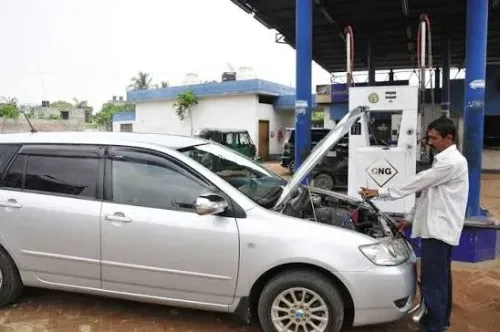
Bangladesh's gas supply crisis deepened sharply in August 2026, with average daily supply falling to 2,235 million cubic feet per day (mmcfd) — the lowest recorded for the month in a decade and the weakest since the early stages of the Covid-19 pandemic. The shortfall, according to an analysis of gas-supply data from 2017 to 2026 cited by The Daily Star, has pushed the country's industrial sector to the brink of a near standstill.
What Is Driving the Shortage
Reports indicate that the US-Israel war has disrupted Bangladesh's liquefied natural gas (LNG) supply chains. Qatar, one of the country's major long-term LNG suppliers, is reportedly not delivering contracted volumes, forcing Dhaka to rely increasingly on the spot market. Spot-market procurement, however, has become both difficult and costly, compounding the strain on an already stretched gas supply network.
Power Sector Under Severe Stress
The gas shortfall has spilled rapidly into the power sector. At the peak of the crisis this month, the country's average hourly power generation deficit reached approximately 3,000 megawatts, with dozens of gas-fired generating units struggling due to fuel shortages. On one Sunday afternoon, the Bangladesh Power Development Board generated only 12,688 MW against a demand of 16,278 MW — a gap of nearly 3,590 MW. Gas-based power production reportedly stood at around 5,000 MW against an installed capacity of at least 12,000 MW.
Factories Curtailing Output, Jobs at Risk
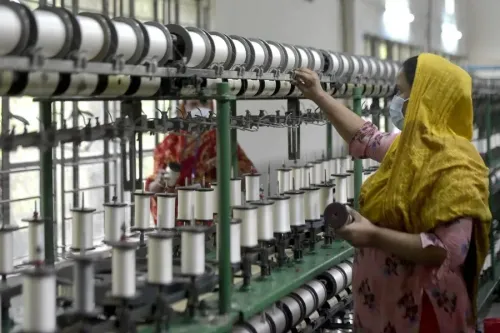
With gas pressure inadequate and power outages frequent, factories across Bangladesh's major industrial belts are being forced to curtail production or operate at drastically reduced capacity. Fazlee Shamim Ehsan, executive president of the Bangladesh Knitwear Manufacturers and Exporters Association and managing director of Fatullah Apparels, described the severity: 'It is difficult to describe the situation simply in terms of factory closures because production is fluctuating sharply from day to day — on some days, production falls to zero, while on other days it may reach only around 20 per cent.'
Ehsan warned that without government intervention, many factories could move towards permanent closure. Md Shehab Udduza Chowdhury, vice-president of the Bangladesh Garment Manufacturers and Exporters Association (BGMEA), said production at gas-hit factories has dropped by up to 50 per cent. For BGMEA members, such output losses can double production costs, potentially pushing units into financial losses.
Broader Economic Implications
Bangladesh's garment sector — the country's primary export earner and a critical link in global apparel supply chains — faces acute disruption. This comes amid an already fragile macroeconomic environment, with the energy crisis adding pressure to foreign exchange reserves and export commitments. Notably, the August gas supply figure is the worst for that month in ten years, signalling that the crisis is not a short-term aberration but a structural vulnerability. The government has yet to announce a concrete emergency procurement or demand-management plan.
Point of View
Which accounts for the bulk of Bangladesh's export earnings, is absorbing the shock directly. A sustained 50% production cut is not a rounding error — it is an export revenue crisis in the making. The government's silence on emergency procurement or demand-side management is conspicuous, and the longer that vacuum persists, the more credible factory closure threats become.
NationPress
15 Oct 2026
Frequently Asked Questions
How low has Bangladesh's gas supply fallen in August 2026?
Bangladesh's average daily gas supply in August 2026 dropped to 2,235 mmcfd, the lowest recorded for that month in a decade and the weakest since the early Covid-19 pandemic period, according to an analysis of data from 2017 to 2026 cited by The Daily Star.
Why is Bangladesh facing a gas and power shortage?
Reports indicate that the US-Israel war has disrupted Bangladesh's LNG supply chains, with Qatar — a major long-term supplier — reportedly not delivering contracted volumes. This has forced Dhaka onto the spot market, where procurement is both difficult and significantly more expensive.
How is the gas crisis affecting Bangladesh's garment factories?
Factories across major industrial belts are curtailing production or operating at drastically reduced capacity. BGMEA vice-president Md Shehab Udduza Chowdhury said output has fallen by up to 50%, which can double production costs and push units into losses. On some days, production at certain factories reportedly falls to zero.
What is the power generation deficit in Bangladesh right now?
At the peak of the crisis in August 2026, the average hourly power generation deficit reached around 3,000 MW. On one Sunday, the Bangladesh Power Development Board generated only 12,688 MW against a demand of 16,278 MW — a shortfall of nearly 3,590 MW.
What could happen if the Bangladesh government does not act?
Industry leaders warn that prolonged inaction could push many factories towards permanent closure. Fazlee Shamim Ehsan of the Bangladesh Knitwear Manufacturers and Exporters Association said the gas crisis is affecting almost every factory to varying degrees, with the full scale of potential closures still uncertain.