Could Bangladesh Experience an Electricity Supply Shortfall Post-2031?
Synopsis
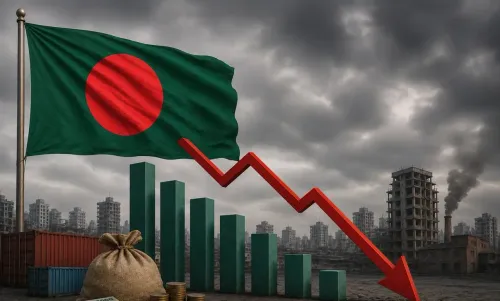
A recent analysis suggests that unless significant investments and reforms are made, Bangladesh may face an electricity shortfall after 2031. The study warns that electricity demand could soon outpace supply, leading to serious implications for the country's energy future.
Key Takeaways
Bangladesh may encounter significant electricity supply deficits post-2031.
Demand is forecasted to grow by 5-6% annually.
Installed capacity could peak at 35,000MW by 2029.
Dependence on imported energy makes the economy vulnerable.
Proactive investments and reforms are crucial for a sustainable energy future.
Dhaka, Jan 21 (NationPress) A recent analysis indicates that Bangladesh may encounter an electricity supply deficit following 2031 unless significant investments, policy changes, and efficiency measures are implemented, as reported by local media on Wednesday.
The study conducted by the South Asian Network on Economic Modelling (Sanem) projects that Bangladesh's current power generation capacity could peak at approximately 35,000 megawatts (MW) by 2029. However, effective capacity might drop to nearly 30,000MW by the mid-2030s due to factors such as plant retirements, diminished domestic gas availability, and restrictions on new project additions, as reported by Bangladesh's prominent daily The Daily Star.
The presentation made by Sanem's Director Israt Hossain and Honorary Deputy Director Tuhin Ahmed during an online workshop on Bangladesh's energy transition emphasized that installed capacity figures can often create a misleading sense of security.
The study forecasts that electricity demand will rise by 5-6 percent annually due to factors like industrialization, mechanization, and improving living standards. Under a five percent growth scenario, demand is projected to exceed supply by 2035, whereas a six percent scenario could see this crossover as early as 2033, potentially resulting in a supply shortfall of over 14,000MW by 2040 if appropriate measures are not undertaken.
The study highlighted, “The notion of overcapacity in the power sector is misleading.” It noted, “The primary challenge lies in securing reliable, fuel-efficient, and sustainably generated electricity for the long term.”
Moreover, the analysis found that private power producers now account for nearly 50 percent of the total installed generation capacity, operating over 70 facilities with a combined capacity exceeding 11,000MW.
As reported by The Daily Star, Selim Raihan, the executive director of Sanem, stated, “This heavy reliance on imported energy renders the economy highly susceptible to global price fluctuations.”
On September 25 last year, various parts of Dhaka experienced prolonged power outages following the partial failure of the national power transmission grid, according to a report from the United News of Bangladesh (UNB).
Data from Power Grid Bangladesh indicated a power deficit of 498MW at 4 PM on September 25, 2025, with power supply recorded at 14,379MW against a demand of 14,900MW, which is nearly half of Bangladesh's current installed power generation capacity of 28,197MW.
Point of View
I believe this study highlights the urgent need for proactive measures in Bangladesh's energy sector. The potential electricity shortfall poses significant challenges not only for economic stability but also for the quality of life of citizens. It is essential for policymakers to prioritize investments and reforms to ensure a sustainable energy future.
NationPress
25 Sept 2026
Frequently Asked Questions
What is the projected electricity demand growth in Bangladesh?
Electricity demand in Bangladesh is expected to increase by 5-6 percent annually due to industrialization and rising living standards.
What factors contribute to the potential electricity supply shortfall?
Factors include plant retirements, reduced domestic gas availability, and limited new project additions.
How much could the electricity supply shortfall exceed by 2040?
If no measures are taken, the supply shortfall could exceed 14,000MW by 2040.
What percentage of installed capacity do private power producers represent?
Private power producers account for nearly 50 percent of the total installed generation capacity in Bangladesh.
What recent event highlighted the challenges in Bangladesh's power supply?
On September 25, 2025, parts of Dhaka experienced extensive power cuts due to a partial collapse of the national power transmission grid.