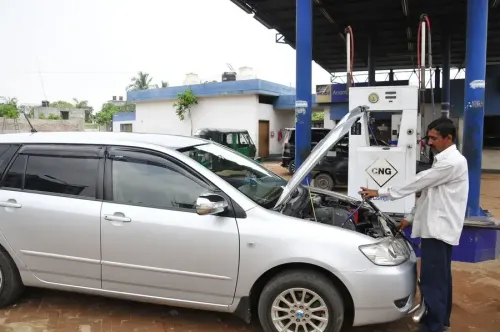
Bangladesh gas crisis shuts factories, hits garment exports across industrial belts
Synopsis
Bangladesh's gas crisis has crossed from inconvenience to industrial emergency: over 100 textile factories in Narsingdi — which supplies 70% of the country's clothing — have halted production, while fuel costs have jumped fivefold. With the Excelerate Energy LNG terminal out of inventory and no resolution in sight, the country's export lifeline is under direct threat.
Key Takeaways
Bangladesh's gas crisis , ongoing since 21 July , intensified after the Excelerate Energy LNG terminal ran out of inventory.
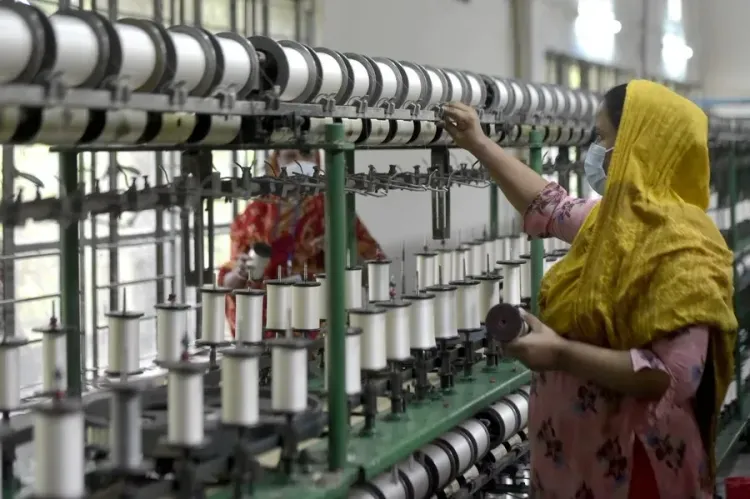
More than 100 textile factories in Narsingdi — which supplies nearly 70% of Bangladesh's clothing — halted production as gas pressure fell to near zero.
Garment factories in Gazipur , Narayanganj , and Savar are reporting production losses of 20–25% .
Switching from gas to fuel oil has pushed generator operating costs up nearly fivefold .
Of 293 factories in Bhaluka , 99 are gas-powered and almost all are currently facing shortages, per Industrial Police-5 .
Factory authorities warn of potential labour unrest and costly air freight if the crisis continues.
A deepening gas crisis in Bangladesh, which began on 21 July, is crippling industrial production across the country's key manufacturing belts, with factories cutting output, suspending operations, and sending workers on leave, according to a report in Dhaka's The Daily Star. The crisis has intensified sharply after Excelerate Energy's LNG terminal ran out of inventory on Wednesday, further squeezing supply to an already strained national gas grid.
What Triggered the Latest Deterioration
Most gas flowing into the national grid is being consumed by power plants, leaving industries that depend on gas for boilers, production processes, and captive power with near-zero supply. Factory owners report that gas pressure — normally at 15 PSI — fell to 2–4 PSI last week and has since dropped to almost zero in several industrial zones. The shutdown of the Excelerate Energy LNG terminal after it exhausted its inventory has made an already strained situation considerably worse.
Sectors and Regions Under Pressure
The crisis has struck textile, garment, steel, glass, and food-processing industries hardest. In Narsingdi, more than 100 textile factories halted production over the past two days as gas pressure collapsed. The district supplies nearly 70 per cent of Bangladesh's clothing, according to Nizam Uddin Bhuiyan, President of the Narsingdi Textile, Dyeing and Printing Association.
Garment factories in Gazipur, Narayanganj, and Savar are also severely affected, with many splitting workforces into shifts and reporting production losses of 20–25 per cent. In Mymensingh's Bhaluka industrial area, workers at 20 factories were partially sent on leave. Of the 293 factories in the zone, 99 are gas-powered and almost all are currently facing a shortage, according to Industrial Police-5 Superintendent Md Ansar Uddin. Titas Gas's Bhaluka regional office confirmed that pressure on the area's two gas lines has fallen from 140 PSI and 50 PSI to just 30–50 PSI. Factories in the Chattogram export processing zone, Karnaphuli EPZ, and industrial areas in Bayezid and Kalurghat are also operating far below capacity.
The Cost Spiral Factories Are Facing
Generators normally run on gas are being switched to fuel oil, pushing operating costs up nearly fivefold. Factories are simultaneously bearing wage bills despite reduced or zero production. Delayed output is threatening export shipment schedules and raising the prospect of costly air freight — a significant margin risk for Bangladesh's price-sensitive garment sector, which competes globally on cost.
Risk of Labour Unrest and Export Disruption
'It is not just garment factory owners who are suffering — the crisis is also affecting workers and our national economy,' said Morshed Sarwar Sohel, a Vice President of the Bangladesh Knitwear Manufacturers and Exporters Association. Factory authorities in Gazipur have warned that if the situation persists, there is a real risk of labour unrest, work stoppages, or street protests. This comes amid Bangladesh's broader economic fragility, with the country still navigating political transition and foreign-exchange pressures that have complicated energy import financing. The gas crisis, now in its second month, shows no clear resolution timeline.
Point of View
Which accounts for over 80% of the country's foreign exchange earnings, is absorbing a simultaneous cost shock and output shock, precisely when global buyers have alternatives in Vietnam and India. What is missing from official responses so far is any credible demand-side rationing plan that protects export-oriented industries over power plants — a policy choice, not just a supply failure. If shipment delays trigger penalty clauses with overseas buyers, the reputational damage could outlast the gas shortage itself.
NationPress
8 Oct 2026
Frequently Asked Questions
What is causing the gas crisis in Bangladesh?
The crisis, which began on 21 July, stems from acute shortages in the national gas grid, compounded by the shutdown of Excelerate Energy's LNG terminal after it ran out of inventory. Most available gas is being consumed by power plants, leaving industrial users — who depend on gas for boilers and captive power — with near-zero supply.
Which industries and regions are worst affected?
Textile, garment, steel, glass, and food-processing industries are the hardest hit. Narsingdi, which supplies roughly 70% of Bangladesh's clothing, has seen over 100 factories halt production. Gazipur, Narayanganj, Savar, Bhaluka, Chattogram, and the Karnaphuli EPZ are also severely affected.
How much has the gas shortage increased factory costs?
Factories switching from gas-fired generators to fuel oil are facing cost increases of nearly fivefold. They are simultaneously paying wages despite reduced or zero production and risk expensive air freight if export shipments are delayed.
Is there a risk of labour unrest?
Yes. Factory authorities in Gazipur have warned that if the gas crisis continues, it could trigger labour unrest, work stoppages, or protests. Workers are already being split into shifts, reducing individual earnings, while the Bangladesh Knitwear Manufacturers and Exporters Association has flagged the broader economic impact on workers.
How does this affect Bangladesh's garment exports?
Delayed production is threatening shipment schedules to overseas buyers, raising the risk of costly air freight and potential penalty clauses. With production losses of 20–25% reported across major garment hubs, Bangladesh's position as a low-cost export hub faces near-term pressure.