Bangladesh CNG shortage cripples Dhaka transport, fares double after Cox's Bazar FSRU fire
Synopsis
A single fire at a Cox's Bazar gas import terminal on 21 July has exposed just how fragile Bangladesh's energy infrastructure is. With daily supply now below 2,150 mmcfd against demand of nearly 3,800 mmcfd, Dhaka's streets are emptying of CNG vehicles, fares are tripling, and low-income families are cooking on firewood — a cascade of consequences from one damaged boiler.
Key Takeaways
A fire at an FSRU in Cox's Bazar on 21 July damaged a boiler and halved the facility's gas import capacity.
Bangladesh's daily gas supply has fallen to below 2,150 mmcfd , against national demand of nearly 3,800 mmcfd .
More than half of CNG-powered transport vehicles in Dhaka have been taken off the road due to the shortage.
Contract fares for auto-rickshaws have doubled or tripled ; metered fares are being refused.
Residential areas including Mirpur, Badda, Kalabagan , and Rampura are reporting near-zero gas pressure for days.
Low-income households have resorted to firewood and clay stoves ; others are absorbing higher costs from LPG cylinders and electric cookers.
A severe compressed natural gas (CNG) shortage has paralysed public transport across Dhaka and other parts of Bangladesh, leaving commuters stranded and driving up fares sharply, local media reported on Monday, 3 August. The crisis traces back to a fire at a floating storage and regasification unit (FSRU) in Cox's Bazar on 21 July, which knocked out a critical gas import facility and sent supply plummeting well below national demand.
Transport Paralysed Across Dhaka
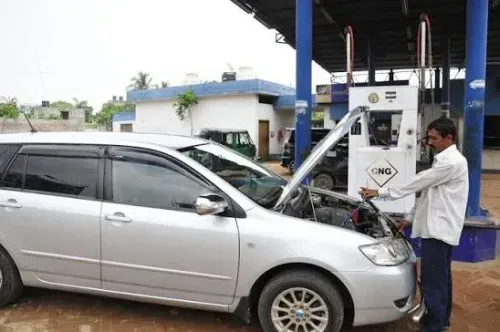
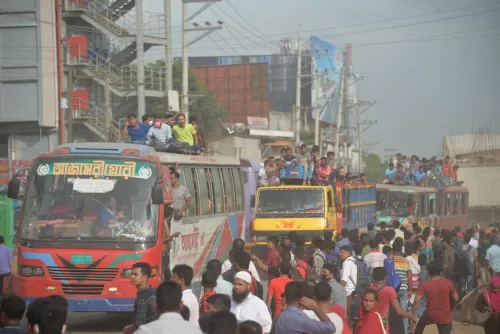
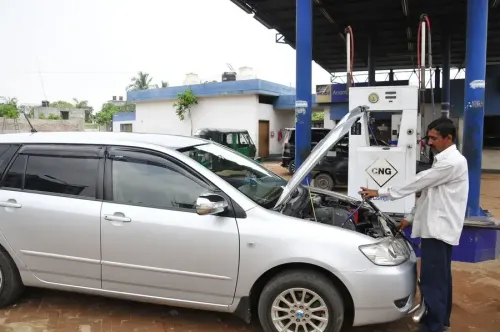
CNG-powered auto-rickshaws and public transport vehicles have largely gone off the roads after failing to receive adequate fuel even after drivers queued through the night. Many vehicle operators reportedly waited in lines from late at night until the following morning — or even afternoon — before giving up, according to The Dhaka Tribune.
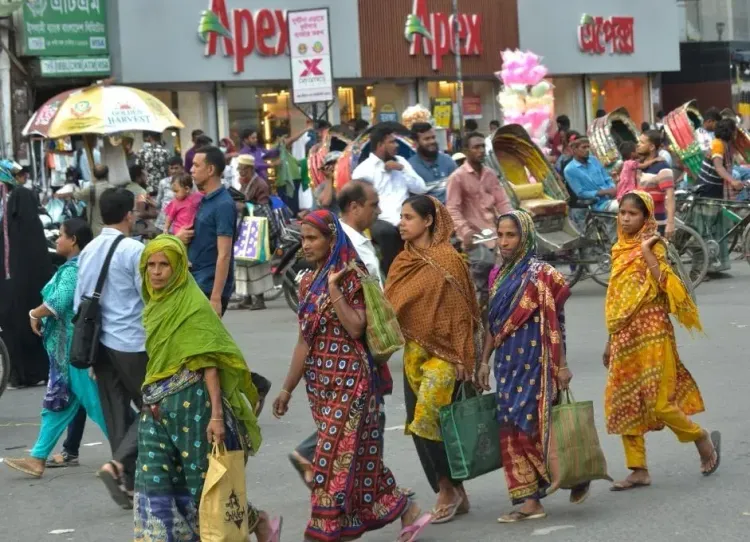
Students, office-goers, and patients have been among the worst affected, struggling to reach their destinations on time. 'On other days, I can easily get a CNG by standing on Banasree E-Block Avenue Road. But today, even after waiting for more than 1 hour, I did not find a single empty vehicle,' a commuter was quoted as saying by The Dhaka Tribune.
Fares Double and Triple as Supply Dries Up
With fewer vehicles on the road, drivers who did operate were reportedly charging well above metered rates. Commuters said auto-rickshaws refused to run on meter, with contract fares doubling and, in some cases, tripling. Transport owners acknowledged that more than half of their fleet was idled due to the gas shortage, compounding financial losses for both owners and drivers.
The Cox's Bazar FSRU Fire: Root Cause
The immediate trigger for the supply collapse was a fire at an FSRU facility in Cox's Bazar on 21 July, which damaged one of its two boilers and forced the unit to suspend operations entirely. According to reports citing United News of Bangladesh (UNB), the incident reduced Bangladesh's daily gas supply to below 2,150 million cubic feet per day (mmcfd) — a steep drop from the roughly 2,700 mmcfd averaged over the past year. Against a national daily demand of nearly 3,800 mmcfd, the gap is acute.
This comes amid Bangladesh's already chronic gas deficit, where domestic production has long fallen short of industrial and household needs, making import-dependent FSRU terminals critical chokepoints in the supply chain.
Household Kitchens Go Dark
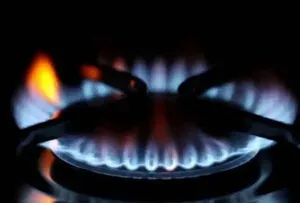
The shortfall has extended well beyond transport. Gas pressure has dropped to near zero or flickered feebly in residential areas across Mirpur, Badda, Kalabagan, Kafrul, Mohammadpur, Kazipara, West Tejturi Bazar, and Rampura, residents said. Stoves have remained unlit for days in many households.
Low-income families have reportedly resorted to building temporary clay stoves and cooking with firewood. Those with greater means have turned to expensive electric cookers or LPG cylinders, pushing up household expenditures at a time when Bangladesh is already navigating broader economic pressures.
What Comes Next
The pace of recovery depends on how quickly the damaged FSRU in Cox's Bazar can restore operations. Until the facility's boiler is repaired and supply is normalised, commuters and households in Dhaka and beyond are likely to continue facing disruption. No official timeline for restoration had been announced as of the time of reporting.
Point of View
With FSRU terminals serving as the critical bridge. A single boiler fire in Cox's Bazar has now exposed that fragility in full. What is missing from most coverage is the compounding effect: this crisis is landing on households already squeezed by currency pressures and import costs. The tripling of auto-rickshaw fares is not just an inconvenience — for daily-wage workers in Dhaka, it is a direct income cut. Until Bangladesh diversifies its energy import infrastructure and builds supply redundancy, any single-point failure will keep producing exactly this kind of cascading disruption.
NationPress
17 Sept 2026
Frequently Asked Questions
What caused the CNG shortage in Bangladesh?
The shortage was triggered by a fire at a floating storage and regasification unit (FSRU) in Cox's Bazar on 21 July, which damaged one of its two boilers and forced the facility to stop operations. This cut Bangladesh's daily gas supply to below 2,150 mmcfd, far short of the national demand of nearly 3,800 mmcfd.
How has the gas shortage affected Dhaka's transport?
More than half of CNG-powered auto-rickshaws and public transport vehicles in Dhaka have stopped operating because drivers cannot obtain adequate fuel even after waiting overnight in queues. Students, office-goers, and patients have struggled to reach their destinations on time.
Why are CNG auto-rickshaw fares higher than usual?
With fewer vehicles on the road, drivers operating during the shortage have reportedly refused to use meters, with contract fares doubling or tripling in many cases. The scarcity of available transport has given operators leverage to charge above normal rates.
Which areas of Dhaka are worst affected by the gas crisis?
Residential areas including Mirpur, Badda, Kalabagan, Kafrul, Mohammadpur, Kazipara, West Tejturi Bazar, and Rampura have reported near-zero gas pressure for several days, leaving household stoves unlit.
How are low-income families coping with the gas shortage?
Low-income families have reportedly resorted to building temporary clay stoves and cooking with firewood. Those who can afford alternatives have switched to LPG cylinders or electric cookers, both of which are significantly more expensive and are adding to household costs.