PM Modi's childhood friend recalls barefoot school days, RSS fee struggle on 76th birthday
Synopsis
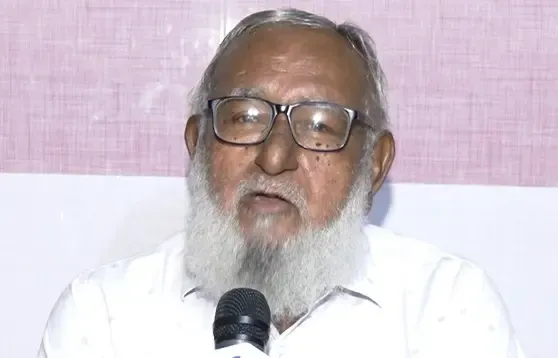
Before the Red Fort addresses and global summits, there was a barefoot boy in Vadnagar who couldn't afford Rs 1 to join the RSS. On PM Modi's 76th birthday, his childhood neighbour and schoolmate Daulat Khan Pathan — a Muslim from the adjacent Pathan community — offers the most intimate portrait available of a leader's formative years, including three years that even his mother wept over.
Key Takeaways
PM Narendra Modi turned 76 on 17 September 2026 .
Childhood friend Daulat Khan Pathan of Vadnagar, Gujarat recalled schooling together at Prerna School and B.N.
High School , sharing two sets of clothes and going barefoot until age 12–13 .
In 1961 , both boys wanted to join the RSS but lacked the Rs 1 fee — Modi visited Pathan's mother and Pathan approached Heeraben Modi to raise the funds.
Modi left Vadnagar in Diwali 1968 for roughly three unaccounted years , returning in May 1971 'a changed man' committed to public service.
Early political work included aiding jailed opposition leaders during the 1975 Emergency , flood relief in the 1977 Morbi floods , and putting up BJP posters at the grassroots level.
Prime Minister Narendra Modi turned 76 on 17 September 2026, and among the warmest tributes came not from a political stage but from a boyhood companion — Daulat Khan Pathan of Vadnagar, Gujarat — who shared vivid, unscripted memories of a childhood marked by poverty, communal harmony, and a shared hunger to do something larger than themselves.
Two Neighbourhoods, One Big Family
Pathan's family lived in the Pathan neighbourhood of Vadnagar, directly adjacent to the Modi community's quarter. The two boys crossed paths daily — at the local market, the STD booth, the railway station, always brushing past each other's homes.
'His hometown is in Vadnagar where the Modi community's neighborhood and our Pathan neighborhood were right next to each other,' Pathan said. 'Whether we had to go to the market, the STD booth, or the railway station, we always crossed paths, often passing in front of Modi saab's house.'
Together, they attended Prerna School through Class 7 and then enrolled at B.N. High School in Vadnagar for secondary education. 'As students, we did everything together — studying, attending tuition classes, and preparing for exams,' Pathan recalled.
The Weight of Poverty
Both families lived under severe financial strain. Pathan's recollections paint a picture far removed from the trappings of high office. 'We used to have only two pairs of clothes and used to wear those on alternate days while going to school. In fact, till 12–13 years of age we went to school barefoot. We didn't even have Re. 1 to buy rubber slippers,' he said.
The young Modi, Pathan recalled, was already an enthusiastic participant in school debates and plays — an early hint of the public communicator he would become decades later. 'We played and lived together. It wouldn't be wrong to say he grew up right alongside us in our neighborhood,' he said. 'Back then, the Modi community, the Pathan community, and others all lived like one big family; there were no issues or conflicts — we lived in harmony and always helped one another.'
The Rs 1 That Almost Changed Everything
A particularly telling episode dates to 1961, when both boys wanted to register with the Rashtriya Swayamsevak Sangh (RSS) under Dr. Vasant Parikh, but the Rs 1 registration fee was beyond their means. 'We only got one paisa from our homes at that time, not more than that, which we used to eat peanuts. So, where would we get Rs 1?' Pathan said.
In a moment that reveals something of the young Modi's determination, he personally visited Pathan's home to persuade his mother to provide the money, while Pathan approached Heeraben Modi — the Prime Minister's mother — and secured the rupee for both of them. Both boys registered. Three days later, Pathan's fee was returned owing to his religious background.
When Pathan was asked to step aside, Modi reportedly insisted he would not stay without his friend — until Pathan urged him to remain so he could receive the pair of shorts provided by the organisation. Decades later, at a 2009 meeting in the Gujarat Chief Minister's office, Modi is said to have fondly brought up those childhood shorts and jokingly offered Pathan 'half of Gujarat' upon retirement. Family obligations ultimately kept Pathan from joining active BJP politics.
The Three Missing Years and a Changed Man
A formative and still somewhat opaque chapter followed. According to Pathan, Modi left Vadnagar in the Diwali vacation of 1968 during his college years under family compulsion. What followed were roughly three years about which little is publicly documented. 'We don't know what he did or where he was for the next three years. His mother used to get emotional for him while speaking to me,' Pathan said.
Modi returned to Vadnagar in May 1971 for two days — visibly changed. 'He was a changed man by then and only spoke about serving the people of India,' Pathan recalled. Modi then left for the RSS office at Khadia in Ahmedabad, where he began working alongside Bharatiya Jana Sangh and RSS workers.
From Grassroots to Government
The years that followed were a steady accumulation of ground-level political work. Pathan recounted that Modi served opposition leaders imprisoned during the 1975 Emergency, authored his first book 'Sangharsh Ma Gujarat', and led RSS volunteers during the 1977 Morbi floods — personally handing over every piece of recovered gold jewellery to the police. After the formation of the Bharatiya Janata Party (BJP), he worked on the Ram Janmabhoomi movement, distributing RSS newspapers to travellers heading to cities including Delhi, Mumbai, and Kolkata.
'PM Modi never shied away from taking up even the smallest party work including putting up BJP posters,' Pathan said — a detail that, given Modi's current stature, carries a quiet resonance. As India marks its Prime Minister's 76th birthday, such firsthand accounts from those who knew him before the cameras found him offer a rare, unmediated portrait of the man behind the office.
Point of View
Harmonious upbringing with Modi — in the same breath as an RSS registration — complicates the sharper narratives often attached to both. The 'three missing years' (1968–1971) remain the biographical black box that every Modi biographer has circled without resolution; Pathan's account confirms their emotional weight for the family without illuminating them. That a sitting Prime Minister's origin story still features unverified gaps is itself a newsworthy accountability question, even on his birthday.
NationPress
17 Sept 2026
Frequently Asked Questions
Who is Daulat Khan Pathan and what is his connection to PM Modi?
Daulat Khan Pathan is a childhood friend and former neighbour of Prime Minister Narendra Modi from Vadnagar in Gujarat. Their families lived in adjacent neighbourhoods, and the two attended the same schools — Prerna School through Class 7 and B.N. High School for secondary education.
What did PM Modi's childhood in Vadnagar look like according to Pathan?
Pathan describes extreme financial hardship: both boys owned only two sets of clothes worn on alternate days, attended school barefoot until age 12–13, and could not afford even Re. 1 for basic needs. Despite this, Modi was active in school debates and plays.
What happened with the Rs 1 RSS registration fee in 1961?
In 1961, both Modi and Pathan wanted to register with the RSS under Dr. Vasant Parikh but lacked the Rs 1 fee. Modi visited Pathan's mother to secure the money while Pathan approached Heeraben Modi, enabling both to register. Pathan's fee was returned three days later due to his religious background.
What are the 'three missing years' in PM Modi's early life?
According to Pathan, Modi left Vadnagar during the Diwali vacation of 1968 under family compulsion and remained away for approximately three years. His whereabouts during this period are not fully documented publicly. He returned to Vadnagar in May 1971 and, according to Pathan, spoke only of serving the people of India.
What did PM Modi do after returning to Vadnagar in 1971?
After two days in Vadnagar, Modi moved to the RSS office at Khadia in Ahmedabad and began working with Bharatiya Jana Sangh and RSS workers. He later aided imprisoned opposition leaders during the 1975 Emergency, led flood relief during the 1977 Morbi floods, authored his first book 'Sangharsh Ma Gujarat', and took up grassroots BJP work including putting up party posters.