Supreme Court orders IOCL to pay ₹12 lakh to woman denied job on gender grounds
Synopsis
In a ruling that spans more than three decades of litigation, the Supreme Court has ordered IOCL to pay ₹12 lakh to a woman denied a job for being a woman — and called it an 'affront to womanhood' by a Government of India undertaking. The bench's pointed remark that women lift LPG cylinders at home every day demolishes the company's own defence.
Key Takeaways
The Supreme Court on 17 September 2026 directed IOCL to pay ₹12 lakh compensation to a woman denied employment on gender grounds.
The bench of Justices Aravind Kumar and Vipul M.
Pancholi called the discrimination an 'affront to womanhood' by a Government of India undertaking.
The woman was rejected for a casual khalasi/peon post at IOCL's LPG bottling plant in Gudha while 43 of 49 recommended candidates were selected.
The court awarded lump-sum compensation instead of reinstatement because the woman had already attained the age of superannuation .
The case had progressed through the trial court, first appellate court, and the Punjab and Haryana High Court over more than three decades before reaching the Supreme Court.
The Punjab and Haryana High Court had on 14 October 2025 upheld the dismissal of her suit, a decision now overturned by the apex court.
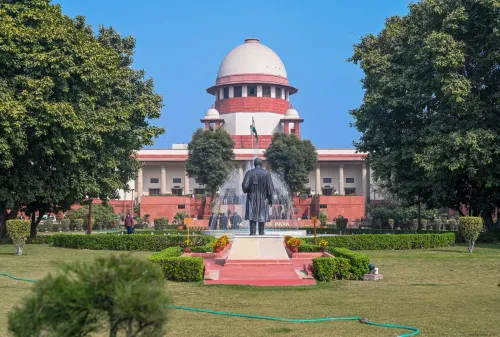
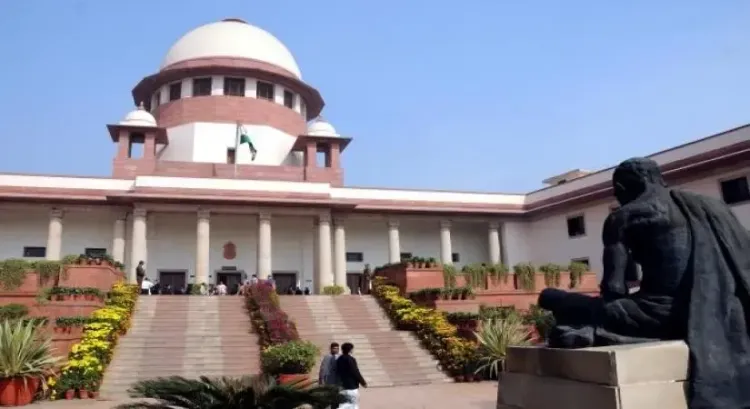
The Supreme Court on Thursday, 17 September 2026, directed Indian Oil Corporation Limited (IOCL) to pay ₹12 lakh in compensation to a woman who was denied employment at the public sector oil company solely on account of her gender, calling the discrimination an 'affront to womanhood.' The order was passed by a bench of Justices Aravind Kumar and Vipul M. Pancholi.
What the Court Found
The bench sharply questioned IOCL's position that the woman was unsuitable for the post — a casual khalasi/peon role at the company's LPG bottling plant in Gudha — because it involved manual labour, lifting LPG cylinders, and night shifts. The court dismissed that reasoning, noting that women routinely handle LPG cylinders in their own homes.
'You denied her appointment just because she is a lady? This is disrespect to womanhood,' the Justice Aravind Kumar-led bench observed during the hearing. The court further remarked: 'We are from India, and every day we say we respect women and that she is a goddess. It is an affront to womanhood, we can say, and that too by a Government of India undertaking.'
Why Appointment Was Not Ordered
The apex court noted that the woman had already attained the age of superannuation — meaning reinstatement was no longer a practical remedy. Accordingly, the bench deemed it appropriate to award lump-sum compensation in place of directing her appointment. 'She has now attained superannuation, but she has been prosecuting her right throughout. We will award her lump-sum compensation,' the court said.
A Decades-Long Legal Battle
The dispute stretches back decades. A committee headed by the Deputy Commissioner had recommended 49 candidates, including the woman, for employment. After appearing for an interview, she was rejected while 43 other candidates were selected — allegedly because she was a woman.
The trial court had initially ruled in her favour and directed IOCL to absorb her as a casual employee or in an administrative or peon post. However, the first appellate court reversed that decision on 6 August 1993, dismissing her suit. The Punjab and Haryana High Court, in a judgment delivered on 14 October 2025, upheld the appellate court's ruling, holding that the district administration's recommendation had no statutory binding force on IOCL and that mere inclusion in a select list does not confer an indefeasible right to appointment. The High Court, presided over by Justice Vikas Bahl, also noted there was no written order establishing that her candidature was rejected solely on grounds of gender.
IOCL's Defence and the Court's Rejection
IOCL's counsel argued before the Supreme Court that the recommendation list was not binding and that the authorities may have found her unsuitable given the physical demands of the role. The bench was unconvinced. It pointedly observed that women change gas cylinders at home 'day in, day out' when men are not present — directly undercutting the company's stated rationale.
Significance of the Ruling
This ruling reinforces the Supreme Court's consistent stance that gender alone cannot be grounds for employment exclusion in public sector undertakings. The decision sends a signal to government-owned companies that discriminatory hiring practices — even those dressed in operational language — will attract judicial scrutiny and financial liability. The case, spanning over three decades and multiple court levels, now concludes with the highest court of the land characterising IOCL's conduct as an institutional affront to women's dignity. All eyes will be on whether the Centre issues fresh guidelines to public sector undertakings on non-discriminatory hiring in the wake of this judgment.
Point of View
And should not be lost on policymakers either. What is striking is how long this took: the woman's original rejection dates to the late 1980s, and she has now crossed superannuation without ever working the job she was qualified for. The Centre should treat this ruling as a prompt to audit hiring and rejection practices across all public sector undertakings, where informal gender filters frequently survive scrutiny for decades.
NationPress
17 Sept 2026
Frequently Asked Questions
Why did the Supreme Court order IOCL to pay ₹12 lakh compensation?
The Supreme Court found that IOCL had discriminated against a woman by denying her a casual khalasi/peon post at its LPG bottling plant in Gudha solely because of her gender, calling it an 'affront to womanhood.' Since the woman had since attained superannuation, the court awarded ₹12 lakh as lump-sum compensation rather than ordering her reinstatement.
What was IOCL's defence in the case?
IOCL argued that the district administration's recommendation list was not legally binding on the company and that the woman may have been deemed unsuitable because the role involved manual labour, lifting LPG cylinders, and night shifts. The Supreme Court rejected this reasoning, pointing out that women routinely handle LPG cylinders at home.
How long did this legal case go on?
The dispute spans more than three decades. The woman's original rejection dates to the late 1980s. The trial court initially ruled in her favour, but the first appellate court reversed that decision in 1993. The Punjab and Haryana High Court dismissed her appeal on 14 October 2025, before the Supreme Court finally ruled in her favour on 17 September 2026.
What did the Punjab and Haryana High Court decide before the Supreme Court intervened?
The Punjab and Haryana High Court, in a judgment by Justice Vikas Bahl on 14 October 2025, upheld the dismissal of the woman's suit. It held that the recommendation list was not binding on IOCL under any statutory rule, and that inclusion in a select list does not confer an indefeasible right to appointment. The Supreme Court has now overturned that position.
What is the broader significance of this Supreme Court ruling?
The ruling reinforces that public sector undertakings cannot use operational or physical-fitness rationale to exclude women from employment without demonstrable, non-discriminatory justification. It signals judicial accountability for gender-based hiring discrimination in government companies and could prompt the Centre to review employment practices across all public sector undertakings.