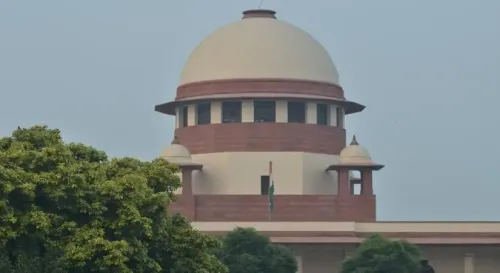
Did the SC Allow a Widow to Settle Her Late Husband's Bank Loan on Relaxed Terms?
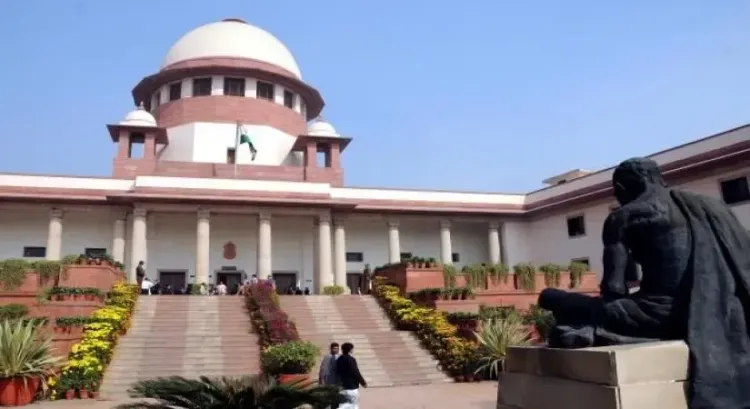
Synopsis
In a landmark ruling, the Supreme Court of India has provided a widow, who lost her husband during the second wave of Covid-19, the opportunity to settle her late husband's bank loan under relaxed terms, ensuring she receives justice in a time of personal loss.
Key Takeaways
Supreme Court utilizes Article 142 for justice Relief given to a widow after Covid-19 loss Bank loan settlement on relaxed terms Significant financial implications for the widow Unique case does not set a precedent
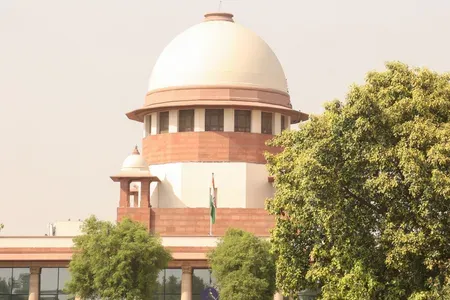
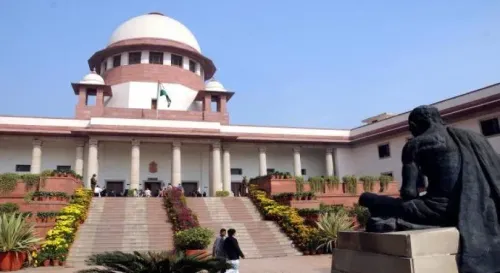
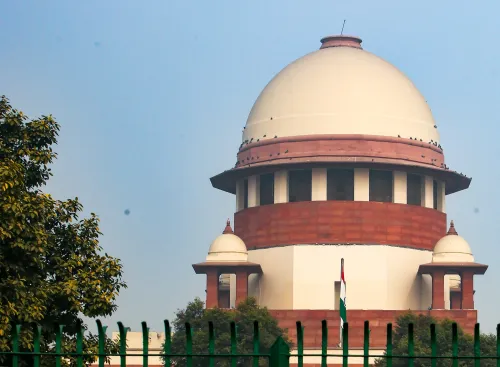
New Delhi, Jan 27 (NationPress) In a remarkable use of its powers under Article 142 of the Constitution, intended to deliver complete justice, the Supreme Court has provided relief to a widow who lost her spouse during the second wave of Covid-19. The court has authorized her to settle a bank loan under more lenient conditions and instructed the Central Bank of India to release the title deeds of her home upon payment of a reduced sum.
A bench comprising Chief Justice of India (CJI) Surya Kant and Justice Joymalya Bagchi accepted the special leave petitions (SLPs) submitted by Sumaiya Parveen, who contested the Madras High Court decision that denied the revival of an expired one-time settlement (OTS) proposal regarding a loan taken by her deceased husband.
Recognizing the unusual and unfortunate circumstances surrounding the case, the CJI-led Bench stated that the order was being issued "purely on equitable grounds and by invoking our powers under Article 142 of the Constitution".
In its ruling, the apex court noted that the petitioner’s husband, who owned FILSA Leathers, had taken out credit facilities worth Rs 50 lakh from the Central Bank of India, securing it with their residential property located in Vellore district. He passed away in May 2021 during the second wave of the Covid-19 pandemic, and the loan account remained regular until his death.
"The demise of the appellant’s husband led to further hardships as the account was classified as NPA, leading to proceedings under the Securitisation and Reconstruction of Financial Assets and Enforcement of Security Interest Act, 2002 being initiated," the bench remarked.
The bank had proposed an OTS of Rs 34.69 lakh against outstanding dues of approximately Rs 71 lakh as of January 2024. The deceased’s wife made the upfront payment of 10 percent, amounting to Rs 3.46 lakh, but was unable to pay the remaining balance within the specified timeframe.
Afterward, the bank requested a higher amount and issued a possession notice under the SARFAESI Act, prompting her to appeal to the Madras High Court, which dismissed her application.
While noting that the bank’s demand was "legally sustainable", the Supreme Court remarked that strict compliance would result in extreme hardship for the petitioner.
"Although the demand from the Bank is legally justified, we believe that meeting this demand would cause extreme distress for the appellant," the CJI-led Bench noted.
In an effort to balance equities, the Supreme Court determined that justice would be served if the petitioner deposits Rs 33 lakh in addition to the upfront payment already made.
"The appellant has been granted eight weeks to pay the amount of Rs 33,00,000, during which further interest will remain suspended. If the appellant pays the amount within the stipulated period, the Bank is mandated to issue a no-dues certificate and return the original title deeds to the appellant," the ruling stated.
However, the apex court clarified that failure to deposit the amount within the designated time frame would mean that "the law will take its own course".
Emphasizing that the relief granted is limited to the specific circumstances of this case, it added that the order "should not be interpreted as a precedent against the respondent-Bank".
Point of View
This ruling by the Supreme Court exemplifies the judiciary's role in providing compassionate and equitable solutions in times of crisis. It highlights the importance of understanding individual circumstances while ensuring that justice is served, thus reinforcing the legal system's commitment to the welfare of its citizens.
NationPress
19 Sept 2026
Frequently Asked Questions
What was the Supreme Court's ruling regarding the widow's loan?
The Supreme Court allowed the widow to settle her late husband's bank loan on relaxed terms, mandating the bank to accept a reduced payment and release the title deeds of her property.
Why did the widow approach the Supreme Court?
The widow approached the Supreme Court after the Madras High Court dismissed her plea to revive an expired one-time settlement offer for her husband's loan.
What were the circumstances surrounding the husband's death?
The husband's death occurred during the second wave of Covid-19 in May 2021, leading to subsequent financial distress as the loan account was classified as NPA.
How much time did the Supreme Court give her to pay the settlement amount?
The Supreme Court granted the widow eight weeks to deposit the settlement amount of Rs 33 lakh.
Is this ruling applicable to other cases?
The Supreme Court clarified that this ruling is specific to the unique circumstances of this case and should not be seen as a precedent.