Supreme Court raises accident compensation to ₹83.38 lakh for disabled infant girl
Synopsis
The Supreme Court nearly doubled compensation for a girl left with 90 per cent permanent disability after a road accident at six months, ruling her functional disability is effectively total and that catastrophic childhood injury destroys not just the body but dignity, independence, and an entire future — setting a landmark benchmark for how Indian tribunals must value such claims.
Key Takeaways
The Supreme Court enhanced road accident compensation for Shreejita Pattnaik from ₹45.40 lakh to ₹83.38 lakh on 3 August .
Shreejita suffered 90 per cent permanent locomotor disability due to post-traumatic myelopathy with paraplegia after a road accident in Odisha on 16 June 2015 , when she was six months old .
The bench held her functional disability was effectively 100 per cent , making her future earning capacity 'completely destroyed.' Interest at 9 per cent per annum from the date of the claim petition will also be paid by insurer New India Assurance Company Ltd.
The insurer must deposit the full amount before the Motor Accident Claims Tribunal within six weeks .
The ruling sets a precedent requiring courts to adopt a 'realistic, humane' approach when assessing compensation for catastrophically injured children.
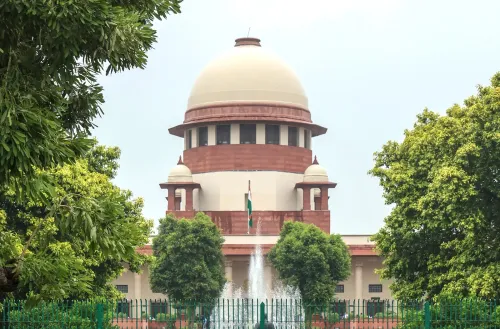
The Supreme Court of India on Monday, 3 August enhanced compensation for a girl who suffered 90 per cent permanent locomotor disability in a road accident when she was just six months old, raising the award from ₹45.40 lakh to ₹83.38 lakh. The bench ruled that a catastrophically injured child loses not merely physical capacity but childhood itself, dignity, and an entire future.
What the Court Observed
A bench of Justice Ujjal Bhuyan and Justice N.V. Anjaria held that courts adjudicating compensation for severely injured children must adopt a 'realistic, humane' approach, recognising that the consequences of such injuries persist throughout the victim's life. 'Injuries suffered by children have consequences which extend far beyond the immediate physical disability. Such injuries accompany the victim throughout her life and affect every stage of her development. The loss suffered is not temporary. It is lifelong, continuing and irreversible,' the bench said.
The court went further, linking catastrophic injury to the erosion of human dignity. 'When a catastrophic injury deprives a child of the ability to perform the ordinary functions independently, the resulting loss transcends the realm of physical disability and assumes the character of a continuing deprivation of dignity,' it observed, adding that such injury affects 'not merely the body but the very manner in which life itself is experienced.'
Background: The Odisha Road Accident
The case originated from a motor accident in Odisha on 16 June 2015. The infant, Shreejita Pattnaik, was travelling with her parents when a tanker allegedly crossed to the wrong side of the road and struck their vehicle head-on. She sustained severe spinal cord and neurological injuries, resulting in post-traumatic myelopathy with paraplegia. Medical evidence confirmed she would require lifelong care and remain permanently dependent on others.
How Earlier Tribunals Had Ruled
The Motor Accident Claims Tribunal had initially awarded ₹30.12 lakh. The Orissa High Court enhanced this to ₹45.40 lakh. The Supreme Court found both figures inadequate, holding that they fell short of the 'just compensation' standard mandated under the Motor Vehicles Act. Crucially, the bench determined that although Shreejita's medically certified physical disability stood at 90 per cent, her functional disability was effectively 100 per cent, rendering her future earning capacity 'completely destroyed; rather extinguished.'
How the Enhanced Compensation Was Computed
Recomputing the award across multiple heads — future earnings, attendant charges, pain and suffering, loss of amenities, and future prospects — the court arrived at ₹83.38 lakh with interest at 9 per cent per annum from the date of filing of the claim petition. The insurer, New India Assurance Company Ltd., has been directed to deposit the enhanced amount along with accrued interest before the Motor Accident Claims Tribunal within six weeks.
Significance for Future Compensation Claims
The ruling sets a precedent for how Indian courts should value childhood loss and lifelong dependency in motor accident claims. By explicitly holding that functional disability can exceed medically certified physical disability, the bench has widened the basis on which 'just compensation' is assessed. This is particularly significant for cases involving infants and young children, where conventional income-based calculations have historically undervalued the full scope of harm. The judgment is expected to influence pending and future claims before Motor Accident Claims Tribunals across the country.
Point of View
The bench has introduced a more honest accounting of harm, one that prior courts systematically avoided. The order's insistence on 'lifelong, continuing and irreversible' loss as a distinct head of compensation could meaningfully shift how future claims are valued, but only if lower courts apply it rigorously rather than treating it as a one-off exception for extreme cases.
NationPress
17 Sept 2026
Frequently Asked Questions
What did the Supreme Court rule in the Shreejita Pattnaik compensation case?
The Supreme Court enhanced compensation for Shreejita Pattnaik — who suffered 90 per cent permanent locomotor disability in a road accident at six months — from ₹45.40 lakh to ₹83.38 lakh, with interest at 9 per cent per annum. The bench held that her functional disability was effectively 100 per cent and that catastrophic childhood injury destroys dignity, independence, and future prospects, not just physical capacity.
What happened in the Odisha road accident that injured Shreejita Pattnaik?
On 16 June 2015, infant Shreejita Pattnaik was travelling with her parents in Odisha when a tanker allegedly swerved onto the wrong side of the road and collided head-on with their vehicle. She sustained severe spinal cord and neurological injuries resulting in post-traumatic myelopathy with paraplegia, leaving her with 90 per cent permanent locomotor disability and requiring lifelong care.
Why did the Supreme Court find earlier compensation awards inadequate?
Both the Motor Accident Claims Tribunal (₹30.12 lakh) and the Orissa High Court (₹45.40 lakh) had underestimated the full scope of harm, according to the Supreme Court. The bench found that neither award met the 'just compensation' standard under the Motor Vehicles Act, particularly because Shreejita's functional disability was effectively total, making her future earning capacity completely extinguished.
Who must pay the enhanced compensation and by when?
Insurer New India Assurance Company Ltd. has been directed to deposit ₹83.38 lakh along with accrued interest at 9 per cent per annum before the Motor Accident Claims Tribunal within six weeks of the order.
What is the broader significance of this Supreme Court ruling for child accident victims?
The ruling establishes that courts must assess compensation for catastrophically injured children using a 'realistic, humane' approach that accounts for the lifelong loss of childhood experiences, human dignity, and earning potential — not just immediate physical impairment. It is expected to influence future Motor Accident Claims Tribunal proceedings involving children across India.