SC raises carpenter's accident compensation to ₹35.95 lakh, treats disability as 100%
Synopsis
A two-decade legal battle by a Uttarakhand carpenter who lost his leg in a 2004 road accident ends with the Supreme Court nearly tripling his compensation to ₹35.95 lakh — and establishing that a 70% medical disability can legally equal 100% functional disability when a skilled worker's entire livelihood is destroyed.
Key Takeaways
The Supreme Court raised compensation for carpenter Shankar Dutt from ₹11.51 lakh to ₹35.95 lakh on 24 June .
Though Dutt's medical disability was certified at 70 per cent , the court treated his functional disability as 100 per cent given that leg amputation made carpentry impossible.
The bench revised his assessed monthly income from ₹5,000 to ₹9,000 , recognising carpentry as a skilled profession. ₹10 lakh was awarded specifically for future medical expenses, including the cost and upkeep of prosthetic limbs.
Insurer United India Insurance Company must deposit the additional ₹24.44 lakh with 6% per annum interest within six weeks .
The accident occurred on 9 November 2004 near Kotdwar, Uttarakhand ; the MCAT's initial award of ₹4.77 lakh came only in 2012 .
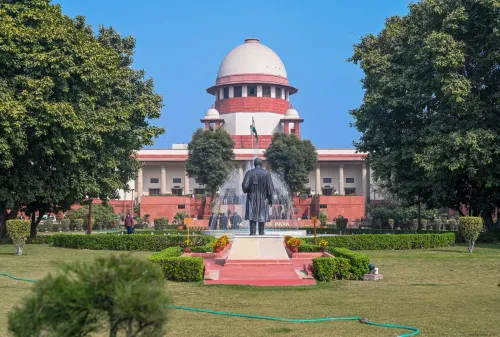
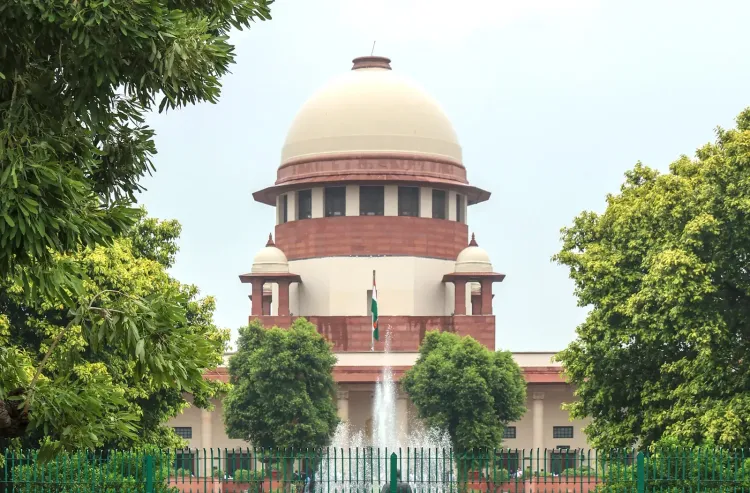
The Supreme Court of India on Wednesday, 24 June substantially increased the motor accident compensation awarded to a Uttarakhand carpenter who lost his right leg, ruling that courts must evaluate the real-world impact of an injury on a victim's earning capacity — a principle the bench termed 'functional disability' — rather than mechanically applying medical disability certificates.
A bench of Justice Ujjal Bhuyan and Justice N.V. Anjaria raised the total compensation payable to claimant Shankar Dutt from ₹11.51 lakh, as awarded by the Uttarakhand High Court, to ₹35.95 lakh. The court held that the amputation of Dutt's right leg had rendered him entirely incapable of continuing his profession.
Background: Two Decades of Legal Battle
The case traces back to a road accident on 9 November 2004, when Dutt — then 38 years old and working as a carpenter — suffered grievous injuries after a jeep, allegedly driven rashly and negligently, struck his motorcycle near Kotdwar, Uttarakhand. The severity of his injuries necessitated amputation of his right leg above the knee, and he remained hospitalised for approximately 43 days.
The Motor Accident Claims Tribunal (MCAT) initially awarded him ₹4.77 lakh in 2012. The Uttarakhand High Court enhanced this to ₹11.51 lakh, still leaving Dutt unsatisfied. He then approached the Supreme Court seeking further enhancement.
Why the Court Treated Functional Disability at 100 Per Cent
Although Dutt's medical disability certificate assessed his permanent disability at 70 per cent, the apex court held that his functional disability for livelihood purposes had to be treated as 100 per cent. The bench reasoned that carpentry is a skilled profession demanding manual dexterity and physical mobility — specifically the ability to sit in a squatting or cross-legged position, which Dutt can no longer do.
'The disability of the appellant has to be appreciated and assessed in the context of the occupation of the appellant, the activity of work he used to do as a carpenter. The functional disability of the appellant-claimant has to be taken properly and reasonably at 100 per cent,' the Justice Bhuyan-led bench stated in its judgment.
The court further noted that carpentry cannot be equated with unskilled labour: 'A carpenter is a skilled worker, who works to bring into existence various items of wood by his expertise and dexterity.' Accordingly, it revised the assessment of Dutt's monthly income from ₹5,000 — as computed by the High Court — to ₹9,000, reflecting the greater earning potential of a skilled tradesperson.
How the Enhanced Compensation Was Calculated
Holding that Dutt had effectively lost his entire earning capacity, the bench recalculated compensation by treating functional disability at 100 per cent and adding a 40 per cent increment towards future prospects. Awards were also made under several additional heads, including pain and suffering, loss of amenities, attendant charges, transportation, nutrition, incidental expenses, and loss of income during the treatment period.
Notably, the court awarded ₹10 lakh specifically towards future medical expenses, recognising the long-term financial burden of prosthetic limbs. 'Artificial limbs require periodic replacement and maintenance throughout a person's lifetime,' the bench observed, adding that Dutt 'must be compensated in a manner and to the extent that he is able to live life in the future years almost in the same way as he was leading his life prior to the accident.'
Insurer Directed to Deposit Additional Amount
The Supreme Court directed respondent insurer United India Insurance Company to deposit the additional compensation of approximately ₹24.44 lakh, along with interest at 6 per cent per annum, before the MCAT within six weeks of the order.
The ruling reinforces a broader judicial principle: compensation in disability cases must reflect the actual erosion of earning capacity, not a doctor's clinical measurement alone. It is likely to serve as precedent in future motor accident claims involving skilled workers whose professions are rendered impossible by partial physical disability.
Point of View
The bench has given skilled tradespeople — carpenters, masons, weavers — a framework that reflects what they actually lose. The more uncomfortable question is systemic: Shankar Dutt waited over two decades from accident to final relief. The compensation calculus may now be fairer, but the timeline remains a quiet indictment of how long justice takes to arrive for those without resources to sustain prolonged litigation.
NationPress
23 Sept 2026
Frequently Asked Questions
What did the Supreme Court rule in the Shankar Dutt carpenter compensation case?
The Supreme Court ruled on 24 June that carpenter Shankar Dutt's functional disability must be treated as 100 per cent — despite a medical certificate assessing it at 70 per cent — because the amputation of his right leg made it impossible for him to continue working as a carpenter. It raised his total compensation from ₹11.51 lakh to ₹35.95 lakh.
What is 'functional disability' and how does it differ from medical disability?
Medical disability is a clinical assessment of physical impairment, typically expressed as a percentage by a doctor. Functional disability, as defined by the Supreme Court, measures the actual impact of an injury on a person's ability to earn a livelihood. The court held that for skilled workers, these two figures can differ significantly — and compensation must be based on functional, not medical, disability.
Why was Shankar Dutt's monthly income revised upward by the Supreme Court?
The Uttarakhand High Court had assessed Dutt's monthly income at ₹5,000. The Supreme Court revised this to ₹9,000, holding that carpentry is a skilled profession with greater earning potential than unskilled labour, and that compensation must reflect a skilled worker's realistic income.
How much did United India Insurance Company have to pay, and by when?
United India Insurance Company was directed to deposit the additional compensation of approximately ₹24.44 lakh, along with interest at 6 per cent per annum, before the Motor Accident Claims Tribunal within six weeks of the Supreme Court's order.
What precedent does this ruling set for future accident compensation cases?
The ruling establishes that courts must assess compensation based on the real-world impact of an injury on earning capacity rather than relying solely on medical disability certificates. It is particularly significant for skilled workers — such as carpenters, masons, and artisans — whose professions may be entirely destroyed by a partial physical disability.