Should Insurers Compensate Accident Victims Even if the Vehicle Deviated from Its Route?
Synopsis
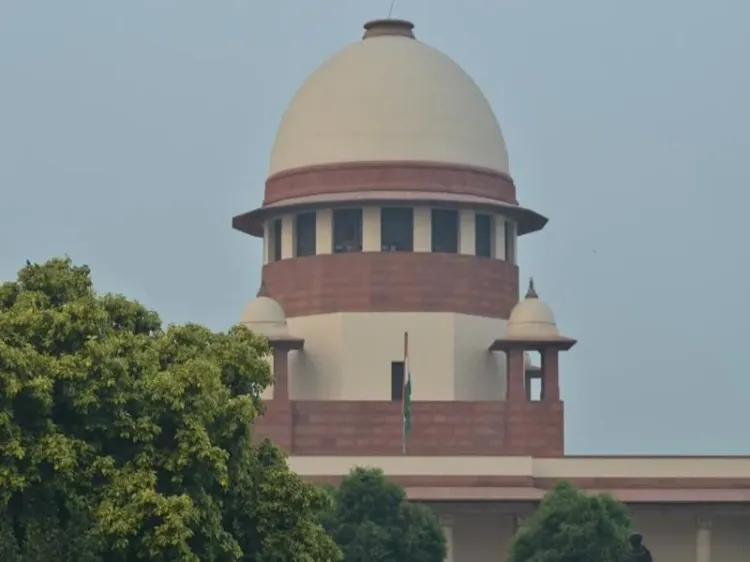
In a landmark ruling, the Supreme Court has reinforced the principle of justice by ensuring that the dependents of accident victims receive compensation, regardless of route deviations by the vehicle involved. This decision highlights the importance of accountability within the insurance sector and the rights of families affected by tragic accidents.
Key Takeaways
Supreme Court mandates compensation to accident victims' families regardless of route deviations.
Justice Karol's bench emphasizes the need for accountability in insurance.
Compensation awarded has been revised to Rs 31.84 lakh for the deceased's family.
The ruling upholds the statutory duty of insurers to compensate victims.
The decision supports the principle of justice for accident victims and their families.
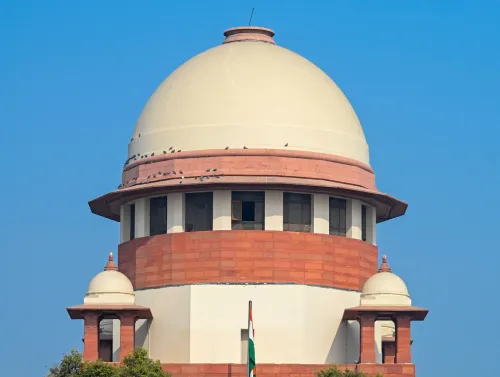
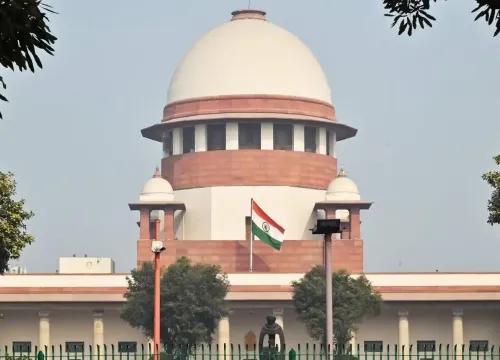
New Delhi, Oct 30 (NationPress) The Supreme Court has mandated that an insurance company must provide compensation to the family of a deceased motorcyclist, despite the fact that the accident transpired while the bus involved had strayed from its authorized route.
A panel of Justices Sanjay Karol and Prashant Kumar Mishra was reviewing an appeal against the Karnataka High Court’s ruling dated September 25, 2019, which had partially granted compensation claims made by the family of the deceased, Srinivasa alias Murthy.
Murthy, the sole provider for his family, operated a small business along with a ration shop. He tragically lost his life on October 7, 2014, when his motorcycle was struck by a bus.
The family sought a compensation of Rs 50 lakh.
The Motor Accident Claims Tribunal initially awarded Rs 18.86 lakh, estimating the deceased’s monthly income at Rs 8,000.
Subsequently, the Karnataka High Court increased this to Rs 31.84 lakh, factoring in future earnings, dependency, and other losses. In its special leave petition (SLP) presented to the apex court, the insurance provider contended that the bus was operating outside its authorized route from Bengaluru to Mysuru, asserting that this deviation relieved it of liability.
However, the Supreme Court dismissed this argument, stating, “To deny the victim’s dependents compensation simply because the accident took place outside the bounds of the permit would be offensive to the sense of justice.”
The court noted that the accident was not the fault of the victim's family. The insurance company is obligated to pay, while retaining the right to seek reimbursement from the bus owner for breaching policy conditions.
This decision referenced earlier Supreme Court rulings that upheld the statutory obligation of insurers to compensate victims while allowing recovery from the insured in cases of policy violations.
The bench led by Justice Karol rejected the appeals, ensuring that the deceased's family receives prompt compensation, while also allowing the insurer to pursue the bus owner for the route deviation.
“The order of the High Court applying the pay and recover principle is entirely justified and requires no interference,” the Supreme Court concluded.
Point of View
We stand firmly in support of justice for victims. This ruling by the Supreme Court not only reinforces the rights of families impacted by tragic accidents but also emphasizes the responsibility of insurance companies to uphold their obligations. We believe that accountability is paramount, and this decision marks a significant step toward protecting the interests of accident victims.
NationPress
19 Sept 2026
Frequently Asked Questions
What was the Supreme Court's ruling regarding insurance compensation?
The Supreme Court ruled that insurance companies must compensate the dependents of deceased accident victims, regardless of whether the vehicle was operating outside its authorized route.
How much compensation was awarded to the family of the deceased motorcyclist?
The family initially sought Rs 50 lakh, and the Karnataka High Court eventually revised the compensation to Rs 31.84 lakh.
What was the insurance company's argument against compensation?
The insurance company argued that the bus had deviated from its authorized route, claiming this absolved them of liability.
What did the Supreme Court say about the insurance company's argument?
The Supreme Court rejected the argument, stating that denying compensation due to route deviation would be unjust.
What principle did the High Court apply in this case?
The High Court applied the 'pay and recover' principle, which allows timely compensation to the victims while permitting the insurer to recover costs from the bus owner.