Calcutta HC: Illegally parked vehicle not immune from accident liability

Synopsis
A parked vehicle is no safe harbour for insurers — the Calcutta High Court has ruled that illegal parking on a national highway constitutes negligence, piercing the 'stationary vehicle' defence that insurers routinely deploy. The judgment, which also enhanced compensation for a homemaker's death, sets a significant precedent for Motor Accident Claims Tribunals across India.
Key Takeaways
The Calcutta High Court ruled that a stationary but illegally parked vehicle can attract accident liability under Indian law.
The ruling arose from a 16 April 2022 fatal crash on NH-6 in Paschim Medinipur , killing three members of the Samanta family.
Bajaj Allianz General Insurance Company's 'stationary vehicle' defence was rejected by Justice Biswaroop Chowdhury .
Compensation for homemaker Barnali Samanta Nandi was enhanced from ₹9.17 lakh to ₹11 lakh at 6% per annum interest.
The ₹2.10 crore award for deceased driver Shamit Samanta was upheld without further enhancement.
Bajaj Allianz must deposit the enhanced amount within eight weeks .
The Calcutta High Court has ruled that a vehicle being stationary at the time of a road accident does not automatically shield its owner or insurer from liability, provided the vehicle was negligently parked in an unauthorised location. The judgment came while the court enhanced compensation awarded to the family of a homemaker killed in a fatal road crash on a national highway in West Bengal.
The Fatal Accident
A single-judge Bench of Justice Biswaroop Chowdhury delivered the ruling while adjudicating a batch of appeals and cross-objections arising from a crash on 16 April 2022, near Harina Bus Stand on NH-6 under Kharagpur Local Police Station in Paschim Medinipur district. The accident claimed the lives of Shamit Samanta, his wife Barnali Samanta Nandi, and their elder daughter Sinjini, while their younger daughter Saanvi sustained serious injuries.
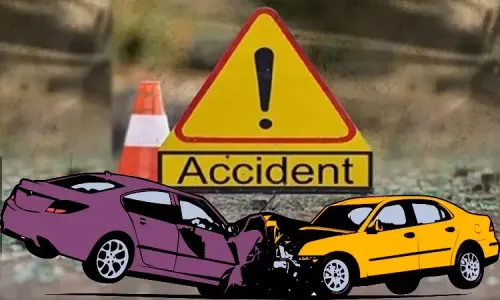
According to the claimants, the family was travelling from Kolkata to Midnapore when a speeding lorry overtook their car from the extreme left, raising a cloud of dust and sharply reducing visibility. Their vehicle then collided with a mini-truck parked in the middle of the highway without any signal or warning.
The Legal Challenge by the Insurer
Bajaj Allianz General Insurance Company challenged the compensation awards passed by a Motor Accident Claims Tribunal, contending that the offending mini-truck was stationary at the time of the accident and therefore its driver could not be held negligent. The court rejected this argument outright.
'It is to be remembered that the mere plea that a vehicle was stationary does not absolve the owner of the vehicle from liability if the said vehicle was parked in an improper place causing such an accident,' Justice Chowdhury observed.
The court noted that the tribunal had relied on evidence and the police charge sheet, which confirmed that the mini-truck bearing registration number WB-33-5717 had been illegally parked on the road. 'Thus, there is no error in the findings of the Learned Trial Judge about the accident caused by the negligent parking of the driver of the vehicle bearing no. WB-33-5717 (Mini-Truck) in the middle of the road,' the judgment stated.
Contributory Negligence Claim Dismissed
In a separate appeal concerning the death of Shamit Samanta, the insurer alleged that the deceased had contributed to the accident through his own negligent driving. The Calcutta High Court found no evidence to support this claim, holding that the insurance company had failed to produce any material establishing contributory negligence on the part of the deceased driver.
The court also reinforced the evidentiary value of eyewitness accounts, observing: 'The fact that the eye witnesses in motor accident claim cases are not summoned as witnesses does not destroy the credibility of the said witnesses if their evidence creates confidence in the minds of the Court.'
Compensation: What the Court Awarded
The court upheld the tribunal's award of ₹2.10 crore compensation in the case relating to Shamit Samanta's death, declining to grant further enhancement sought by the claimants. It found that the tribunal had correctly assessed the deceased's income in line with principles laid down by the Supreme Court.
In the connected case concerning the death of homemaker Barnali Samanta Nandi, the court enhanced compensation from ₹9.17 lakh to ₹11 lakh, along with interest at 6% per annum from the date of filing of the claim petition. Justice Chowdhury stressed the invaluable and unquantifiable contribution of women within households: 'The loss suffered by members of a family on the death of a housewife cannot be compensated by money. Thus, the compensation which appears to the Court as just and reasonable should be awarded.'
Referring to Supreme Court precedents, the court reiterated that the services rendered by a wife and mother — including care, guidance, and round-the-clock support — cannot be measured solely in monetary terms. Bajaj Allianz General Insurance Company has been directed to deposit the enhanced compensation along with interest within eight weeks.
Broader Significance
This ruling reinforces a critical principle in Indian road accident jurisprudence: illegal parking on public highways constitutes negligence capable of attracting civil liability, regardless of whether the vehicle was in motion. This comes amid persistent concerns over unauthorised parking on national highways contributing to road fatalities across India. The judgment is likely to be cited in future Motor Accident Claims Tribunal proceedings where insurers invoke the 'stationary vehicle' defence.
Point of View
By definition, cause an accident. In reality, unauthorised highway parking is among the most documented causes of chain-reaction crashes in India, yet liability has historically been difficult to pin on parked-vehicle owners. By anchoring negligence to the act of illegal parking rather than vehicle movement, this judgment aligns legal accountability with ground reality. The enhanced compensation for the homemaker's death is equally significant — courts continue to grapple with quantifying unpaid domestic labour, and while ₹11 lakh remains a modest figure, the court's explicit recognition of the 'invaluable' nature of a homemaker's contribution is a step toward more equitable valuation in future claims.
NationPress
13 Sept 2026
Frequently Asked Questions
What did the Calcutta High Court rule about stationary vehicles and accident liability?
The Calcutta High Court ruled that a vehicle being stationary at the time of an accident does not automatically exempt its owner or insurer from liability if the vehicle was negligently parked in an unauthorised location. Justice Biswaroop Chowdhury held that illegal parking on a public road constitutes negligence capable of attracting civil liability.
What was the accident that led to this ruling?
The ruling arose from a fatal crash on 16 April 2022 near Harina Bus Stand on NH-6 in Paschim Medinipur, West Bengal. The accident killed Shamit Samanta, his wife Barnali Samanta Nandi, and their elder daughter Sinjini, while their younger daughter Saanvi was seriously injured after their car collided with an illegally parked mini-truck.
How much compensation was awarded to the family?
The tribunal's award of ₹2.10 crore for the death of Shamit Samanta was upheld. Compensation for homemaker Barnali Samanta Nandi was enhanced from ₹9.17 lakh to ₹11 lakh, with interest at 6% per annum from the date of filing. Bajaj Allianz General Insurance Company must deposit the enhanced amount within eight weeks.
Why did the court enhance compensation for the homemaker's death?
The Calcutta High Court held that the services rendered by a wife and mother — including care, guidance, and round-the-clock support — cannot be measured solely in monetary terms. Citing Supreme Court precedents, Justice Chowdhury found the original ₹9.17 lakh award inadequate and revised it to ₹11 lakh as 'just and reasonable' given the family's status and the deceased's responsibilities.
What is the broader legal significance of this judgment?
The ruling reinforces that illegal parking on national highways constitutes actionable negligence under Indian road accident law, regardless of whether the vehicle was in motion. It is likely to be cited in future Motor Accident Claims Tribunal proceedings where insurers invoke the 'stationary vehicle' defence to avoid liability.