SC: Missing train ticket alone can't deny railway accident compensation
Synopsis
The Supreme Court has drawn a firm line: losing your train ticket in an accident cannot cost your family the compensation they are legally owed. Ruling in favour of a widow whose husband died falling from the Ahmedabad-Howrah Mail in 2015, the court ordered ₹8 lakh in compensation and told the Railways that welfare law is not a loophole to be narrowed — it is a guarantee to be upheld.
Key Takeaways
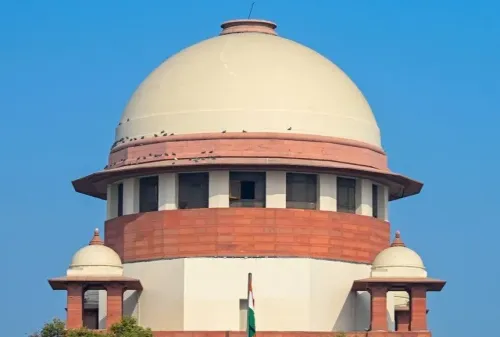
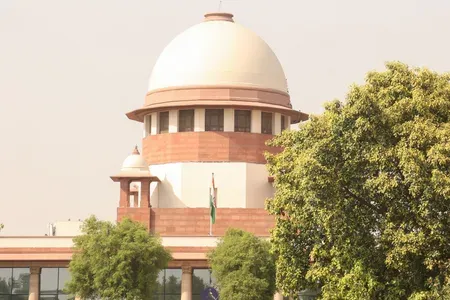
The Supreme Court on 17 July ruled that absence of a train ticket alone cannot be grounds to deny compensation under the Railways Act .
A Bench of Justice Sanjay Karol and Justice NK Singh ordered the Railways to pay ₹8 lakh within four weeks , with 8% annual interest if delayed.
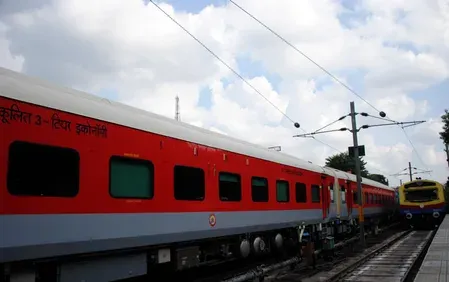
The case involved the 2015 accidental death of Chandrakant Thakkar , who fell from the Ahmedabad-Howrah Mail ; his ticket was lost with his travel bag.
The court held that Section 124A of the Railways Act embodies 'no-fault liability' and must receive a purposive, liberal interpretation.
An affidavit is sufficient to discharge the initial burden of proving bona fide passenger status, the court reiterated.
The court also recommended the Railways drop the term 'second class passenger' from its manuals as offensive to the spirit of the Constitution of India .
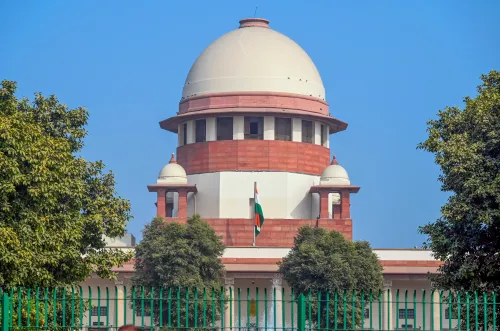
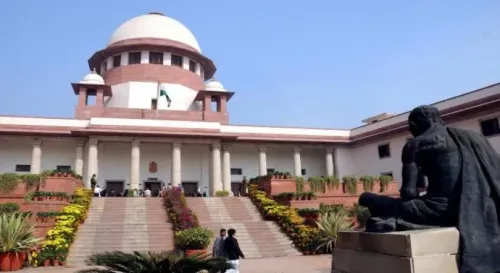
The Supreme Court of India on Friday, 17 July ruled that the absence of a train ticket on the body of a deceased passenger cannot, by itself, be grounds to deny compensation under the Railways Act. The apex court held that welfare legislation must be interpreted liberally to ensure justice for victims of railway accidents, not restrictively to deny it.
Background: A Decade-Long Fight for Compensation
Chandrakant Thakkar was travelling from Raipur to Ahmedabad aboard the Ahmedabad-Howrah Mail on 28 November 2015 when he accidentally fell from the moving train and died. His widow filed a compensation claim, stating that the journey ticket had been kept inside a travel bag that went missing after the accident.
The Railway Claims Tribunal acknowledged that the incident qualified as an 'untoward incident' under the Railways Act but denied compensation, ruling that the deceased had not been proved to be a bona fide passenger. The Madhya Pradesh High Court upheld that decision, leaving the widow without relief for nearly a decade.
What the Supreme Court Ruled
A Bench of Justice Sanjay Karol and Justice NK Singh set aside the concurrent findings of both the Tribunal and the High Court. The Bench directed the Railways to pay compensation of ₹8 lakh to the appellant within four weeks, failing which the amount would carry interest at 8 per cent per annum from the date of filing of the claim petition.
The court grounded its ruling in Section 124A of the Railways Act, which operates on the principle of 'no-fault liability' — meaning the Railways bears responsibility for untoward incidents regardless of negligence. 'The beneficial legislations are to receive purposive and liberal construction in furtherance of the intentions of the Legislature... instead of a literal or restrictive approach being adopted,' the Bench observed.
Ticket Loss Does Not Erase Passenger Status
The apex court reiterated that the initial burden on a claimant can be discharged through an affidavit and that mere non-recovery of a ticket does not negate the status of a bona fide passenger. 'Merely because the ticket of a train journey was not found on the person of the deceased, will not change his status as a bona fide passenger,' the court stated.
The Bench also made clear that 'technical approaches and lapses in procedure should not defeat the welfare aim of the statute,' adding that it does not befit the Railways, 'as an instrumentality of the State, to take such restrictive, pigeonhole view.'
A Note on Terminology: 'Second Class Passenger'
In a significant aside, the Supreme Court recommended that the Railways reconsider the use of the term 'second class passenger' in its official manuals. The Bench suggested that 'the class connotation be attached to the coach and not to the passenger, in recognition of the history of class divisions in our country and the same being offensive to the spirit of the Constitution of India.'
The ruling sets a clear precedent: railway accident claimants who lose their tickets in the chaos of an accident cannot be denied statutory compensation on that ground alone. How the Railways and lower tribunals apply this standard in pending and future claims will be closely watched.
Point of View
An incomplete form — were being used by the Railways to defeat the very welfare purpose that Section 124A was enacted to serve. The Railways, as a state instrumentality, has a statutory duty of care, not a mandate to minimise payouts. What this judgment also exposes is how lower tribunals have been applying a standard of proof better suited to civil contract disputes than to no-fault accident compensation. The court's aside on 'second class passenger' terminology, while advisory, signals a broader discomfort with institutional language that encodes hierarchy — and puts the Railways on notice that constitutional values extend beyond courtroom arguments into operational manuals.
NationPress
16 Oct 2026
Frequently Asked Questions
What did the Supreme Court rule on railway compensation without a ticket?
The Supreme Court ruled on 17 July that the absence of a train ticket on the body of a deceased passenger cannot, by itself, be a ground to deny compensation under the Railways Act. The court held that welfare legislation must be interpreted liberally, and that an affidavit is sufficient to establish bona fide passenger status.
Who was the claimant and what was the case about?
The claimant was the widow of Chandrakant Thakkar, who died on 28 November 2015 after accidentally falling from the Ahmedabad-Howrah Mail while travelling from Raipur to Ahmedabad. Her compensation claim had been rejected by the Railway Claims Tribunal and the Madhya Pradesh High Court on the ground that the ticket was not found on the deceased.
How much compensation was awarded and when must it be paid?
The Supreme Court directed the Railways to pay ₹8 lakh within four weeks of the order. If the payment is delayed beyond that period, the amount will carry interest at 8 per cent per annum from the date the claim petition was originally filed.
What is Section 124A of the Railways Act?
Section 124A of the Railways Act establishes 'no-fault liability' for untoward incidents on railways, meaning the Railways is liable to pay compensation regardless of whether negligence is proved. The Supreme Court reaffirmed that this provision must be given a purposive and liberal interpretation to advance its welfare objective.
What did the Supreme Court say about the term 'second class passenger'?
The court recommended that the Railways reconsider using the term 'second class passenger' in its manuals, suggesting that class connotations be attached to the coach rather than the person. The Bench noted the term is offensive to the spirit of the Constitution of India given the country's history of class divisions.