Will the SC Address Railway Quota for Acid Attack Survivors?

Synopsis
The Supreme Court's decision to review a PIL for acid attack victims' railway concessions raises crucial questions about their rights and accessibility. This case could reshape how society supports survivors facing lifelong challenges.
Key Takeaways
Supreme Court to review PIL for acid attack victims.
Call for railway concessions and reserved quota.
Highlighting the need for equal rights under the law.
Potential implications for accessibility in public services.
Advocacy for the dignity of survivors.
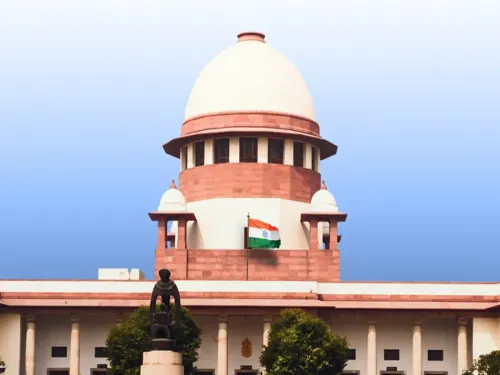
New Delhi, Jan 19 (NationPress) The Supreme Court has decided to review a Public Interest Litigation (PIL) that requests a dedicated reservation quota and discounted Railway fares for acid attack victims (AAVs), who currently do not receive the same benefits as those available to Persons with Disabilities.
A bench led by Chief Justice of India (CJI) Surya Kant issued a notice to the Ministry of Railways, the Department of Empowerment of Persons with Disabilities, the National Commission for Women (NCW), and the Indian Railway Catering and Tourism Corporation (IRCTC) regarding the writ petition filed by the Atijeevan Society under Article 32 of the Constitution.
The petition, represented by advocate Anandh Venkataramani, argued that even though acid attack victims are acknowledged as having specific disabilities under the Rights of Persons with Disabilities (RPwD) Act, 2016, they are excluded from discounted fare benefits under the Railways’ Coaching Tariff No. 26 and from the reserved quota for Persons with Disabilities.
The PIL pointed out that acid attack survivors endure lifelong physical and facial disfigurement, which can lead to blindness and severe physical impairments, necessitating multiple reconstructive surgeries and specialized medical care that is predominantly available in a few tertiary hospitals in major cities.
“Due to the nature of their burn injuries, persistent discomfort, and especially following surgeries, acid attack victims often require travel in air-conditioned coaches. However, the expenses associated with AC tickets for frequent journeys are prohibitively high for them,” the petition stated.
It further claimed that the exclusion of AAVs from discounted fare privileges is “ex-facie arbitrary” and violates Article 14 of the Constitution, especially when individuals with other recognized disabilities are afforded such benefits.
“This regulatory gap effectively denies acid attack victims access to the quota, rendering the policy unjustly arbitrary, unreasonable, and in violation of Article 14,” the petition mentioned.
The petitioner, Pragya Prasun, founder of Atijeevan Foundation, also referenced Section 41(2) of the RPwD Act, which imposes a mandatory responsibility on the government to enhance personal mobility for Persons with Disabilities at an affordable cost through incentives and concessions.
She further asserted that the denial of discounted fares and reservation quotas negatively affects the right to live with dignity, an essential aspect of the right to life under Article 21 of the Constitution.
Point of View
We recognize the critical importance of advocating for marginalized groups, particularly acid attack victims who deserve equal access to public services. The ongoing legal discussions signify a pivotal moment for inclusion and dignity in our society.
NationPress
10 Oct 2026
Frequently Asked Questions
What is the purpose of the PIL?
The PIL aims to secure a railway reservation quota and discounted fares for acid attack victims, who currently lack access to these benefits.
What rights are being discussed?
The case discusses the rights of acid attack victims under the Rights of Persons with Disabilities Act and their need for accessibility and dignity.
Why are acid attack victims excluded from concessions?
The petition argues that they are unjustly excluded despite being recognized as having specific disabilities under the law.
What impact could this case have?
A favorable ruling could enhance accessibility for acid attack victims and set a precedent for other marginalized groups.