Should Properties of Acid Attack Convicts Be Attached?
Synopsis
The Supreme Court is taking a bold stance on acid attack cases, pushing for the attachment of convict properties to ensure victims receive adequate compensation. With numerous cases pending, the court's call for expedited trials signals a commitment to justice and victim support.
Key Takeaways
The Supreme Court is advocating for the attachment of convict properties in acid attack cases.
Over 500 acid attack cases are pending across different states in India.
States are required to submit detailed data on acid attack incidents and victim support.
Legislative reforms may be considered to strengthen the legal framework for acid attack cases.
The Supreme Court aims to expedite trials and improve compensation for victims.
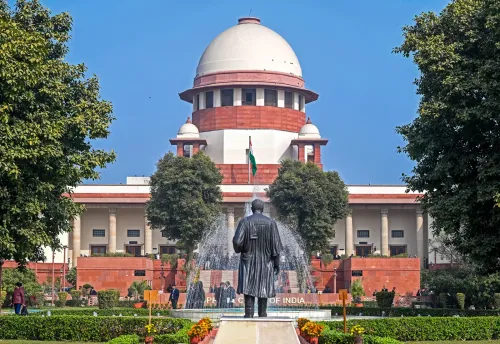
New Delhi, Jan 27 (NationPress) The Supreme Court on Tuesday raised significant concerns regarding the backlog of acid attack cases nationwide and advocated for more stringent measures, including the seizure of assets from convicts to guarantee proper compensation for victims.
A bench led by Chief Justice of India (CJI) Surya Kant, while reviewing a Public Interest Litigation (PIL) aimed at enforcing previously established guidelines, remarked on the information that 15 High Courts have provided details on pending acid attack cases.
According to the status report presented to the Supreme Court, Uttar Pradesh alone accounts for 198 pending cases, followed by Gujarat with 114, West Bengal with 60, Bihar with 68, and Maharashtra with 58 cases.
During the proceedings, the CJI Kant-led bench emphasized the importance of expediting acid attack cases.
“Why shouldn’t the assets of the offenders be seized? If a person is convicted of an acid attack, why shouldn’t all their immovable properties be appropriated to compensate the victim? Extraordinary punitive measures are necessary. Unless the repercussions are severe, the deterrent effect will not be achieved,” the Supreme Court stated.
The court has also instructed all states and Union Territories to submit comprehensive data within four weeks, detailing yearly incidents of acid attacks, chargesheets filed, resolved cases, pending trials, and appeals from concluded trials.
Furthermore, states and UTs must also provide essential information about each acid attack victim, including their academic background, current job status, marital situation, details of medical care, and any expenses incurred or anticipated by the government for treatment and rehabilitation.
The Supreme Court also directed all State Legal Services Authorities to share information about any schemes implemented for the rehabilitation, compensation, and medical assistance for acid attack survivors.
Additionally, the CJI Kant-led bench suggested that the Union government explore legislative measures to fortify the legal framework addressing acid attack cases.
This issue stems from a PIL in which the Supreme Court had previously mandated all High Courts to report on pending acid attack trials and prioritize these cases.
The Supreme Court is actively overseeing this matter to ensure that trials are conducted swiftly and that victims receive effective compensation for acid attacks.
Point of View
The Supreme Court's actions reflect a necessary shift in how we handle acid attack cases. The focus on victim compensation and the call for expedited trials underscore a commitment to justice that many survivors desperately need. By considering legislative reforms, we can hope for a future where such heinous acts are significantly deterred, ensuring justice prevails.
NationPress
22 Sept 2026
Frequently Asked Questions
What prompted the Supreme Court to suggest property attachment for acid attack convicts?
The Supreme Court expressed concern over the high number of pending acid attack cases and aimed to ensure meaningful compensation for victims.
How many pending acid attack cases are currently reported in India?
According to the latest reports, there are over 500 pending acid attack cases across various states in India.
What data has the Supreme Court requested from the states and Union Territories?
The Supreme Court has requested comprehensive data on acid attack incidents, chargesheets, resolved cases, and details about the victims.