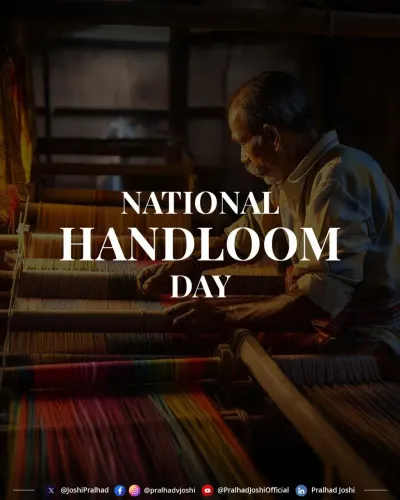
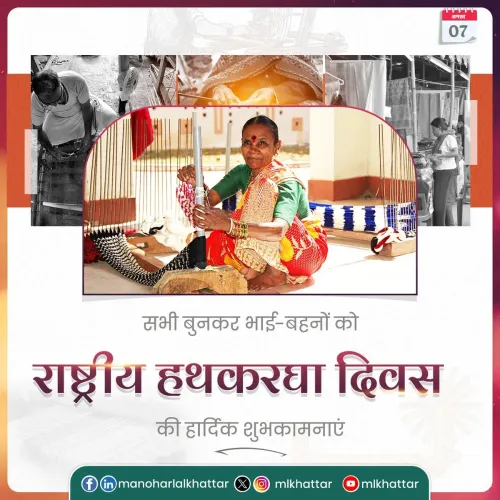
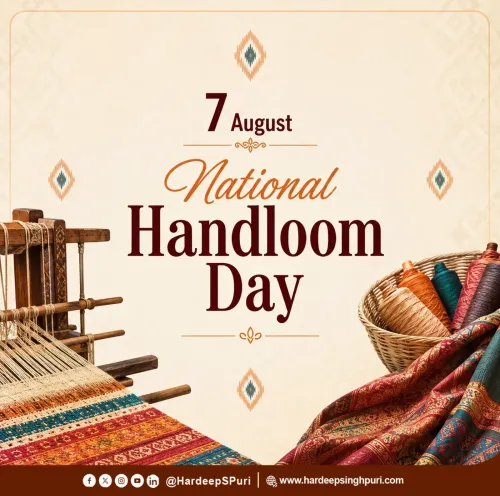
Tharoor calls for handloom revival on India's 12th National Handloom Day
Synopsis
On India's 12th National Handloom Day, Congress MP Dr. Shashi Tharoor spotlighted the sector's 35 lakh workers — over 70% women — and urged greater policy ambition at a time when global markets increasingly prize sustainability and artisanal authenticity.
Key Takeaways
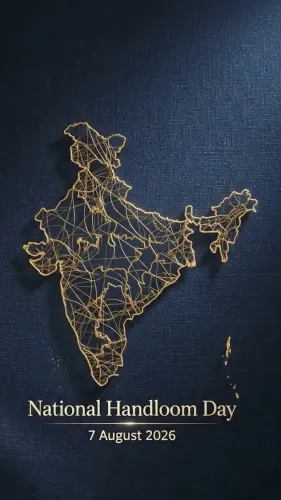
7 August 2026 marks India's 12th National Handloom Day , observed annually since 2015 .
The date commemorates the Swadeshi Movement launched on 7 August 1905 , which championed indigenous textile production.
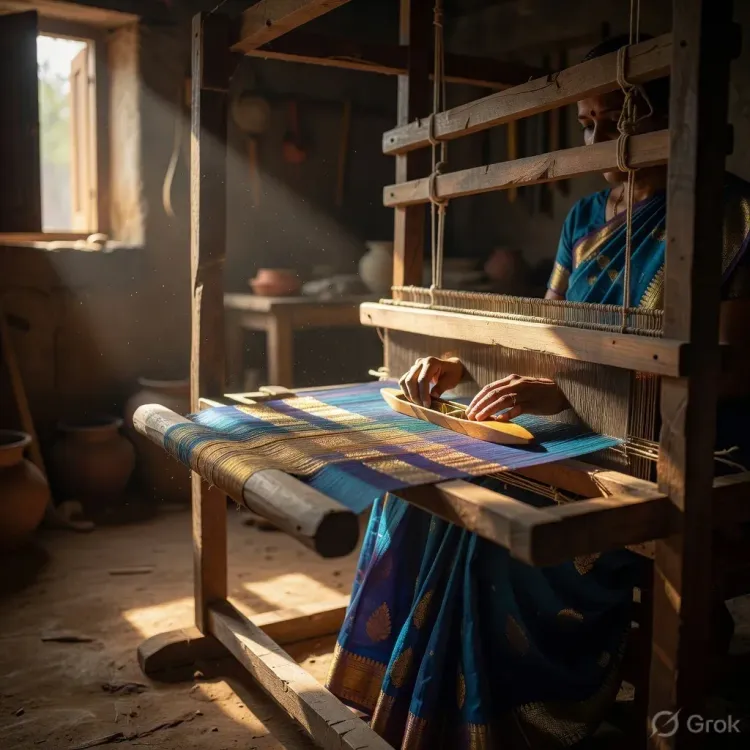
Handlooms are India's largest cottage industry, with an estimated 35 lakh workers , over 70% of whom are women.
Shashi Tharoor linked the sector's revival case to global trends in sustainability, authenticity, and resilient supply chains.
The Ministry of Textiles runs the National Handloom Development Programme , supporting weaver clusters, GI registrations, and e-marketing portals.
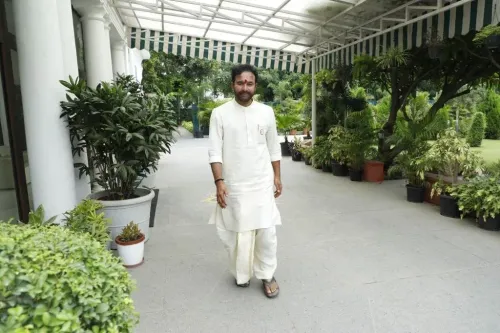
Twelve years after India institutionalised its annual salute to the loom, Congress MP Dr. Shashi Tharoor used National Handloom Day on 7 August 2026 to make the case that the sector's moment — economic, cultural, and ecological — has never been more urgent.
Tharoor noted that handlooms constitute India's largest cottage industry, employing some 35 lakh workers, of whom over 70% are women. In a world, he argued, that is paying greater heed to sustainability, authenticity, and resilient supply chains, the sector deserves fresh political and commercial attention.
Why August 7 carries a century of weight
National Handloom Day was first observed on 7 August 2015, chosen deliberately to mark the anniversary of the Swadeshi Movement, launched on the same date in 1905. That campaign urged Indians to reject imported British cloth and patronise indigenous weavers — a moment that fused economic self-reliance with political resistance. The date was not chosen lightly, and every annual observance carries that echo.
The Ministry of Textiles has since run the National Handloom Development Programme, channelling support through weaver clusters and cooperatives. More recently, policy emphasis has expanded to include Geographical Indication registrations for distinct regional weaves, e-marketing portals to connect artisans directly with buyers, and a deliberate alignment with the global sustainable-fashion narrative.
Women weavers at the centre of the supply chain argument
Tharoor's framing is pointed: the handloom sector is not just cultural heritage but a functioning, female-majority workforce embedded in rural India's non-farm economy. That workforce — disproportionately women — sits at the precise intersection of three pressures reshaping global trade: the push for ethical sourcing, the demand for traceable supply chains, and the premium that export markets now attach to artisanal authenticity.
Successive governments have treated handlooms as a complement to powerloom modernisation rather than a rival to it. The open question — one Tharoor's post gestures at without completing — is whether that posture is ambitious enough given the scale of opportunity in international textile markets hungry for non-synthetic, story-rich fabrics.
With major international textile fairs on the horizon and post-budget scheme announcements still possible, the handloom sector's advocates will be watching whether political attention on 7 August translates into allocations that outlast the day itself.
Point of View
Not a welfare obligation. By anchoring his call in sustainability and supply-chain resilience — the language of global trade policy — he implicitly challenges the government to move beyond ceremonial observance toward export-linked incentives. The female-majority workforce statistic is equally deliberate: it ties handloom revival to women's economic empowerment, broadening the political coalition for action. Whether the ruling dispensation responds with fresh allocations or lets the day pass with pageantry will be the real test of that framing.
NationPress
7 Aug 2026
Frequently Asked Questions
When is National Handloom Day celebrated in India?
National Handloom Day is celebrated every year on 7 August . It was first observed in 2015 and marks the anniversary of the Swadeshi Movement launched on 7 August 1905.
Why is National Handloom Day observed on August 7?
The date commemorates the launch of the Swadeshi Movement on 7 August 1905 , a campaign that urged Indians to use domestically produced goods, especially indigenous handloom textiles, over imported British cloth.
How many people work in India's handloom sector?
The handloom sector is India's largest cottage industry, employing an estimated 35 lakh (3.5 million) workers , with women making up over 70% of that workforce.
What did Shashi Tharoor say about handlooms on National Handloom Day 2026?
Dr. Shashi Tharoor highlighted that handlooms employ 35 lakh workers , over 70% of them women, and argued that rising global interest in sustainability, authenticity, and resilient supply chains makes this the right moment to strengthen the sector.
What government schemes support India's handloom weavers?
The Ministry of Textiles runs the National Handloom Development Programme , which supports weaver clusters, cooperatives, Geographical Indication registrations, and e-marketing portals to help artisans reach wider markets.