SC issues notice on PIL against advocates' social media promotions
Synopsis
The Supreme Court has agreed to examine whether advocates promoting themselves on Instagram, YouTube, and Facebook — in court attire, inside court premises — are violating the Advocates Act. The PIL draws a sharp line: call it 'legal awareness' all you want, but if the dominant purpose is client acquisition, it is professional misconduct. The BCI must now respond.
Key Takeaways
The Supreme Court issued notice on 14 July 2025 on a PIL challenging advocates' promotional activities on social media platforms.
The bench of CJI Surya Kant , Justice Joymalya Bagchi , and Justice V.
Mohana made the matter returnable on 15 September 2026 .
The PIL, filed by advocates Anil Pandey and A.R.
Tripathi , seeks a comprehensive regulatory framework from the Bar Council of India (BCI) .
The petition flags promotional reels, influencer-style videos, and monetised legal content on Instagram , YouTube , and Facebook as violations of the Advocates Act, 1961 .
The Madras High Court had ruled against lawyer rankings and digital solicitation on 3 July 2024 ; the BCI issued a disciplinary advisory on 17 March 2025 .
The Supreme Court of India on Tuesday, 15 July 2025, agreed to examine a public interest litigation (PIL) seeking directions to rein in unethical digital solicitation and professional misconduct by advocates on social media platforms. The PIL alleges that influencer-style legal content and promotional activities are steadily eroding the dignity of the legal profession.
Bench Order and Next Hearing
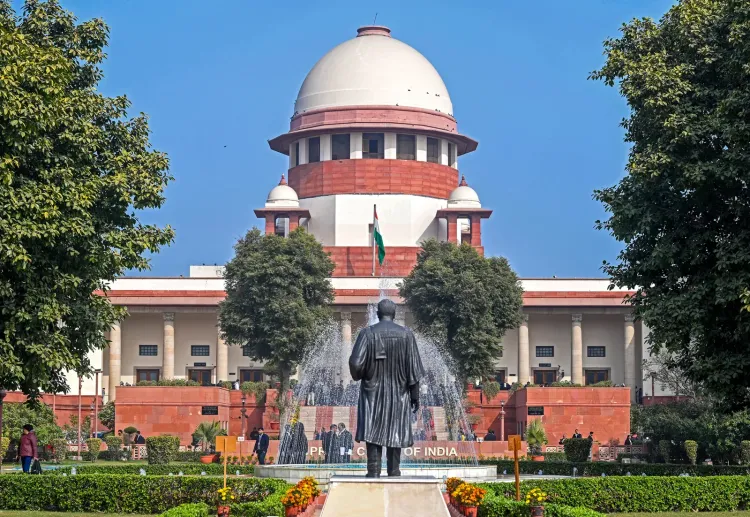
A bench comprising Chief Justice of India (CJI) Surya Kant, Justice Joymalya Bagchi, and Justice V. Mohana issued notice on the petition and made it returnable on 15 September 2026. 'Issue notice, returnable on 15.09.2026,' the CJI Kant-led bench said in its order, while also permitting 'dasti, in addition.'
What the PIL Seeks
The petition, filed by advocates Anil Pandey and A.R. Tripathi under Article 32 of the Constitution, urges directions to the Bar Council of India (BCI) to frame and enforce a comprehensive regulatory framework governing advocates' conduct on digital platforms. It also seeks strict implementation of the Advocates Act, 1961, and the Bar Council of India Rules.
The plea contends that despite statutory safeguards prohibiting direct and indirect solicitation by advocates, there has been an 'unprecedented proliferation' of promotional reels, influencer-style videos, monetised legal content, and paid collaborations across platforms such as Instagram, YouTube, and Facebook.
Key Allegations in the Petition
According to the petition, a substantial portion of such content is recorded inside court premises — corridors and waiting halls — with advocates appearing in full court attire. Videos frequently display contact details, claims of expertise, client testimonials, and sensational legal commentary aimed at attracting prospective litigants.
'The petitioners seek this Hon'ble Court's intervention against the rampant and unchecked proliferation of digital solicitation, the commercialisation of advocacy, and the flagrant misuse of judicial precincts by certain members of the Bar,' the plea stated.
The petition argued that the prohibition against advertisement cannot be circumvented by labelling promotional content as 'legal awareness,' 'educational videos,' or 'know your rights' campaigns. 'The true test is the substance and dominant purpose of the communication,' it said, adding that 'where the primary object is self-promotion, acquisition of clientele or enhancement of commercial visibility, the activity constitutes professional misconduct irrespective of the terminology employed.'
The plea further contended that the use of advocates' robes, bands, and court premises for digital content creation amounts to a direct violation of BCI Rules. 'Court attire is an institutional symbol representing the majesty of law and the dignity of judicial proceedings. It cannot be converted into an instrument of branding, publicity or commercial promotion,' the petition stated.
Prior Regulatory Measures Cited
The petitioners referenced several earlier actions, including the Madras High Court's judgment of 3 July 2024 against lawyer rankings and digital solicitation, the Bar Council of India's advisory of 17 March 2025 warning of disciplinary action against promotional activities through influencers and celebrities, and the Supreme Court Bar Association's resolution prohibiting videography and creation of reels within the apex court premises.
The petitioners also noted that they had submitted a detailed representation on 2 July to the CJI and the BCI Chairman seeking immediate regulatory intervention, but no effective nationwide framework has since been put in place.
What Happens Next
The matter is now listed for hearing before the Supreme Court on 15 September 2026. The BCI and other relevant authorities are expected to file their responses in the intervening period. How the court ultimately defines the boundary between genuine legal education and commercial self-promotion could set a precedent reshaping how India's legal community engages with social media.
Point of View
Suggesting that soft warnings are not working. The harder question the court will eventually have to answer is definitional: at what point does a 'know your rights' video become a solicitation? That line, once drawn by the Supreme Court, will either professionalise digital legal discourse or drive it underground — and the outcome will depend entirely on whether the BCI is given teeth or merely another circular to issue.
NationPress
13 Oct 2026
Frequently Asked Questions
What is the Supreme Court PIL against advocates' social media promotions?
It is a public interest litigation filed by advocates Anil Pandey and A.R. Tripathi under Article 32 of the Constitution, seeking directions to the Bar Council of India to regulate and enforce rules against digital solicitation by advocates on platforms such as Instagram, YouTube, and Facebook. The Supreme Court issued notice on the PIL on 14 July 2025.
What specific conduct does the PIL target?
The PIL targets promotional reels, influencer-style videos, monetised legal content, paid collaborations, and the use of court premises and court attire for social media content creation. It argues these activities violate the Advocates Act, 1961, and BCI Rules prohibiting direct and indirect solicitation.
When is the next hearing in this case?
The Supreme Court has made the matter returnable on 15 September 2026, when the Bar Council of India and other respondents are expected to file their replies.
Has the Bar Council of India taken any action on this issue before?
Yes. The BCI issued an advisory on 17 March 2025 warning of disciplinary action against promotional activities conducted through influencers and celebrities. The Madras High Court also ruled against lawyer rankings and digital solicitation on 3 July 2024, and the Supreme Court Bar Association passed a resolution prohibiting videography and reels within the apex court premises.
Why does the PIL argue that 'legal awareness' content can still be misconduct?
The petition contends that labelling promotional content as 'legal awareness' or 'educational videos' does not change its character. It argues the true test is the dominant purpose: where the primary object is self-promotion or client acquisition, the activity constitutes professional misconduct regardless of how it is described.