PIL in Supreme Court targets 'Cockroach Janta Party' viral campaign over judicial dignity
Synopsis
A PIL filed in the Supreme Court argues that the viral 'Cockroach Janta Party' campaign — which amassed over 21.9 million Instagram followers after CJI Surya Kant's courtroom remarks were widely circulated — represents organised commercial exploitation of judicial proceedings, not protected free speech. The case puts a spotlight on how outrage algorithms and meme culture are reshaping constitutional discourse in India.
Key Takeaways
A PIL has been filed in the Supreme Court targeting the viral 'Cockroach Janta Party' (CJP) satirical campaign.
The plea was filed by advocate Raja Choudhary through advocate-on-record Rajesh Singh Chauhan .
The CJP campaign reportedly amassed over 21.9 million followers on Instagram and was reportedly founded by strategist Abhijeet Dipke .
The campaign arose from oral remarks attributed to CJI Surya Kant during a 15 May hearing; the CJI later clarified his words were aimed at those using 'fake and bogus degrees', not at youth broadly.
The PIL distinguishes between free speech under Article 19(1)(a) and alleged 'organised commercial exploitation' of courtroom proceedings.
The petition seeks court-mandated safeguards and an investigation into alleged monetisation and branding linked to the campaign.
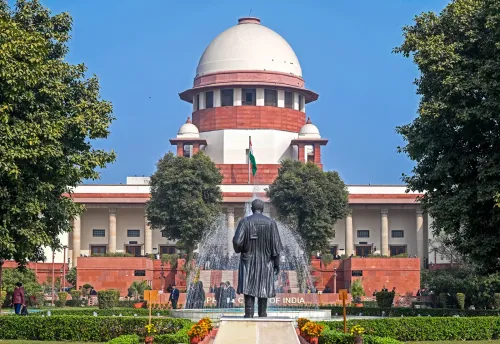
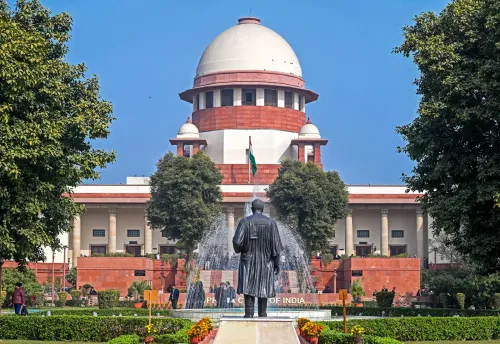
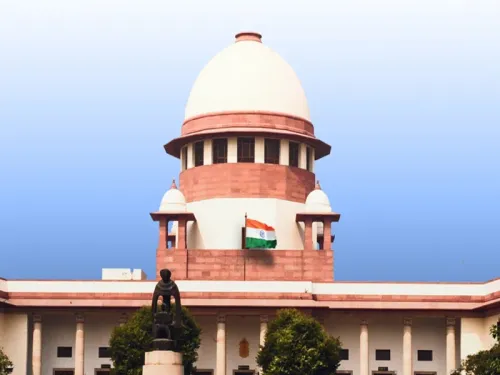
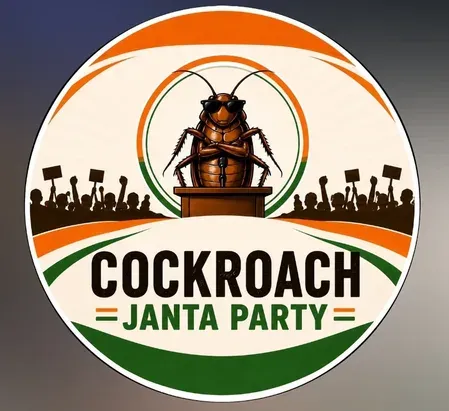
A public interest litigation (PIL) has been filed in the Supreme Court of India, raising concerns over the rapid commercial and political amplification of the satirical 'Cockroach Janta Party' (CJP) campaign — a social media movement that exploded online following controversial oral observations made during a Supreme Court hearing on 15 May 2025. The petition argues that courtroom proceedings are being stripped of constitutional context and repackaged as monetised digital spectacle.
What the PIL Contends
The plea, filed by advocate Raja Choudhary through advocate-on-record Rajesh Singh Chauhan, argues that oral observations made by constitutional courts are increasingly being converted into 'viral commodities', memes, and monetised content, detached from their procedural and institutional context.
The petition specifically targets developments associated with the CJP campaign, alleging 'organised commercial exploitation, trademark-commercialisation, monetised viral circulation, meme-based distortion, and algorithmically amplified digital commodification of oral courtroom proceedings.' According to the plea, the campaign attracted over 21.9 million followers on Instagram — predominantly younger users — in a short span, effectively transforming a judicial controversy into a form of online branding and political symbolism.
The Controversy That Sparked It
The CJP campaign traces its origins to oral remarks reportedly made by Chief Justice of India (CJI) Surya Kant during a 15 May hearing, where terms such as 'parasites' and 'youngsters like cockroaches' were allegedly used in the context of individuals entering professions through fake degrees. The remarks triggered widespread outrage online and fuelled the satirical campaign, which was reportedly founded by political communications strategist Abhijeet Dipke.
However, CJI Surya Kant subsequently issued a clarification asserting that his remarks were directed specifically at persons obtaining 'fake and bogus degrees' and not at the youth of the country. 'I am pained to read how a section of the media has misquoted my oral observations made during the hearing of a frivolous case,' the CJI said in his statement.
The Constitutional Argument
The PIL draws a careful distinction between constitutionally protected free speech and organised commercial exploitation of judicial proceedings. 'The constitutional issue before this Hon'ble Court is therefore not criticism of judiciary,' the plea stated, arguing that constitutional courts derive legitimacy from 'public confidence, institutional neutrality, constitutional trust, and procedural seriousness' — not 'algorithmic approval'.
The petition further warned that if solemn courtroom exchanges continued to be transformed into entertainment content and viral spectacle, 'the constitutional promise of justice itself risks gradual erosion within algorithmic outrage culture.' The plea contended that constitutional proceedings are increasingly being shaped by 'outrage algorithms, trolling cultures, meme warfare, emotional mobilisation, and monetised virality'.
What the PIL Seeks
The petition urges the apex court to formulate safeguards against commercial exploitation of judicial proceedings and to order an investigation into alleged monetisation, branding, and digital propagation of constitutional controversies arising from oral court observations. The PIL stops short of seeking a ban on criticism of the judiciary, explicitly acknowledging that democratic dissent protected under Article 19(1)(a) of the Constitution is distinct from organised commercial exploitation of courtroom discourse.
The Supreme Court is yet to formally list the petition for hearing; how the bench responds could set a significant precedent for the intersection of judicial dignity and digital free speech in India.
Point of View
Yet India's free speech jurisprudence under Article 19(1)(a) has historically protected even offensive political commentary. What the petition gets right is the structural problem: oral observations, stripped of procedural context and amplified by outrage algorithms, can distort public understanding of what courts actually said and meant. The CJI's own clarification — that his remarks targeted fake-degree holders, not youth — received a fraction of the viral attention the original controversy did. That asymmetry is the real institutional risk, and it deserves a more nuanced judicial response than a blanket crackdown on digital engagement with courtroom proceedings.
NationPress
16 Sept 2026
Frequently Asked Questions
What is the 'Cockroach Janta Party' and why is it in the news?
The 'Cockroach Janta Party' (CJP) is a satirical social media campaign that went viral after oral remarks attributed to Chief Justice of India Surya Kant — including references to 'parasites' and 'cockroaches' — were widely circulated online following a Supreme Court hearing on 15 May. The campaign reportedly amassed over 21.9 million Instagram followers before a PIL was filed in the Supreme Court challenging its commercial and political amplification.
What does the PIL filed in the Supreme Court seek?
The PIL, filed by advocate Raja Choudhary, urges the Supreme Court to formulate safeguards against the commercial exploitation of judicial proceedings and to order an investigation into alleged monetisation, branding, and digital propagation of controversies arising from oral court observations. It explicitly clarifies that it does not seek to curb legitimate criticism of the judiciary protected under Article 19(1)(a).
What did CJI Surya Kant actually say, and how did he clarify his remarks?
CJI Surya Kant reportedly used terms such as 'parasites' and 'youngsters like cockroaches' during a 15 May hearing in the context of individuals entering professions through fake degrees. He subsequently issued a clarification stating his remarks were directed at persons obtaining 'fake and bogus degrees' and not at the youth of the country, adding that he was 'pained' by what he described as misquotation by a section of the media.
Who reportedly founded the Cockroach Janta Party campaign?
The CJP campaign was reportedly founded by political communications strategist Abhijeet Dipke. It quickly spread across social media platforms, particularly Instagram, where it gained over 21.9 million followers, predominantly among younger users.
How does the PIL distinguish between free speech and exploitation of judicial proceedings?
The PIL argues that democratic dissent and criticism of the judiciary, protected under Article 19(1)(a) of the Constitution, are constitutionally distinct from organised commercial exploitation of courtroom proceedings. The petition contends that the CJP campaign crossed into the latter category through trademark-commercialisation, monetised viral circulation, and meme-based distortion of judicial discourse.