Supreme Court issues notice on PIL over 'Cockroach Janta Party' viral campaign
Synopsis
The Supreme Court has issued notice on a PIL that targets the viral 'Cockroach Janta Party' campaign — a digital movement born from a May 15 hearing — as an example of organised commercial exploitation of judicial observations. The case could set a landmark precedent on whether monetising and meme-ifying courtroom remarks crosses a constitutional line.
Key Takeaways
The Supreme Court issued notice on 11 August on a PIL over alleged commercial exploitation of oral judicial observations.
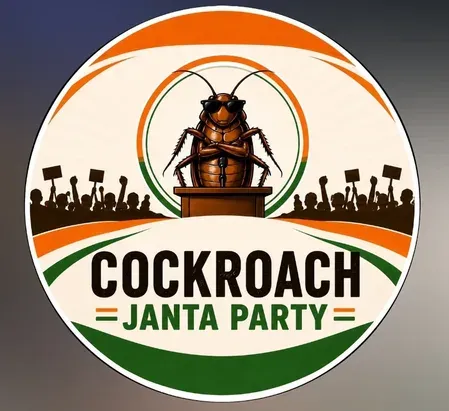
The PIL specifically targets the 'Cockroach Janta Party' (CJP) viral campaign, which arose from remarks made during a hearing on 15 May .
Notices sent to Union of India , MeitY , Bar Council of India , and the CBI ; next hearing on 10 September .
CJI Surya Kant had earlier clarified the original remarks were directed at those with fake and bogus degrees , not at youth generally.
The PIL seeks safeguards against trademark-commercialisation, meme-based distortion, and monetised viral circulation of courtroom proceedings.
The petition argues the issue is not democratic dissent under Article 19(1)(a) but organised digital commodification of judicial proceedings.
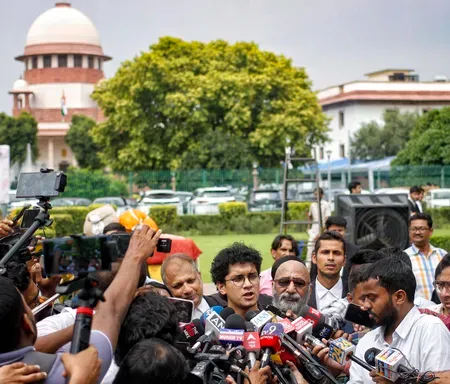
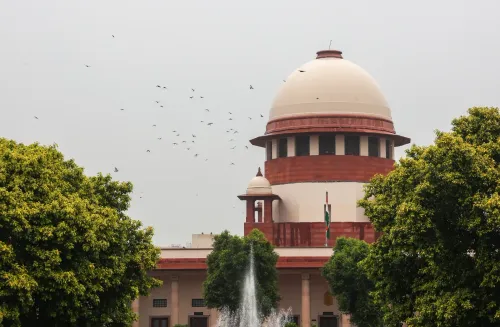
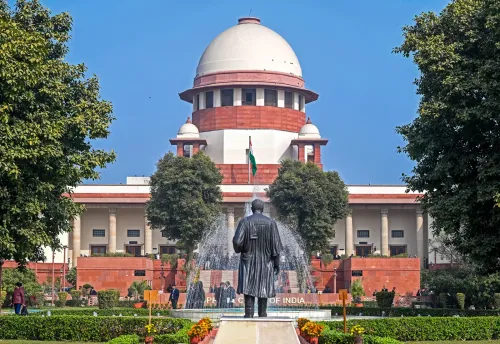
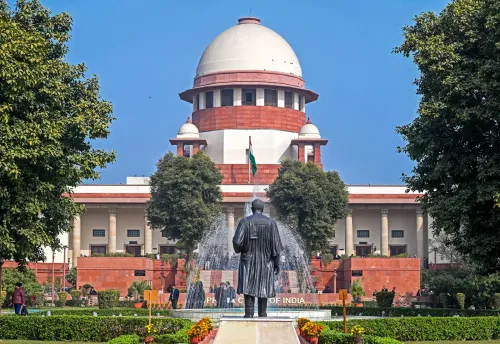
The Supreme Court on Tuesday, 11 August issued notice on a Public Interest Litigation (PIL) seeking safeguards against the alleged commercial exploitation and monetisation of oral observations made during judicial proceedings — specifically targeting the viral 'Cockroach Janta Party' (CJP) social media campaign that emerged from a Supreme Court hearing earlier this year.
What the Court Has Done
A Bench comprising Chief Justice of India (CJI) Surya Kant and Justices Joymalya Bagchi and V. Mohana issued notices to the Union of India, the Ministry of Electronics and Information Technology (MeitY), the Bar Council of India (BCI), and the Central Bureau of Investigation (CBI). The matter has been posted for further hearing on 10 September.
The PIL and Its Core Allegations
The PIL, filed through advocate-on-record Rajesh Singh Chauhan, contends that courtroom exchanges and oral observations of constitutional courts are being transformed into viral digital content, memes, political symbolism, and monetised online campaigns — stripped of their judicial and procedural context.
The petition specifically cites the CJP campaign, alleging that remarks made during a Supreme Court hearing were 'selectively clipped, meme-ified, mimicked, commercially circulated, and transformed into viral digital content.' The petitioner claims this constitutes organised commercial exploitation rather than protected democratic dissent under Article 19(1)(a) of the Constitution.
The Controversy That Triggered the Campaign
The dispute traces back to oral observations made during a hearing on 15 May, when expressions including references to 'parasites' and 'youngsters like cockroaches' were reportedly used in the context of persons allegedly entering professions on the basis of fake degrees. The remarks triggered the CJP campaign, which the petitioner claims rapidly evolved into a large-scale digital movement, complete with branding and political symbolism.
Following the public controversy, CJI Surya Kant clarified that the remarks were directed specifically at persons obtaining 'fake and bogus degrees' and were not aimed at the youth of the country broadly.
What the PIL Seeks
The petition has urged the Supreme Court to formulate safeguards governing the commercial use and monetisation of judicial proceedings. It specifically calls for directions against trademark-commercialisation, monetised viral circulation, meme-based distortion, and algorithmically amplified digital commodification of courtroom proceedings.
The plea has also sought appropriate directions for an investigation into activities allegedly involving the monetisation, branding, and digital propagation of controversies arising from oral court observations. It further warns against the growing influence of 'outrage algorithms, trolling cultures, meme warfare, emotional mobilisation, and monetised virality' on public discourse surrounding judicial proceedings.
The Broader Concern
The petition contends that constitutional courts derive legitimacy from 'public confidence, institutional neutrality, constitutional trust, and procedural seriousness' — not algorithmic popularity. The petitioner argues that the increasing transformation of solemn courtroom interactions into viral spectacles risks undermining the institutional dignity of constitutional courts and eroding public confidence in the judicial process. The Supreme Court's response to this PIL is expected to set a significant precedent on how judicial proceedings may be used and circulated in the digital age.
Point of View
Which is constitutionally protected. Yet the petitioner's concern about organised monetisation of selectively clipped remarks is not frivolous; it points to a structural gap in India's digital governance framework. The CJI's own clarification about the original remarks suggests institutional awareness of the reputational stakes. How the court navigates the line between protecting its dignity and preserving free speech will be closely watched by both civil liberties advocates and digital platforms alike.
NationPress
25 Sept 2026
Frequently Asked Questions
What is the 'Cockroach Janta Party' campaign and why is it before the Supreme Court?
The 'Cockroach Janta Party' (CJP) is a viral social media campaign that emerged after oral observations made during a Supreme Court hearing on 15 May, in which expressions including references to 'youngsters like cockroaches' were reportedly used regarding persons entering professions with fake degrees. A PIL filed by advocate-on-record Rajesh Singh Chauhan alleges the remarks were selectively clipped and commercially exploited as memes, political branding, and monetised digital content, prompting the Supreme Court to issue notice on 11 August.
Who has the Supreme Court issued notice to in this case?
The Supreme Court Bench of CJI Surya Kant, Justice Joymalya Bagchi, and Justice V. Mohana issued notices to the Union of India, the Ministry of Electronics and Information Technology (MeitY), the Bar Council of India, and the Central Bureau of Investigation (CBI). The next hearing is scheduled for 10 September.
What does the PIL seek from the Supreme Court?
The PIL seeks court-formulated safeguards against the commercial use and monetisation of judicial proceedings, including directions against trademark-commercialisation, meme-based distortion, and algorithmically amplified digital commodification of courtroom observations. It also seeks an investigation into alleged organised monetisation and branding activities linked to the CJP campaign.
Does the PIL amount to restricting free speech or criticism of the judiciary?
The petitioner explicitly argues it does not. The PIL contends the issue is not democratic dissent or criticism of the judiciary protected under Article 19(1)(a) of the Constitution, but rather organised commercial exploitation and monetisation of judicial proceedings stripped of their context.
What did CJI Surya Kant say about the original remarks that sparked the controversy?
CJI Surya Kant clarified, following the public controversy, that the remarks made during the 15 May hearing were directed specifically at persons obtaining 'fake and bogus degrees' and were not aimed at the youth of the country broadly.