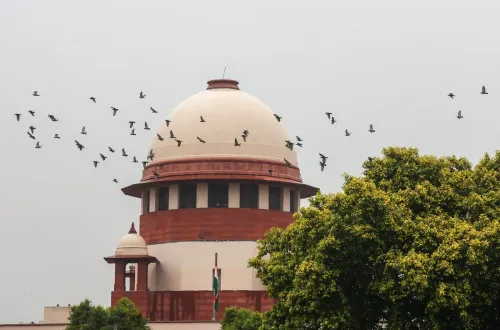
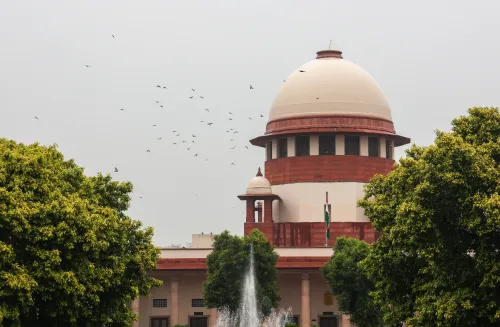
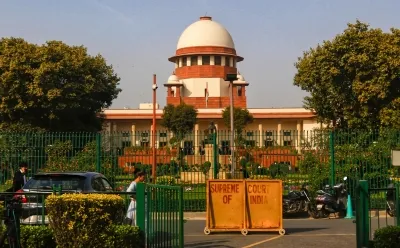
Supreme Court bars unauthorised sharing of court hearing recordings on social media
Synopsis
The Supreme Court has moved to shut down the unauthorised clipping and uploading of court hearing recordings — issuing notices to Meta, Google, X Corp, YouTube, and every High Court in India. The order draws a sharp line: accredited press is exempt, but everyone else must seek permission. A uniform national framework for live streaming is now squarely on the judicial agenda.
Key Takeaways
The Supreme Court on 28 July barred extraction, uploading, or monetisation of court hearing recordings on social media without prior permission.
Permission must come from the Secretary General of the Supreme Court or the Registrar Generals of the respective High Courts .
Accredited and recognised news outlets are explicitly exempted from the restriction.
Notices issued to Union government , Bar Council of India , all High Courts , and platforms including Meta , Google , X Corp , and YouTube .
All High Courts must submit status reports on adoption of the apex court's Model Rules for live streaming.
Next hearing is scheduled for 31 July .
The Supreme Court of India on 28 July issued an interim direction prohibiting the extraction, dissemination, monetisation, or uploading of audio and video recordings of judicial proceedings on social media and other digital platforms without prior written permission from the Secretary General of the Supreme Court or the Registrar Generals of the respective High Courts. The order came while the court issued notice on a writ petition seeking a uniform national framework for live streaming and recording of court proceedings.
What the Interim Order Says
A bench comprising Chief Justice of India Surya Kant, Justice Joymalya Bagchi, and Justice V. Mohana passed the direction, which covers a broad sweep of actions — posting, re-posting, uploading, transmitting, modifying, storing, and hosting of court recordings on any digital platform. The order applies to social media intermediaries and technology platforms alike.
Critically, the bench clarified that the restriction does not extend to accredited media organisations. 'This order shall have no bearing on the reporting of Court proceedings by recognised news outlets,' the bench stated, drawing a clear line between unauthorised individual uploads and legitimate press reportage.
Who Has Been Issued Notice
The Supreme Court impleaded all High Courts across the country as parties and issued notices to a wide set of respondents, including the Union government, the Bar Council of India, and major social media and technology intermediaries — LinkedIn, Meta Platforms, Facebook, Instagram, WhatsApp, Google, X Corp, and YouTube. The sweep of respondents signals that the court intends a comprehensive, platform-agnostic enforcement mechanism.
What the Government and High Courts Must Do
The Union government has been directed to submit a proposal identifying the nodal ministries responsible for implementing the reliefs sought in the petition. Separately, all High Courts have been asked to file status reports detailing their adoption of the Model Rules for live streaming and recording of court proceedings that the apex court had earlier circulated.
Those status reports must also address 'the impact and feasibility of continuous/uninterrupted live streaming,' the bench directed — a question that goes to the heart of how far judicial transparency can practically extend in India's court system.
Additionally, the Secretary General of the Supreme Court and the Registrar Generals of all High Courts have been directed to publish the order on their respective official websites for public awareness.
Background and Broader Significance
The writ petition before the court seeks a standardised, nationwide framework for live streaming and recording of hearings — a reform that has gained momentum since the Supreme Court itself began live streaming Constitution Bench proceedings in 2022. Several High Courts have adopted their own rules at varying levels of compliance, creating an uneven landscape that the petition aims to address.
This comes amid growing concerns about court recordings being clipped, edited, and circulated on social media — often out of context — raising questions about contempt of court, misrepresentation of judicial proceedings, and the monetisation of court content by unauthorised channels. The interim order effectively plugs that gap until a comprehensive framework is finalised.
The matter is next listed for hearing on 31 July.
Point of View
But it also exposes a governance gap that has been ignored for years. Since live streaming began in 2022, the court has had no enforcement mechanism against the clipping and monetisation of proceedings by third parties — a vacuum that social media platforms exploited freely. The order's breadth, sweeping in Meta, Google, X Corp, and YouTube, signals judicial intent to treat this as a platform-accountability issue, not just a contempt question. The real test, however, lies in the Union government's nodal-ministry proposal: without a credible, tech-literate enforcement agency, the order risks remaining aspirational. The status reports from High Courts will also be revealing — compliance with the Model Rules has been patchy, and the court's push for 'continuous/uninterrupted live streaming' will meet resistance from courts that lack the infrastructure to deliver it.
NationPress
27 Oct 2026
Frequently Asked Questions
What has the Supreme Court ordered regarding court hearing recordings?
The Supreme Court has issued an interim order prohibiting anyone from extracting, uploading, monetising, or sharing audio-video recordings of judicial proceedings on social media or digital platforms without prior permission from the Secretary General of the Supreme Court or the Registrar Generals of the respective High Courts. The order was passed on 28 July by a bench led by Chief Justice of India Surya Kant.
Are news organisations affected by this Supreme Court order?
No. The bench explicitly clarified that the order does not affect reporting of court proceedings by recognised and accredited news outlets. The restriction targets unauthorised individual or third-party uploads, not legitimate press coverage.
Which platforms and organisations have been issued notice by the Supreme Court?
The court issued notices to the Union government, the Bar Council of India, all High Courts in India, and major technology and social media intermediaries including LinkedIn, Meta Platforms, Facebook, Instagram, WhatsApp, Google, X Corp, and YouTube.
What must the Union government and High Courts do in response?
The Union government must submit a proposal identifying the nodal ministries responsible for implementing the reliefs sought in the petition. All High Courts must file status reports detailing their adoption of the apex court's Model Rules for live streaming and recording, including their assessment of the feasibility of continuous live streaming.
When is the next hearing in this case?
The Supreme Court has listed the matter for further hearing on 31 July.