NCW Unveils Major Roadmap for Acid Attack Survivors' Care & Justice
Synopsis
The NCW has submitted a landmark multi-ministry roadmap for acid attack survivors in India, proposing a Golden Hour Protocol, fast-track trials, a national compensation framework, disability recognition under RPwD Act, and a national case registry — one of the most comprehensive survivor-centric policy pushes in recent Indian history.
Key Takeaways
The National Commission for Women (NCW) submitted wide-ranging recommendations to 4 Central ministries on April 22, 2025 for acid attack survivor welfare.
A "Golden Hour Protocol" has been proposed to ensure standardised emergency care for acid attack victims at all hospitals across India.
The NCW called for expedited passage of the Victims of Acid Attacks Bill, 2022 , which has been pending in Parliament despite growing advocacy.
Acid attack survivors are recommended to be explicitly recognised under the Rights of Persons with Disabilities Act, 2016 with a dedicated disability category.
A national registry integrating FIR data, medical records, compensation, and rehabilitation — with real-time monitoring dashboards — has been proposed for transparency.
Stricter regulation of acid sale including licensing and amendments to the Poison Act, 1919 have been recommended to prevent future attacks.
The National Commission for Women (NCW) has submitted a sweeping, survivor-centric set of recommendations to four key Central ministries on April 22, 2025, laying out a comprehensive roadmap to transform medical care, legal justice, financial relief, and long-term rehabilitation for acid attack survivors across India. The move signals one of the most structured policy pushes in recent years to address the systemic gaps that have long left survivors without adequate support.
Roundtable That Sparked the Roadmap
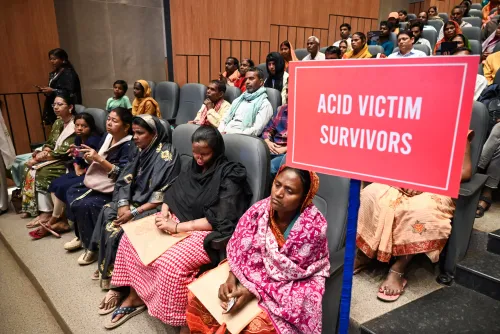
The recommendations were formulated following a high-level roundtable consultation titled "Navjeevan: A Consultation on Care, Justice & Dignity for Acid Attack Survivors", held on January 16, 2025. Framed under the provisions of the NCW Act, 1990, the proposals were sent to the Ministry of Home Affairs, the Ministry of Health and Family Welfare, the Ministry of Women and Child Development, and the Ministry of Social Justice and Empowerment.
The consultation brought together survivors, legal experts, medical professionals, and civil society representatives, making the resulting framework one of the most ground-level-informed policy documents on acid violence in India's recent history.
Medical Care and Emergency Protocols
At the core of the NCW's medical recommendations is a proposed "Golden Hour Protocol" — a standardised emergency response framework to ensure immediate, uniform treatment for acid attack victims at all hospitals across the country. The Commission has called for free, lifelong medical treatment, encompassing reconstructive surgeries and assistive care, to be guaranteed to every survivor.
The NCW has also recommended establishing district-level centres of excellence for burn care and dedicated hospital units equipped to support survivors through both treatment and long-term follow-up. Recognising the deep psychological toll of acid violence, the Commission stressed the urgent need for trauma-informed counselling, family assistance programmes, and structured peer-support networks.
Widespread sensitisation of police personnel, judiciary members, healthcare workers, and local communities has also been flagged as a critical intervention to reduce stigma and improve institutional response.
Legal Reforms and Fast-Track Justice
On the legal front, the NCW has proposed fast-track investigations and trials for acid attack cases, alongside simplified FIR procedures including mandatory Zero FIRs to ensure no survivor is turned away at any police station. The appointment of dedicated legal officers to assist survivors through the justice process has also been recommended.
The Commission has pushed for stricter punitive provisions under existing law and called for the expedited passage of the Victims of Acid Attacks Bill, 2022, which has remained pending despite growing advocacy. This legislative gap has been a persistent criticism from survivor rights groups, who argue that India's legal framework still does not adequately reflect the severity and specificity of acid violence.
Notably, while Sections 326A and 326B of the Indian Penal Code — now carried forward under the Bharatiya Nyaya Sanhita — criminalise acid attacks with stringent penalties, survivors and advocates have long argued that enforcement and compensation mechanisms remain weak and inconsistent across states.
Financial Support, Livelihood, and Disability Rights
To address financial vulnerability, the NCW has proposed a uniform national compensation framework with time-bound disbursal of relief and monthly pension schemes for survivors. Direct benefit transfers (DBT) linked to FIR registration and enhanced compensation scaled to the severity of injuries are among the specific mechanisms suggested.
The recommendations also cover livelihood and education support, including skill development, digital literacy programmes, workplace inclusion mandates, and financial incentives for companies that employ acid attack survivors. Support for survivor entrepreneurship under existing national schemes has been highlighted as an underutilised avenue.
In a significant legal recognition push, the NCW has advocated for acid attack survivors to be explicitly recognised under the Rights of Persons with Disabilities (RPwD) Act, 2016, including the creation of a dedicated disability category and streamlined access to welfare benefits. This is a long-standing demand from survivor communities, as the current disability framework does not consistently accommodate the complex, multi-system injuries caused by acid attacks.
Prevention, Regulation, and National Registry
On the prevention side, the Commission has recommended stricter regulation of acid sale, including mandatory licensing, regular audits, and compulsory record-keeping by sellers. Amendments to the Poison Act, 1919 to strengthen enforcement have also been called for — a recommendation that echoes a 2013 Supreme Court directive that ordered states to regulate acid sales, compliance with which has been patchy at best across Indian states.
The NCW has proposed the creation of a national registry for acid attack cases, integrating data from FIRs, medical care, compensation, and rehabilitation into a single platform supported by real-time monitoring dashboards. This data infrastructure, if implemented, could be a game-changer for accountability and policy refinement.
The Commission has urged all concerned ministries to act swiftly, emphasising that a coordinated, time-bound approach is essential to ensure survivors receive timely care, access to justice, and a life of dignity and independence. With India recording hundreds of acid attack cases annually — and survivor groups arguing that official numbers significantly undercount actual incidents — the urgency of these recommendations cannot be overstated. The coming months will be critical in determining whether these proposals translate into enforceable policy or remain aspirational documents.
Point of View
But through the very gaps it now seeks to fill. The fact that a Golden Hour Protocol doesn't already exist, that the 2022 Victims Bill remains unpassed, and that survivors still aren't consistently recognised under disability law reveals a systemic failure that spans multiple governments. While the recommendations are commendable in scope, India has a troubling history of well-crafted policy documents gathering dust — the 2013 Supreme Court order on acid regulation being a prime example of partial compliance. The real test is not the roadmap's ambition, but whether ministries treat it as a binding mandate or a performative exercise.
NationPress
15 Sept 2026
Frequently Asked Questions
What recommendations has the NCW made for acid attack survivors in India?
The NCW has submitted a comprehensive set of recommendations to four Central ministries covering medical care, legal justice, financial compensation, disability rights, and crime prevention. Key proposals include a Golden Hour Protocol for emergency treatment, fast-track trials, a national compensation framework, and explicit recognition under the RPwD Act, 2016.
What is the Golden Hour Protocol proposed by the NCW for acid attack victims?
The Golden Hour Protocol is a proposed standardised emergency care framework to ensure that all hospitals across India provide immediate, uniform treatment to acid attack survivors within the critical first hour of injury. It is part of the NCW's broader push for free, lifelong medical care including reconstructive surgeries.
What is the Victims of Acid Attacks Bill 2022 and why is it significant?
The Victims of Acid Attacks Bill, 2022 is pending legislation in India that aims to provide a dedicated legal framework for compensation and rehabilitation of acid attack survivors. The NCW has called for its expedited passage, as the current legal provisions are considered inadequate to address the specific needs of survivors.
Which ministries received the NCW's acid attack survivor recommendations?
The NCW sent its recommendations to four Central ministries: the Ministry of Home Affairs, Ministry of Health and Family Welfare, Ministry of Women and Child Development, and Ministry of Social Justice and Empowerment. The proposals were based on the Navjeevan roundtable consultation held on January 16, 2025.
Are acid attack survivors recognised as persons with disabilities in India?
Currently, acid attack survivors are not consistently or explicitly recognised under the Rights of Persons with Disabilities Act, 2016 in India. The NCW has specifically recommended creating a dedicated disability category for acid attack survivors under the RPwD Act to ensure streamlined access to welfare benefits.