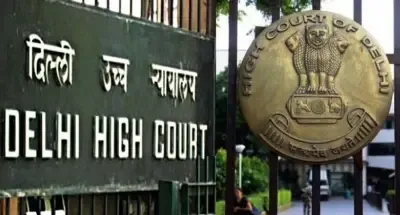
Delhi HC bars SBI from recovering ₹3.60 lakh pension from widow, orders refund with 6% interest
Synopsis
The Delhi High Court has drawn a firm line: a widow cannot be penalised for a bank's own processing error. Ruling that SBI's 'wrong ENHANCE DATE' — not any act of Indra — caused the ₹3.60 lakh overpayment, Justice Narula ordered a full refund with interest and called unilateral pension deductions without notice a violation of 'elementary fairness.'
Key Takeaways
The Delhi High Court barred SBI from recovering ₹3.60 lakh in alleged excess pension from widow Indra .
Justice Sanjeev Narula ruled the overpayment arose from the bank's own processing error, not any misrepresentation by the petitioner.
SBI was directed to refund all deducted amounts within eight weeks with simple interest at 6 per cent per annum from the date of each deduction.
The court held that recovery without prior notice 'offends elementary fairness' and rejected a 2004 undertaking relied upon by SBI as insufficient to override equitable protections.
The case was placed within the Supreme Court 's 'protective zone' precedent shielding pensioners from undue hardship caused by institutional errors.
The Delhi High Court has barred the State Bank of India (SBI) from recovering alleged excess family pension payments from a widow, ruling that the overpayment resulted entirely from errors in the bank's own pension processing and not from any fraud or misrepresentation by the beneficiary. The court further directed SBI to refund all amounts already deducted, along with 6 per cent simple annual interest.
Background of the Case
The petitioner, Indra, began drawing family pension after her husband — an Upper Division Clerk in the Election Department under the South-West Delhi SDM — died in service in June 2003. A pension payment order was issued by the Delhi government and disbursed through SBI's Kapashera branch.
Indra later noticed a sharp reduction in her monthly pension and was told that an excess amount of over ₹2.51 lakh had been paid due to a 'wrong ENHANCE DATE' in the pension records. SBI subsequently revised the alleged excess upward to ₹3.60 lakh and began making monthly deductions from her pension without prior notice.
What the Court Found
A single-judge bench of Justice Sanjeev Narula observed that the bank's own records confirmed the excess payments arose from internal processing errors, not from any concealment or false information furnished by the petitioner. 'There is nothing on record to suggest that the petitioner knew, or ought reasonably to have known, that she was receiving amounts beyond her lawful entitlement,' Justice Narula stated in the judgment.
The court also noted that Indra, as a family pensioner, had 'no role in configuring the software or dates' and could not reasonably have been expected to detect errors in the bank's internal calculations.
On Procedural Fairness and the SBI Undertaking
The bench faulted SBI for initiating recovery without first communicating the basis or particulars of the proposed deductions to the petitioner. 'Recovery from pension without prior communication of the basis and particulars of the proposed recovery offends elementary fairness,' the judgment held.
The court also rejected SBI's reliance on an undertaking signed by Indra in 2004 — obtained as part of standard pension formalities — permitting adjustment of excess payments. Justice Narula held that such a generic document 'does not, in these facts, suffice to displace the equitable restraint recognised by the Supreme Court.'
Supreme Court Precedents and the 'Protective Zone'
Referring to Supreme Court precedents on recovery of excess payments from pensioners, the Delhi High Court held that this case fell within the 'protective zone' recognised by the apex court — applicable where recovery would cause undue hardship to retired employees or their dependants. This principle has been consistently applied by Indian courts to shield pensioners from bureaucratic or banking errors that they had no hand in creating.
The Court's Order
Justice Narula allowed the writ petition and directed SBI to refund all recovered amounts within eight weeks, along with simple interest at 6 per cent per annum calculated from the date of each deduction until actual payment. The bank was also restrained from making any further recoveries from Indra's family pension.
The ruling reinforces judicial protection for family pensioners against unilateral and procedurally deficient recovery actions by disbursing banks.
Point of View
Without explanation, and with no acknowledgment of their own role in creating the overpayment. The Delhi High Court's invocation of the Supreme Court's 'protective zone' doctrine is a reminder that pensioners are not debtors and that procedural fairness is not optional. The harder question this case surfaces: how many similar recoveries are ongoing across SBI's pension portfolio, and is there any systemic audit to catch processing errors before they translate into deductions from the most financially vulnerable beneficiaries?
NationPress
13 Oct 2026
Frequently Asked Questions
What did the Delhi High Court rule in the SBI family pension case?
The Delhi High Court ruled that SBI cannot recover ₹3.60 lakh in alleged excess pension payments from widow Indra, finding that the overpayment was caused by the bank's own processing error and not by any fraud or misrepresentation on her part. The court ordered SBI to refund all deducted amounts within eight weeks with 6 per cent annual interest.
Why was SBI recovering money from the widow's pension?
SBI claimed that a 'wrong ENHANCE DATE' in the pension records had led to excess payments — initially estimated at over ₹2.51 lakh and later revised to ₹3.60 lakh — and began monthly deductions from Indra's family pension to recover the amount.
What is the 'protective zone' doctrine cited by the Delhi High Court?
The 'protective zone' is a principle established by the Supreme Court of India that protects retired employees and pensioners from recovery of excess payments when the overpayment was not caused by their own fraud or misrepresentation and when recovery would cause undue hardship. The Delhi High Court applied this doctrine to bar SBI's recovery in this case.
Was the 2004 undertaking signed by the widow legally valid for recovery?
No. Justice Sanjeev Narula rejected SBI's reliance on the 2004 undertaking, holding that it was a standard-form document obtained during pension formalities and could not override the equitable protections recognised by the Supreme Court for pensioners in such circumstances.
What happens next after the Delhi High Court order?
SBI must refund all amounts already deducted from Indra's family pension within eight weeks of the judgment, along with simple interest at 6 per cent per annum from the date of each deduction. The bank is also restrained from making any further recoveries from her pension.