Supreme Court Overturns Patna HC Bail in Dowry Death Case
Synopsis
The Supreme Court has revoked a bail order from the Patna High Court in a dowry death case, criticizing its 'mechanical approach' and emphasizing the need for careful judicial scrutiny in such serious matters.
Key Takeaways
The Supreme Court has overturned a bail order in a dowry death case.
The Patna High Court was criticized for a mechanical approach to justice.
The deceased was subjected to significant dowry harassment.
The court mandated the husband to surrender within a week.
Judicial scrutiny in dowry death cases is crucial for public trust.
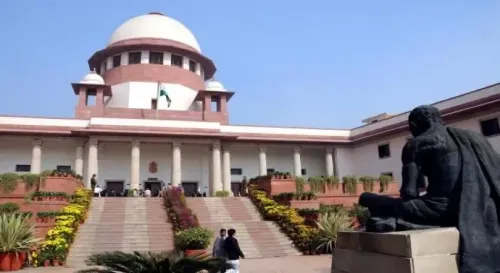
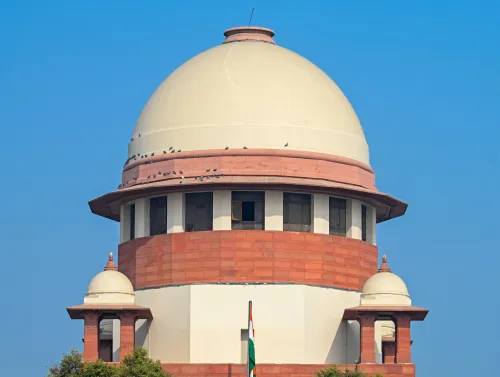
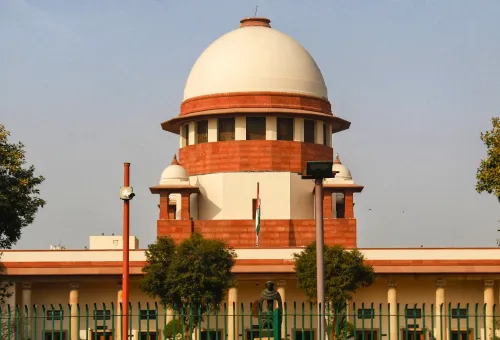
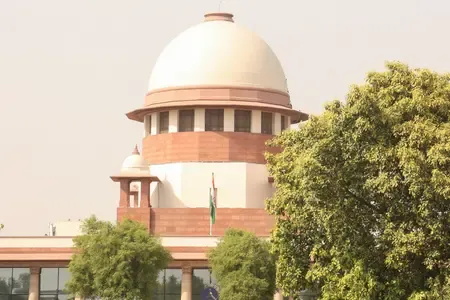
New Delhi, March 27 (NationPress) The Supreme Court has annulled a bail decision made by the Patna High Court concerning a man charged in a dowry death incident, deeming the bail as “entirely untenable” and criticizing the “mechanical approach” utilized in handling such grave matters.
A bench comprising Justices J.B. Pardiwala and Vijay Bishnoi granted the appeal filed by the mother of the victim, mandating that the husband of the deceased report to the prison authorities within a week; failure to do so would result in the trial court issuing a non-bailable warrant.
The dowry death case originates from a First Information Report (FIR) lodged on September 1, 2024, at Gopalpur Police Station, Bihar, under Sections 103(1) and 80 of the Bharatiya Nyaya Sanhita, 2023.
According to the prosecution, the deceased, married for approximately one and a half years, was discovered dead in her marital home under suspicious circumstances, exhibiting numerous external and internal injuries.
The FIR, filed by the victim’s mother, Lal Muni Devi, claimed that a significant dowry, which included Rs 20 lakh in cash and gold and silver valued at around Rs 6 lakh, had been provided at the time of marriage. However, the accused and his family allegedly persisted in demanding a motorcycle, a vehicle, and additional items, subjecting the deceased to harassment. It was also claimed that the accused engaged in an extramarital affair within six months of the marriage, resulting in further disputes and mistreatment of the woman.
The post-mortem report indicated serious injuries, such as a fractured skull with lacerated brain matter, a ruptured sternum and heart, a pelvic fracture, and multiple abrasions. The cause of death was reported as “haemorrhage and shock due to head injury.”
The apex court noted that the Patna High Court failed to adequately assess critical evidence before granting bail. “The High Court's decision to release the accused on bail is entirely untenable. In a grave crime like dowry death, the High Court should have exercised caution in its discretion,” remarked the Justice Pardiwala-led bench.
It further stated that the Patna High Court primarily considered the duration of custody and the slow trial progress without addressing the seriousness of the allegations or the medical evidence. “The High Court's order lacked discussion. The only factors considered were the accused's custody status and the examination of just two witnesses,” the ruling explained.
The Supreme Court also pointed out that the Patna High Court had “overlooked several critical aspects,” including the post-mortem results that highlighted multiple serious injuries and the statutory presumption under the Bharatiya Sakshya Adhiniyam, 2023.
Expressing concern about the trend of granting bail in such cases, the Supreme Court emphasized that dowry deaths pose a significant social issue necessitating thorough judicial examination. “It is regrettable that dowry deaths continue to be a severe social issue in today's society, and courts are obliged to conduct deeper scrutiny,” added the Justice Pardiwala-led bench, warning that a “superficial application of bail parameters” could undermine public confidence in the judiciary's commitment to addressing dowry deaths.
Rejecting the defense's assertion that the incident could be a suicide, the apex court clarified that even suicides linked to dowry harassment are punishable by law.
While nullifying the Patna High Court's ruling, the Supreme Court specified that it was not passing any judgment on the case's merits and that the trial court would resolve the matter based on evidence.
The court instructed the trial court to expedite the proceedings, aiming for completion within six months.
Additionally, the Supreme Court directed that a copy of its ruling be forwarded to the Registrar General of the Patna High Court for appropriate action before the Chief Justice.
Point of View
The Supreme Court emphasizes the need for rigorous judicial scrutiny in dowry death cases, highlighting the potential dangers of a mechanical approach to bail decisions. The court's intervention reflects a commitment to ensuring justice and addressing societal issues related to dowry harassment.
NationPress
3 Oct 2026
Frequently Asked Questions
What did the Supreme Court rule regarding the Patna HC's bail order?
The Supreme Court annulled the Patna High Court's bail order, deeming it 'wholly unsustainable' and highlighting the need for careful consideration in dowry death cases.
What was the basis for the Supreme Court's decision?
The Supreme Court criticized the Patna High Court for its 'mechanical approach' and failure to adequately assess critical evidence related to the case.
What charges are involved in the dowry death case?
The case involves charges under Sections 103(1) and 80 of the Bharatiya Nyaya Sanhita, 2023, concerning dowry death.
What are the implications of the Supreme Court's ruling?
The ruling emphasizes the necessity for thorough judicial scrutiny in dowry death cases and aims to strengthen public confidence in the judiciary.
What was the timeline for the trial court as per the Supreme Court's direction?
The Supreme Court directed the trial court to expedite proceedings, preferably completing the trial within six months.