Delhi HC: Fast-track FIR pleas in dowry death cases of young brides
Synopsis
In a sharp judicial rebuke, the Delhi High Court has flagged a disturbing pattern: FIRs in young-bride dowry deaths often take longer to file than the marriages themselves lasted. Justice Swarana Kanta Sharma's order — denying bail to a husband and in-laws after an 8-month FIR delay — pushes magistrates to treat such pleas as time-critical, not routine paperwork.
Key Takeaways
The Delhi High Court directed courts to fast-track FIR-registration pleas in unnatural deaths of young married women.
Justice Swarana Kanta Sharma denied anticipatory bail to the husband Sandeep alias Sunny and his parents Puran Chand and Satwati .
The deceased, Heena alias Anu , married on 11 December 2024 and died on 3 July 2025 — under seven months into the marriage.
The FIR was registered only on 13 March 2026 , more than eight months after the death and following a Magistrate's direction.
The court warned that delays risk loss of evidence, fading witness memory and erosion of material truth.
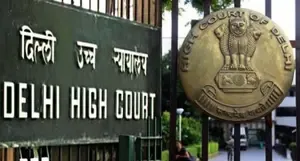
The Delhi High Court has directed lower courts to fast-track applications seeking registration of FIRs in cases involving the unnatural death of young married women, warning that procedural delays risk crippling investigations into suspected dowry harassment. The observation came as the court denied anticipatory bail to a husband and his parents in a case where an FIR was registered only after judicial intervention — more than eight months after the bride's death.
Key observations by the court
A single-judge Bench of Justice Swarana Kanta Sharma ruled that such applications must be listed on shorter dates and taken up expeditiously, particularly where allegations of dowry-related harassment are raised and police decline to act. The court said the issue of FIR registration and commencement of investigation should not be left unresolved for months.
“This Court hopes that, in future, applications seeking directions for registration of FIR, concerning the unnatural death of a young woman within a short period of marriage, particularly where allegations of dowry-related harassment are raised and the police fail to register an FIR, shall be taken up with greater urgency by the Courts and be listed on shorter dates so that the issue of registration of FIR and commencement of investigation is not left unresolved for months together,” Justice Sharma said.
The case at the heart of the order
The deceased, Heena alias Anu, had married the accused, Sandeep alias Sunny, on 11 December 2024, and died on 3 July 2025 under allegedly unnatural circumstances — less than seven months into the marriage. Her parents flagged suspicion against the husband and in-laws before the Executive Magistrate on the day of her death itself, but no FIR was registered then.
Within weeks, the woman's father lodged a detailed complaint alleging dowry demands, physical and mental cruelty, harassment for additional money and articles, and sustained pressure on his daughter. Despite this, the matter languished at the inquiry stage. An FIR was finally registered on 13 March 2026, pursuant to directions issued by a Magistrate.
Why the delay troubled the court
The High Court flagged a sharp contradiction: the registration of the criminal case took longer than the marriage itself lasted. “The registration of the FIR in relation to the unnatural death of a young woman took more time than the entire duration of her marriage itself,” Justice Sharma observed.
The court cautioned that such delays can prove fatal to a probe. “Every passing day carries the possibility of loss or disappearance of evidence, fading of witnesses' memory and erosion of other evidentiary material that may assist in discovering the truth,” the judgment said.
Rejecting the ‘afterthought' argument
The Bench dismissed the defence's contention that the family's allegations were an afterthought because detailed accusations were not made in initial statements before the Executive Magistrate. Justice Sharma said the law cannot demand investigative precision from grieving parents in the immediate aftermath of losing a daughter.
“The law cannot demand from a bereaved parent, in the immediate aftermath of such a tragedy, the composure of a trained investigator or the recollection of a meticulously prepared complainant,” the judge observed. The court noted that once suspicion was raised on the day of death, the onus shifted to the investigating agency to conduct a meaningful probe.
Bail denied to husband and in-laws
Rejecting anticipatory bail to Sandeep alias Sunny, father-in-law Puran Chand and mother-in-law Satwati, the court held that the allegations of dowry demands, cruelty and harassment were serious and specific, warranting a thorough investigation. The Bench said custodial interrogation could not be ruled out given that the probe was still at a nascent stage.
The court clarified that its observations would not influence the merits of the trial. With the order now part of judicial record, the directive is expected to weigh on how magistrates across Delhi calendar similar pleas going forward.
Point of View
The next grieving family may still wait eight months for paperwork that should take eight hours.
NationPress
24 Sept 2026
Frequently Asked Questions
What did the Delhi High Court direct in dowry death FIR cases?
The Delhi High Court urged lower courts to list applications seeking FIR registration in cases of unnatural deaths of young married women on shorter dates and take them up expeditiously. The direction specifically applies where dowry-harassment allegations are raised and police fail to register an FIR.
Why did Justice Swarana Kanta Sharma deny anticipatory bail?
The court held that the allegations of dowry demands, cruelty and harassment against the husband and in-laws were serious and specific, and warranted thorough investigation. With the probe at a nascent stage, custodial interrogation could not be ruled out.
How long was the delay in registering the FIR?
The FIR was registered on 13 March 2026, more than eight months after the woman's death on 3 July 2025. The court noted this was longer than the entire seven-month duration of her marriage.
Who are the accused in this dowry death case?
The accused are the husband Sandeep alias Sunny, father-in-law Puran Chand and mother-in-law Satwati. All three were denied anticipatory bail by the Delhi High Court.
Why does delayed FIR registration matter in dowry death cases?
The court warned that every day of delay risks loss or disappearance of evidence, fading of witness memory and erosion of material needed to uncover the truth. In dowry death cases, where domestic evidence is time-sensitive, such delays can fatally weaken investigation.