Supreme Court raises mason's compensation to ₹40.29 lakh, treats leg amputation as 100% functional disability
Synopsis
The Supreme Court has drawn a sharp line between physical and functional disability in accident compensation — ruling that a Tamil Nadu mason who lost his leg above the knee is 100% functionally disabled even though his clinical disability stands at 70%. The judgment, raising his award to ₹40.29 lakh, could reshape how tribunals across India assess compensation for manual labourers.
Key Takeaways
The Supreme Court enhanced compensation for mason M.
Paramesh from ₹29.01 lakh to ₹40.29 lakh on 24 June .
The court held that his 70% physical disability amounted to 100% functional disability for the purpose of earning capacity as a mason.
The accident occurred on 18 April 2017 on the Namakkal–Salem National Highway , Tamil Nadu, when a lorry hit his bicycle.
The Madras High Court had awarded ₹23.86 lakh ; the Supreme Court identified computation errors and corrected them.
Future medical expenses for prosthetic limb replacement were raised from ₹1 lakh to ₹2 lakh .
The insurance company must deposit the full amount before the MACT within six weeks .
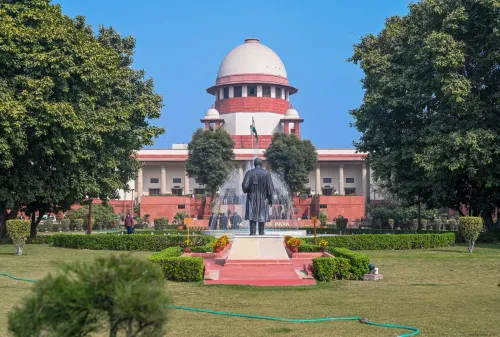
The Supreme Court of India has enhanced the motor accident compensation payable to a Tamil Nadu mason from ₹29.01 lakh to ₹40.29 lakh, ruling on 24 June that courts must evaluate 'functional disability' — not just the clinical percentage of physical disability — when determining loss of earning capacity in accident claims. The bench held that the amputation of claimant M. Paramesh's right leg above the knee had rendered him 100 per cent functionally disabled for his profession, even though his physical disability had been formally assessed at 70 per cent.
Background: The Accident and Earlier Awards
The case stems from an accident on 18 April 2017 on the Namakkal–Salem National Highway in Tamil Nadu, when a lorry struck the claimant's bicycle from behind. Paramesh, who was approximately 30 years old at the time and worked as a mason, suffered grievous injuries to his head, jaw, eye, and right leg — ultimately resulting in above-knee amputation of his right leg.
He initially approached the Motor Accident Claims Tribunal (MACT) seeking ₹25 lakh in compensation. The MACT awarded ₹10.84 lakh in 2019, pegging his monthly income at ₹6,000 and calculating earning loss on a 70 per cent disability basis. On appeal, the Madras High Court raised the award to ₹23.86 lakh, revising the monthly income to ₹12,000 and adding a 40 per cent future prospects component — but the Supreme Court identified computational errors in that order.
What the Supreme Court Ruled
A bench of Justice Prashant Kumar Mishra and Justice N.V. Anjaria held that physically demanding professions requiring continuous use of both legs must be assessed differently from sedentary occupations when computing compensation. The court observed that masonry demands constant bilateral leg support and movement, meaning the loss of one leg above the knee effectively eliminates the claimant's ability to earn a livelihood in his chosen trade.
'The amputation of the right leg above the knee has not merely caused physical disability to the appellant but has rendered him incapable of effectively carrying on the manual and physical work which constituted his only source of livelihood,' the bench stated. It added: 'In such circumstances, restricting the loss of earning capacity to 70 per cent merely on the basis of physical disability would not be justified.'
Errors Found in the High Court's Computation
The apex court noted that the Madras High Court had inadvertently calculated future prospects on the basis of the MACT's original income figure rather than the enhanced income of ₹12,000 it had itself determined. Additionally, certain amounts awarded by the MACT under heads including nutrition, clothing, ornaments, and medical expenses had been omitted from the High Court's final tally despite not being set aside.
The Supreme Court corrected these errors, retaining the monthly income at ₹12,000, applying a 40 per cent future prospects addition, and using a multiplier of 17. It also enhanced compensation for future medical expenses — covering artificial limb replacement and rehabilitation — from ₹1 lakh to ₹2 lakh, noting that the claimant would require periodic prosthetic replacement and maintenance throughout his lifetime.
The Legal Principle: Functional Over Physical Disability
The judgment reiterates a principle the court has articulated in earlier decisions: compensation in permanent disability cases cannot be determined by mechanically equating the percentage of physical impairment with the percentage of economic loss. 'The assessment of compensation in cases of permanent disability cannot be undertaken by mechanically applying the percentage of physical disability as the percentage of economic loss,' the bench ruled.
This distinction — between a medically certified disability percentage and the real-world impact on a person's capacity to earn — carries significant implications for how tribunals and high courts across India approach motor accident claims involving manual labourers, artisans, and daily-wage workers.
Next Steps
The Supreme Court directed the insurance company to deposit the enhanced compensation of ₹40.29 lakh before the MACT within six weeks. The enhanced amount will carry interest at the same rate as fixed by the Madras High Court. The ruling is expected to serve as a precedent in similar cases involving occupational disability assessments for manual workers.
Point of View
The Supreme Court is nudging tribunals toward a more contextual, occupation-sensitive assessment. The real test is whether MACTs and high courts internalise this principle consistently, or whether claimants continue to fight the same battle case by case.
NationPress
22 Sept 2026
Frequently Asked Questions
What did the Supreme Court rule in the Tamil Nadu mason compensation case?
The Supreme Court ruled that mason M. Paramesh's 70% physical disability must be treated as 100% functional disability because amputation of his right leg above the knee made it impossible for him to continue working as a mason. The court enhanced his total compensation to ₹40.29 lakh and directed the insurance company to deposit the amount within six weeks.
What is the difference between physical disability and functional disability in motor accident claims?
Physical disability refers to the medically certified percentage of bodily impairment, while functional disability refers to the actual impact on a person's capacity to earn a living in their specific occupation. The Supreme Court held that courts cannot mechanically apply a physical disability percentage as the measure of economic loss — they must assess how the injury affects the claimant's particular livelihood.
How was the final compensation of ₹40.29 lakh calculated?
The Supreme Court retained the monthly income at ₹12,000, added 40% for future prospects, applied a multiplier of 17, and treated functional disability at 100%. It also raised future medical expenses for prosthetic limb replacement from ₹1 lakh to ₹2 lakh, and restored amounts for nutrition, clothing, and medical expenses that the Madras High Court had inadvertently omitted.
What errors did the Supreme Court find in the Madras High Court's order?
The Madras High Court had calculated future prospects on the basis of the MACT's original income of ₹6,000 rather than the enhanced income of ₹12,000 it had itself determined. It had also omitted certain amounts awarded by the MACT under heads such as nutrition, clothing, ornaments, and medical expenses, despite not having overturned those awards.
Who are the judges on the bench that delivered this ruling?
The ruling was delivered by a two-judge bench comprising Justice Prashant Kumar Mishra and Justice N.V. Anjaria of the Supreme Court of India.