SC rules municipal body not liable under MVA for falling tree branch injury
Synopsis
The Supreme Court has drawn a sharp legal boundary: a tree branch falling on a parked autorickshaw is not an accident 'arising out of the use of a motor vehicle' — so the MVA cannot be the basis for civic liability. But in a rare exercise of Article 142 powers, the court still raised the paralysed victim's compensation from ₹17.10 lakh to ₹25 lakh, refusing to let legal precision override human consequence.
Key Takeaways
The Supreme Court ruled on 11 June that the Motor Vehicles Act does not cover injuries caused by a falling tree branch on a stationary vehicle.
The bench of Justice Sanjay Karol and Justice N.
Kotiswar Singh held that the autorickshaw was not the proximate cause of the accident.
Compensation for claimant K.K.
Umesh Kumar was enhanced from ₹17.10 lakh to ₹25 lakh using powers under Article 142 of the Constitution.
The incident occurred on 23 June 2007 in Bengaluru ; the claimant suffered permanent paraplegia .
The court upheld the existing apportionment: BBMP 25% , insurer 50% , Horticulture Department 25% ; all parties directed to deposit within four weeks .
The judgment reaffirms civic duty to maintain roadside trees while acknowledging limits of constant municipal surveillance.
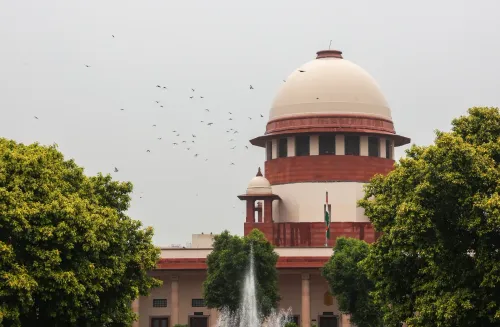
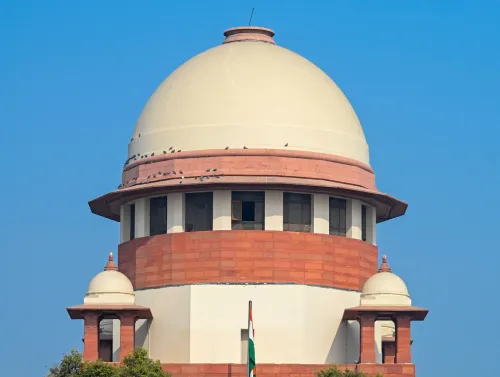
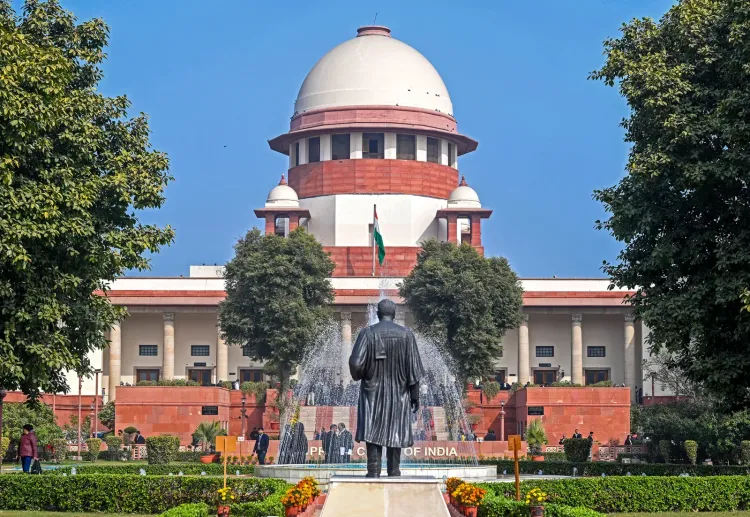
The Supreme Court of India on Thursday, 11 June ruled that a municipal authority cannot be held liable under the Motor Vehicles Act (MVA) for injuries sustained when a tree branch fell on a stationary autorickshaw during heavy rain, holding that such an incident does not arise out of the 'use of a motor vehicle' as contemplated under the law. The bench, however, invoked its extraordinary powers under Article 142 of the Constitution to enhance compensation for the grievously injured claimant from ₹17.10 lakh to ₹25 lakh.
Background: The Bengaluru Incident of 2007
The case traces back to 23 June 2007, when respondent K.K. Umesh Kumar was travelling in an autorickshaw from Queens Road to Chinnaswamy Stadium in Bengaluru. Caught in heavy rain, the driver pulled over and parked beneath a roadside tree. A branch detached from the tree and crashed onto the vehicle, leaving the passenger with permanent paraplegia along with bladder and bowel incontinence — injuries the court described as 'life-altering'.
A Motor Accident Claims Tribunal initially dismissed the compensation claim, classifying the incident as a natural calamity. After multiple rounds of litigation, the Karnataka High Court awarded ₹17.10 lakh in compensation, apportioning liability as follows: 25% to the Bruhat Bengaluru Mahanagara Palike (BBMP), 50% to the autorickshaw's insurer, and 25% to the state's Horticulture Department. The BBMP challenged this apportionment before the Supreme Court.
What the Supreme Court Held on MVA Liability
A bench of Justice Sanjay Karol and Justice N. Kotiswar Singh examined whether the incident could be classified as arising out of the 'use of a motor vehicle' under Section 166 of the MVA. The court held it could not. 'The motor vehicle itself does not play an active role in the accident. It is not part of the proximate cause of the accident. For that reason, a claim under Section 166 specifically may not be appropriate,' the bench observed.
Notably, the court reasoned that had the claimant been standing under the tree as a pedestrian rather than seated in the autorickshaw, the outcome would have been identical — underscoring the absence of a causal link between the vehicle and the accident. 'The unfortunate falling of a branch was within contemplation of neither any authority nor even the driver of the autorickshaw,' the bench said.
Civic Duty and Its Limits
While ruling in favour of the BBMP on the MVA question, the court did not absolve municipal bodies of their general duty of care. The bench acknowledged that corporations are obligated to maintain roadside trees — not merely for their health, but to prevent hazards to the public. 'A tree has been on the side of the road for many years. Because it is part of the city, the Municipal Corporation does have a duty to ensure that those trees are looked after,' the bench said.
At the same time, the court struck a calibrated note, cautioning that 'it would be unrealistic to expect that authorities of the Corporation can maintain a constant vigil over each tree/shrub.' This balance between civic accountability and operational practicality is significant for how future negligence claims against urban local bodies may be framed.
Article 142 and Enhanced Compensation
Despite settling the legal question against the claimant on the MVA front, the Supreme Court said it could not, in good conscience, leave a person suffering permanent paralysis without adequate relief. Describing the Karnataka High Court's award as based on a 'somewhat technical approach', the bench enhanced the total compensation to ₹25 lakh with interest accruing from the date of filing of the claim petition.
The existing apportionment of liability among the BBMP, the insurer, and the Horticulture Department was left undisturbed. All parties were directed to deposit their respective shares within four weeks. 'It is within our domain, as the final Court of the country, to ensure the law, as implemented, especially in cases like these, is humane and in accordance with the salutary principles of the Constitution,' the bench declared.
Implications for Future Claims
This judgment draws a clear line between accidents causally linked to vehicle use and those where a vehicle is merely incidental to the harm. It signals that claimants injured by falling trees, collapsing infrastructure, or similar hazards while in a parked vehicle may need to pursue remedies outside the MVA framework — potentially under tort law or state-specific compensation schemes. Urban local bodies, meanwhile, face renewed scrutiny over tree-maintenance protocols, even as the court acknowledged the limits of what can reasonably be demanded of them.
Point of View
Pothole collapses, or broken signage — victims are left navigating a patchwork of tort law and departmental claims that few can afford to pursue. The court's Article 142 intervention is compassionate, but it is also a one-off; it creates no precedent for similarly situated victims. The more durable fix would be a statutory no-fault compensation scheme for injuries caused by civic neglect — something successive urban-governance reforms have conspicuously avoided addressing.
NationPress
26 Oct 2026
Frequently Asked Questions
What did the Supreme Court rule about the Motor Vehicles Act and falling tree branches?
The Supreme Court ruled that injuries caused by a tree branch falling on a stationary autorickshaw do not arise out of the 'use of a motor vehicle' under the Motor Vehicles Act, and therefore a claim under Section 166 of the MVA is not appropriate in such cases. The vehicle, the court held, was not the proximate cause of the accident.
Who was the claimant in this case and what injuries did he suffer?
The claimant was K.K. Umesh Kumar , who was a passenger in an autorickshaw in Bengaluru on 23 June 2007 when a tree branch fell on the vehicle during heavy rain. He suffered permanent paraplegia with bladder and bowel incontinence — described by the Supreme Court as 'life-altering grievous injuries'.
Why did the Supreme Court enhance the compensation despite ruling against the MVA claim?
The court invoked its extraordinary powers under Article 142 of the Constitution to ensure 'complete justice', finding that the Karnataka High Court's award of ₹17.10 lakh was inadequate and based on a 'somewhat technical approach'. It raised the amount to ₹25 lakh with interest, stating that leaving a permanently paralysed person without adequate support 'does not appeal to the conscience of justice'.
Are municipal bodies completely free from liability for roadside tree accidents?
No. The Supreme Court affirmed that municipal corporations have a duty to maintain roadside trees and undertake periodic upkeep to prevent such incidents. However, the court also noted it would be unrealistic to expect constant surveillance of every tree, striking a balance between civic accountability and operational practicality.
How is the compensation apportioned among the parties?
The Supreme Court retained the Karnataka High Court's apportionment: BBMP bears 25% of the ₹25 lakh compensation, the autorickshaw's insurer bears 50%, and the state Horticulture Department bears the remaining 25%. All parties were directed to deposit their share within four weeks of the order.