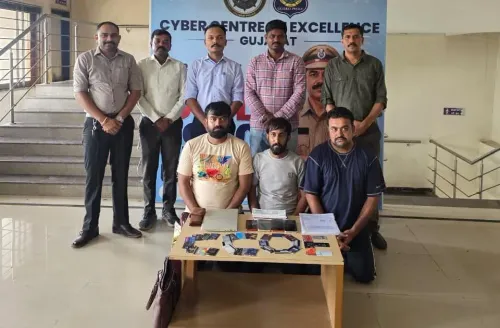
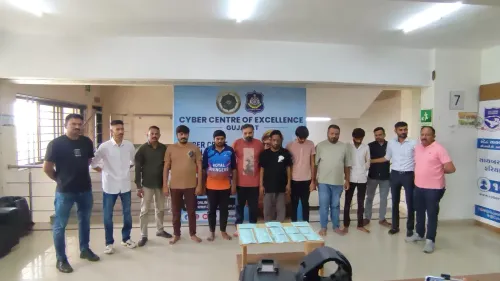
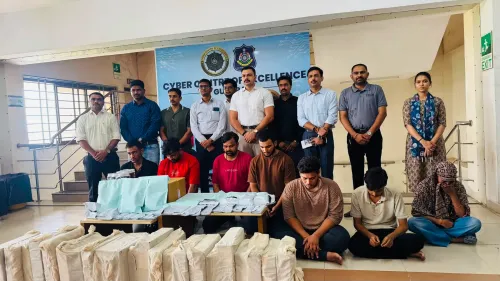
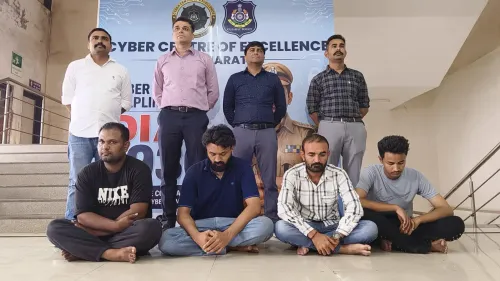
Gujarat CCoE arrests 3 in ₹3.76 crore digital arrest fraud across 13 states
Synopsis
Three men arrested from Rajasthan and Chandigarh are accused of funnelling ₹83.11 lakh from a ₹3.76 crore digital arrest fraud — and their bank accounts trail a cybercrime network stretching across 13 states. A fake loan app called NEO FINANCE and the PUSHBULLET tool were allegedly used to hijack victims' phones and launder the money undetected.
Key Takeaways
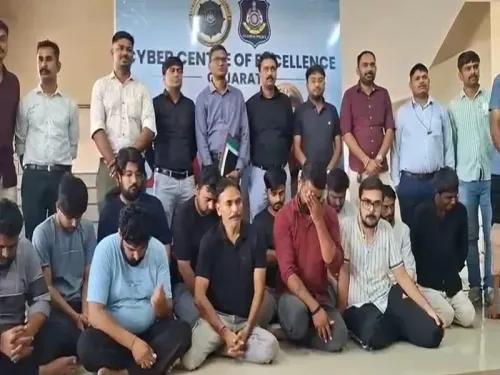
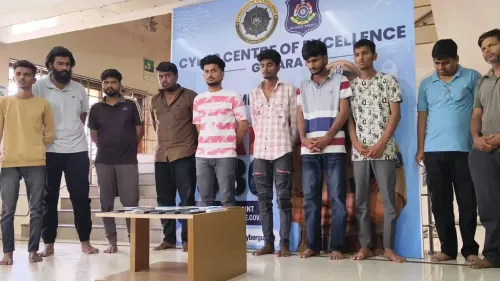
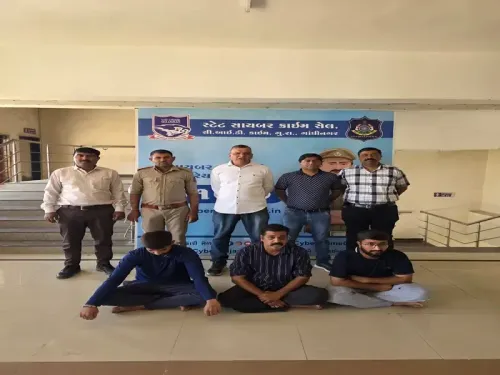
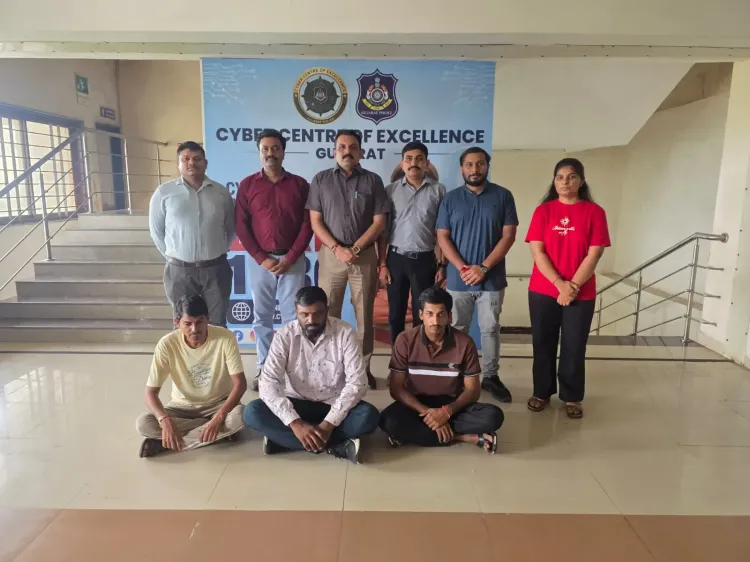
Gujarat Police's CCoE arrested three men — Gopal Ram , Nekdin Kathat (both from Ajmer, Rajasthan ) and Deepak (from Jind, Haryana ) — in connection with a ₹3.76 crore digital arrest fraud .
The accused collectively received around ₹83.11 lakh in commissions for facilitating the movement of fraud proceeds.
Their bank accounts are linked to 29 cybercrime complaints across 13 states including Gujarat, Karnataka, Tamil Nadu, West Bengal, and Delhi.
The network allegedly used a fake loan company called NEO FINANCE and the PUSHBULLET app to remotely access victims' phones and divert funds.
Fraud proceeds were also converted into USDT cryptocurrency and transferred to other network members, with cash returned through multiple bank accounts.
Four mobile phones and details of seven bank accounts were seized; absconding members of the network remain under investigation.
The Gujarat Police's Cyber Centre of Excellence (CCoE) has arrested three alleged members of a cybercrime network linked to a ₹3.76 crore digital arrest fraud, with their bank accounts connected to 29 complaints spanning 13 states. The arrests, made from Rajasthan and Chandigarh, followed technical surveillance and field investigation into an FIR registered at the CID Cyber Crime Cell Police Station.
Who Was Arrested and Where
The three accused have been identified as Gopal Ram, a resident of Ajmer district, Rajasthan; Nekdin Kathat, also from Ajmer; and Deepak, a resident of Jind, Haryana. Police said the accused allegedly operated on a commission basis, collectively receiving around ₹83.11 lakh for facilitating the movement of money generated through cyber fraud.
How the Fraud Network Operated
According to police, the accused employed a multi-layered money diversion strategy. Deepak, arrested from Chandigarh, allegedly used mobile applications to carry out USDT cryptocurrency transactions and transfer digital assets to other members of the network, receiving cash in return through his own and third-party bank accounts.
The two accused arrested from Rajasthan allegedly opened a bank account in the name of a partnership firm and deposited around ₹70 lakh of the fraud proceeds before transferring it onwards. During examination of their mobile phones, police recovered details of seven bank accounts. A check on the national cybercrime portal reportedly confirmed that more than 29 cybercrime cases involving approximately ₹83.11 lakh were linked to these accounts.
The 'Fake Loan App' Modus Operandi
Investigators uncovered what they described as a 'new modus operandi' used by absconding members of the network. The accused allegedly targeted people searching for online loans, directing them to a fictitious company called NEO FINANCE and instructing them to submit personal documents. Victims were then asked to download the PUSHBULLET application from the Play Store and provided with an ID and password to activate it.
Once installed, the accused allegedly gained remote access to the victims' mobile phones and used their bank accounts to receive the proceeds of the digital arrest fraud. The money was then transferred in bulk transactions to other accounts, effectively laundering fraud proceeds through the bank accounts of unsuspecting loan applicants.
Geographic Spread of Complaints
The 29 cybercrime complaints linked to the seized accounts span a wide geography: one in Gujarat, two in Maharashtra, seven in Karnataka, three in Tamil Nadu, one each in Rajasthan, Uttar Pradesh, Delhi, and Madhya Pradesh, three in West Bengal, two each in Andhra Pradesh and Jharkhand, one in Telangana, and one in Odisha. The bank accounts were also allegedly used in investment, UPI-related, and trading frauds. Four mobile phones were seized during the arrests.
CCoE Advisory to the Public
The Cyber Centre of Excellence urged citizens to verify the credentials of companies before applying for online loans and to avoid sharing bank accounts, ATM cards, chequebooks, or SIM cards with others. The agency also cautioned against investment advertisements on Facebook, Instagram, WhatsApp, and Telegram promising unusually high returns in a short period. With digital arrest frauds continuing to proliferate across India, investigators say further arrests from the absconding portion of the network remain a priority.
Point of View
Remote phone access, cryptocurrency conversion, and multi-state money mules to frustrate investigators. The 13-state spread of complaints from just three low-level commission agents suggests a much larger network above them, the bulk of which remains at large. Gujarat's CCoE deserves credit for pursuing the money trail across jurisdictions, but the absconding members and the masterminds behind NEO FINANCE are the real story — and they are still free. Until India builds a fast-response inter-state cybercrime coordination mechanism with real enforcement teeth, cases like this will continue to generate arrests at the bottom while the architects operate undisturbed.
NationPress
17 Sept 2026
Frequently Asked Questions
What is a digital arrest fraud?
A digital arrest fraud is a type of cybercrime where scammers impersonate law enforcement or government officials and falsely tell victims they are under 'digital arrest' for alleged crimes, coercing them into transferring large sums of money to avoid prosecution. In this case, the fraud allegedly netted ₹3.76 crore from at least one complainant.
Who were the three people arrested by Gujarat's CCoE?
The three accused are Gopal Ram and Nekdin Kathat, both residents of Ajmer district in Rajasthan, and Deepak, a resident of Jind in Haryana. They were arrested from Rajasthan and Chandigarh respectively after technical surveillance and field investigation.
How did the accused use the PUSHBULLET app to commit fraud?
According to police, the accused directed victims — who believed they were applying for loans from a fictitious company called NEO FINANCE — to download the PUSHBULLET application and activate it with a provided ID and password. This allegedly gave the accused remote access to victims' mobile phones, enabling them to use the victims' bank accounts to receive and route fraud proceeds.
Which states are linked to the cybercrime complaints in this case?
Complaints connected to the seized bank accounts span 13 states: Gujarat, Maharashtra, Karnataka, Tamil Nadu, Rajasthan, Uttar Pradesh, Delhi, Madhya Pradesh, West Bengal, Andhra Pradesh, Telangana, Jharkhand, and Odisha — with Karnataka recording the highest count of seven complaints.
What precautions has the Gujarat CCoE advised the public to take?
The CCoE has advised people to verify company credentials before applying for online loans, and to never hand over bank accounts, ATM cards, chequebooks, or SIM cards to third parties. It also warned against investment advertisements on Facebook, Instagram, WhatsApp, and Telegram that promise unusually high returns in a short period.