Operation Mule Hunt 2.0: Gujarat Police arrest four in cyber fraud, bank hacking cases
Synopsis
A single fictitious firm in Ahmedabad was linked to ₹161 crore in fraud complaints across 22 states — and that is just one thread in Operation Mule Hunt 2.0. Gujarat Police's latest four arrests expose how localised mule operators quietly power national cyber fraud syndicates, with ₹802 crore in total alleged fraud now on the books.
Key Takeaways
Gujarat Police's Cyber Centre of Excellence arrested four individuals from Ahmedabad and Surat on 3 July under Operation Mule Hunt 2.0 .
The operation has resulted in 55 arrests over the past month, with suspects linked to 1,117 fraud complaints and alleged fraud of ₹802 crore nationwide.
Vishal Dodiya of Ahmedabad allegedly ran fake firm Chamunda Communication , whose accounts are tied to 253 cybercrime cases and ₹161 crore in fraudulent transactions.
Two Surat residents — Mohammad Khaliq Ghulam Husain and Shoaib Gulabnabi Rana — were arrested in connection with the Bhavnagar District Co-operative Bank hacking, involving over ₹7.34 crore in illegal transfers.
Afzal Pir Mohammad Mansuri of Ahmedabad was arrested for operating mule accounts in a separate earlier investigation linked to 132 cybercrime complaints and ₹53.55 crore in alleged fraud.
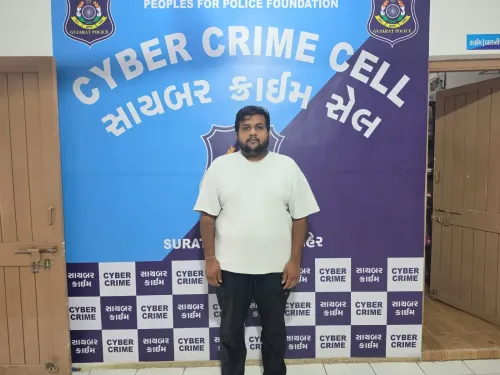
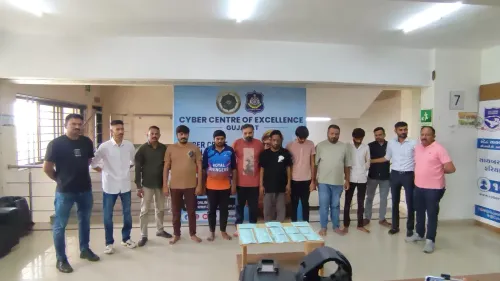
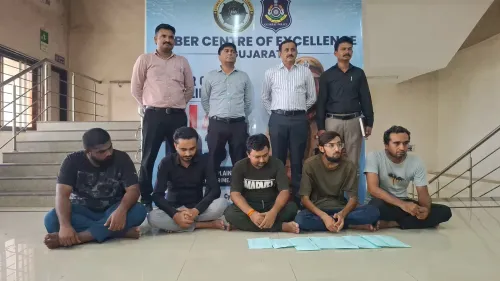
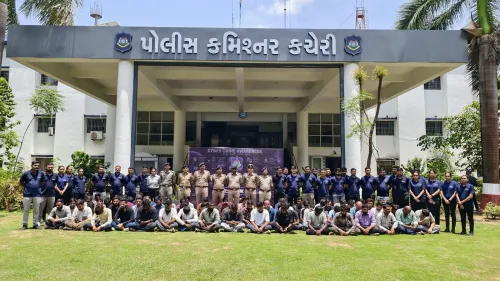
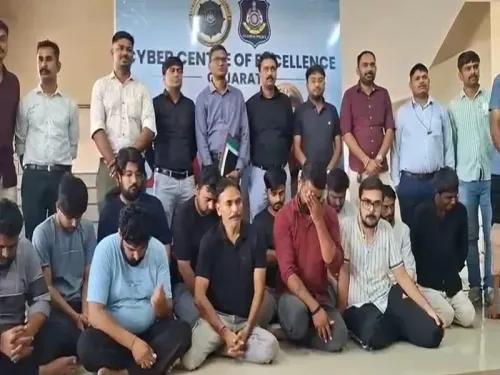
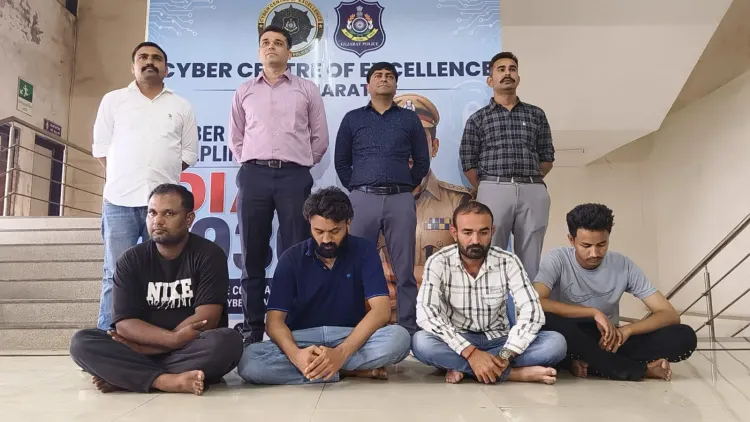
Gujarat Police's Cyber Centre of Excellence arrested four individuals from Ahmedabad and Surat on 3 July in separate probes into mule bank accounts used for cyber fraud and the Bhavnagar District Co-operative Bank hacking case, exposing a cybercrime network operating across multiple states. The arrests form part of Operation Mule Hunt 2.0, under which the Cyber Centre of Excellence of CID Crime has detained 55 accused over the past month.
Scale of the Fraud Network
According to police, verification of the arrested individuals' bank accounts on the National Cyber Crime Reporting Portal (NCCRP) revealed links to 1,117 cyber fraud complaints registered nationwide, involving alleged fraud worth approximately ₹802 crore. The complaints span states from Maharashtra and Karnataka to Arunachal Pradesh and Jharkhand, underscoring the pan-India reach of the syndicate.
The Ahmedabad Mule Account Case
In one of the cases, police arrested Vishal Dodiya of the Vastral area in Ahmedabad. Investigators alleged that Dodiya registered a fictitious firm named Chamunda Communication and opened three bank accounts in the firm's name across different banks. The account details were allegedly shared with members of a cyber fraud syndicate, who used them to receive and transfer money obtained through online fraud targeting victims in multiple states.
Checks on the Cyber Crime Portal found that the Chamunda Communication accounts were linked to more than 253 cybercrime cases across India, involving an estimated ₹161 crore in fraudulent transactions. Complaints originated from 56 cases in Maharashtra, 28 in Karnataka, 23 in Gujarat, 20 each in Telangana and Uttar Pradesh, 18 in Rajasthan, 16 in Tamil Nadu, 14 in Delhi, and 13 in West Bengal, among others. Dodiya has been booked under Sections 318(4), 317(2) and 61(2) of the Bharatiya Nyaya Sanhita, along with Section 66(D) of the Information Technology Act.
Bhavnagar Bank Hacking: Two Arrested from Surat
In a separate investigation into the Bhavnagar District Co-operative Bank hacking case, investigators alleged that accused persons illegally accessed the bank's server, database, and core banking system, manipulated electronic records, created fictitious account balances, and transferred over ₹7.34 crore to various bank accounts. 'The transfers caused financial loss to the bank while generating unlawful financial gain for those involved,' officials said.
The probe led to the arrest of two individuals from Surat: Mohammad Khaliq Ghulam Husain (40), identified as an account holder, and Shoaib Gulabnabi Rana (38), who police said operated the account. Examination of mobile phones and bank records in this case revealed details of 197 bank accounts, of which 60 were allegedly linked to more than 132 cybercrime complaints across India involving estimated fraud of ₹53.55 crore. Ten accused in this case had already been arrested and are in judicial custody.
Fourth Accused: Mule Account Operator in Ahmedabad
Police also announced the arrest of Afzal Pir Mohammad Mansuri of Ahmedabad in connection with an earlier mule account investigation. Mansuri is alleged to have operated mule bank accounts and handled fraud proceeds after the accounts were opened through another accused. He was arrested on Friday. This brings the total arrests in the broader Operation Mule Hunt 2.0 to 55 over the past month.
What the Operation Signals
This comes amid a nationwide push by law enforcement to dismantle mule account networks — a critical layer in the cyber fraud ecosystem that allows perpetrators to launder proceeds quickly across jurisdictions. Notably, the geographic spread of complaints against a single set of accounts in Ahmedabad — covering 22 states and Union Territories — illustrates how localised mule operators serve syndicate networks with national reach. The operations were carried out by teams of CID Crime officers led by multiple police inspectors as part of the ongoing initiative.
Point of View
And Gujarat's CID Crime is one of the few state units treating them as such. The ₹802 crore figure across 1,117 complaints in a single month-long operation suggests the NCCRP data is finally being used as an investigative tool rather than a complaint archive. The question is whether prosecution rates will match arrest rates — historically, the gap has been wide in cyber fraud cases.
NationPress
2 Oct 2026
Frequently Asked Questions
What is Operation Mule Hunt 2.0?
Operation Mule Hunt 2.0 is an ongoing cyber fraud crackdown by Gujarat Police's Cyber Centre of Excellence under CID Crime , targeting individuals who operate mule bank accounts used to receive and launder proceeds of online fraud. The operation has resulted in 55 arrests over the past month, with suspects linked to alleged fraud of approximately ₹802 crore across 1,117 complaints nationwide.
What is the Bhavnagar District Co-operative Bank hacking case?
In this case, accused persons allegedly illegally accessed the Bhavnagar District Co-operative Bank's server, database, and core banking system, manipulated electronic records, created fictitious balances, and transferred over ₹7.34 crore to various bank accounts. Two individuals — Mohammad Khaliq Ghulam Husain and Shoaib Gulabnabi Rana , both from Surat — were arrested in connection with the case on 3 July .
Who is Vishal Dodiya and what is he accused of?
Vishal Dodiya is an Ahmedabad resident from the Vastral area, arrested for allegedly registering a fictitious firm named Chamunda Communication and opening three bank accounts in its name to receive and route cyber fraud proceeds. His accounts are reportedly linked to over 253 cybercrime cases across India involving an estimated ₹161 crore in fraudulent transactions.
Which states are affected by the cyber fraud complaints in this case?
Complaints linked to the accused span at least 22 states and Union Territories , including Maharashtra, Karnataka, Gujarat, Telangana, Uttar Pradesh, Rajasthan, Tamil Nadu, Delhi, West Bengal, Kerala, Andhra Pradesh, Assam, Punjab, Bihar, Haryana, Jammu and Kashmir, Chhattisgarh, Madhya Pradesh, Odisha, Uttarakhand, Arunachal Pradesh, and Jharkhand.
Under which laws have the accused been charged?
The accused have been booked under Sections 318(4), 317(2) and 61(2) of the Bharatiya Nyaya Sanhita, along with Section 66(D) of the Information Technology Act, which covers cheating by impersonation using computer resources.