Operation Mule Hunt 2.0: Gujarat Police trace ₹2,562 crore in cyber fraud funds

Synopsis
Gujarat Police's Operation Mule Hunt 2.0 has traced ₹2,562.83 crore in cyber fraud proceeds through 1,326 mule accounts in under five months — already outpacing the ₹2,289 crore uncovered in Phase 1. The scale of financial flows through ordinary bank accounts handed over for commissions reveals a sprawling, cross-state criminal infrastructure that enforcement is only beginning to map.
Key Takeaways
Operation Mule Hunt 2.0 was launched across Gujarat on 2 June 2025 following a review meeting chaired by Home Minister Harsh Sanghavi .
Investigators traced ₹2,562.83 crore in cyber fraud proceeds through 1,326 mule accounts between 16 January and 13 June 2025 .
118 FIRs were registered and 238 accused arrested; 5,124 cybercrime-linked acknowledgement numbers were identified across India.
The CCOE Gandhinagar recorded the highest financial exposure at ₹802.28 crore ; Surat City led on enforcement with 58 FIRs and 77 arrests .
Phase 2 has already surpassed Operation Mule Hunt 1.0 , which traced ₹2,289 crore through 913 mule accounts across 565 FIRs .
Several districts, including Banaskantha , Bharuch , and Vadodara Rural , reported no action during the data period.
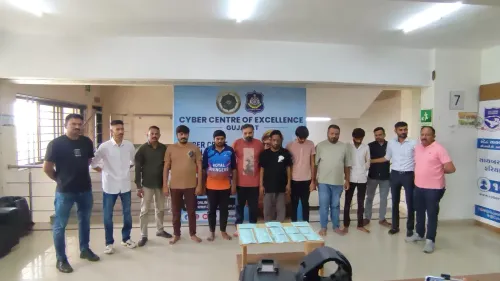
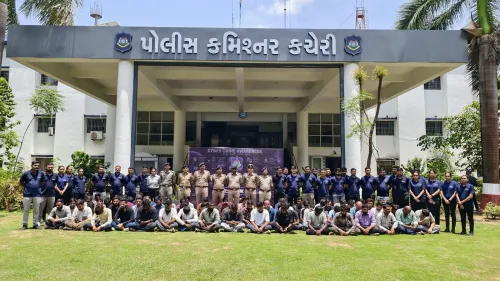
Gujarat Police have traced ₹2,562.83 crore in cyber fraud proceeds through Operation Mule Hunt 2.0, a statewide crackdown on mule bank accounts launched on 2 June 2025. In under five months, investigators registered 118 FIRs, arrested 238 accused, and took action against 1,326 mule accounts — already surpassing the ₹2,289 crore uncovered in the operation's first phase.
How the Operation Was Set in Motion
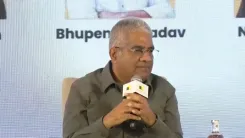
The crackdown followed a statewide review meeting chaired by Gujarat Deputy Chief Minister and Home Minister Harsh Sanghavi, held via video conference earlier this month. The meeting was attended by then Director General of Police K.L.N. Rao, city police commissioners, and district police chiefs. It directed law enforcement agencies to intensify action against mule bank accounts — accounts knowingly or unknowingly handed over to cybercriminals to receive, transfer, and launder proceeds of online fraud.
The operation was formally launched across the state on 2 June 2025, building on the momentum of its predecessor, Operation Mule Hunt 1.0.
Key Numbers: Districts and Financial Trails
The Cyber Centre of Excellence (CCOE) in Gandhinagar recorded the largest financial exposure, with 11 FIRs, 55 arrests, action against 198 mule accounts, and transactions worth ₹802.28 crore traced through those accounts.
Anand district emerged as another major hotspot — 2 FIRs, 8 arrests, 150 mule accounts flagged, and ₹770.38 crore traced. Patan district, despite registering only 1 FIR, linked 14 arrests and 14 mule accounts to transactions worth ₹398.43 crore. Gir Somnath identified 2 mule accounts connected to transactions worth ₹319 crore.
Amreli traced approximately ₹107.48 crore, Navsari uncovered around ₹94.08 crore, and Ahmedabad Rural acted against 411 mule accounts. Surat City recorded the highest enforcement activity in terms of criminal cases — 58 FIRs and 77 arrests — though the amount traced there stood at ₹23.25 crore.
Across the state, investigators identified 5,124 cybercrime-linked acknowledgement numbers across India, of which 540 were linked to Gujarat.
How Mule Accounts Fuel Cyber Fraud
Investigations from the first phase revealed that account holders often surrendered passbooks, ATM cards, cheque books, SIM cards, and internet banking credentials to organised networks in exchange for commissions. These accounts then became transit points for funds generated through investment frauds, digital arrest scams, phishing attacks, task-based frauds, and other cybercrimes.
Notably, the financial trails in the current phase span not just Gujarat but link to cybercrime-acknowledgement numbers across India, underscoring that these networks operate well beyond state boundaries.
Phase 2 Already Outpaces Phase 1
During Operation Mule Hunt 1.0, Gujarat Police registered 565 FIRs, arrested 638 accused, acted against 913 mule accounts, and traced cyber fraud transactions worth ₹2,289 crore. The second phase, still ongoing, has already exceeded that figure — with ₹2,562.83 crore traced through 1,326 mule accounts in less than five months.
Several districts — including Banaskantha, Bharuch, Gandhinagar district, Jamnagar, and Vadodara Rural, among others — did not report action within the data period, suggesting the operation's geographic footprint could widen further as enforcement continues.
Point of View
562 crore figure is striking not because it represents money recovered, but because it represents money traced — a distinction that matters. Tracing is not seizure, and the gap between the two will define whether this operation produces lasting disruption or headline statistics. The mule-account model is resilient precisely because it recruits ordinary citizens, often through commission lures, making prosecution complex and deterrence difficult. The fact that dozens of Gujarat districts reported zero action during the data period also raises questions about whether the crackdown is concentrated in select enforcement pockets rather than uniformly applied. Phase 2 has momentum; the test is whether it produces convictions and account-holder deterrence at scale.
NationPress
25 Sept 2026
Frequently Asked Questions
What is Operation Mule Hunt 2.0?
Operation Mule Hunt 2.0 is a statewide cybercrime crackdown launched by Gujarat Police on 2 June 2025, targeting mule bank accounts used to receive, transfer, and launder proceeds of online fraud. It is the second phase of the operation and has already traced ₹2,562.83 crore through 1,326 mule accounts, surpassing the ₹2,289 crore uncovered in Phase 1.
How much cyber fraud money has been traced in Operation Mule Hunt 2.0?
Investigators have traced ₹2,562.83 crore in cyber fraud proceeds between 16 January and 13 June 2025, linked to 1,326 mule accounts across Gujarat. This already exceeds the ₹2,289 crore traced during the entire first phase of the operation.
What is a mule bank account?
A mule bank account is a bank account — knowingly or unknowingly — handed over to cybercriminals for receiving, transferring, or laundering money obtained through online fraud. Account holders typically surrender their passbooks, ATM cards, SIM cards, and internet banking credentials to organised networks in exchange for commissions.
Which districts recorded the highest financial exposure in Operation Mule Hunt 2.0?
The Cyber Centre of Excellence (CCOE) in Gandhinagar led with ₹802.28 crore traced, followed by Anand district at ₹770.38 crore and Patan at ₹398.43 crore. Gir Somnath linked transactions worth ₹319 crore to just two mule accounts.
Who directed Operation Mule Hunt 2.0 in Gujarat?
The operation was directed following a review meeting chaired by Gujarat Deputy Chief Minister and Home Minister Harsh Sanghavi, attended by then Director General of Police K.L.N. Rao, city police commissioners, and district police chiefs. The meeting ordered intensified action against cybercrime-linked mule accounts across the state.