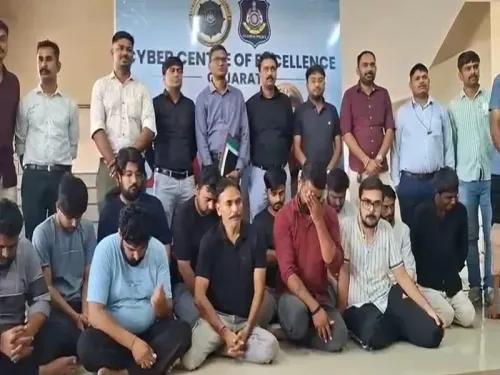
Surat police bust ₹23.85 crore cyber fraud racket, 77 held in Operation Mule Hunt 2.0
Synopsis
Surat's three-day ‘Operation Mule Hunt 2.0’ has cracked open one of Gujarat's biggest mule account rackets — 77 arrests across five states, 58 FIRs, ₹23.85 crore in fraud unearthed and ₹1.04 crore frozen. The accounts were tied to 339 complaints nationwide, exposing how India's cyber-scam economy still runs on rented bank accounts of the poor.
Key Takeaways
Surat City Police arrested 77 people and registered 58 cyber fraud cases under Operation Mule Hunt 2.0 from 31 May to 2 June .
Fraud transactions worth ₹23.85 crore were uncovered and ₹1.04 crore frozen during the drive.
The mule accounts were linked to 339 complaints filed across India on the NCCRP portal.
Arrests were made in Gujarat , Delhi , Madhya Pradesh , and Maharashtra , with the Cyber Crime Police Station alone filing 18 FIRs .
The operation was led by Police Commissioner Anupam Singh Gehlot and involved 500+ trained personnel .
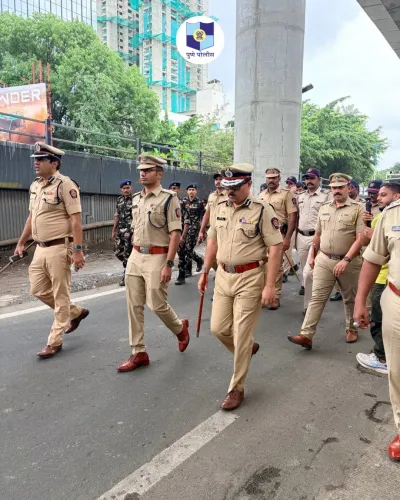
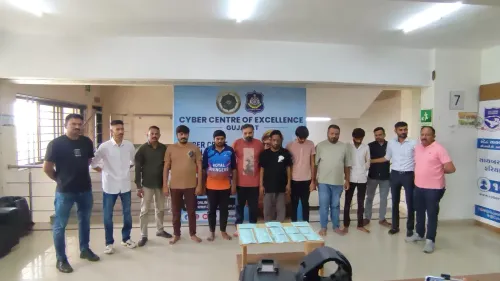
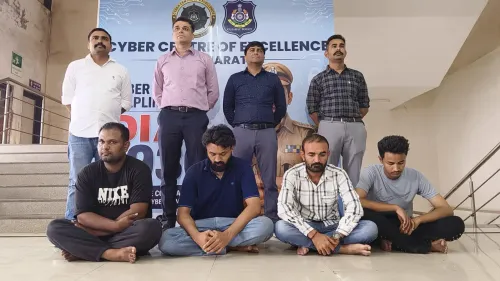
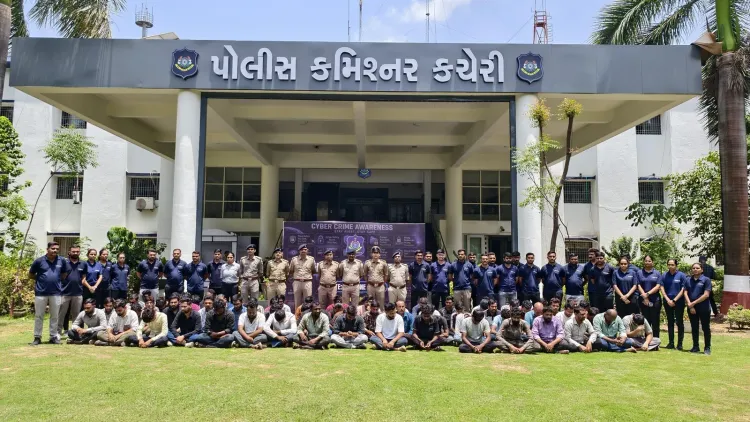
Surat City Police have arrested 77 people across several states and registered 58 cyber fraud cases after a three-day crackdown on mule account networks used to launder proceeds from online scams, uncovering fraudulent transactions worth ₹23.85 crore and freezing over ₹1.04 crore linked to the accounts under investigation. The drive, codenamed ‘Operation Mule Hunt 2.0’, was carried out from 31 May to 2 June under the direct supervision of Police Commissioner Anupam Singh Gehlot.
How the mule account racket worked
According to police, cybercriminals routinely move defrauded funds through layers of bank accounts in quick succession before withdrawing cash from ATMs — a tactic that makes recovery extremely difficult. Investigators said mule accounts are typically sourced from economically weaker individuals in exchange for rent or commission, with the criminals retaining ATM cards, cheque books, SIM cards, and UPI credentials while the original account holder is paid a small fixed sum.
Fraud groups also allegedly collect Aadhaar, PAN, photographs, and other KYC documents to open fresh accounts in unsuspecting names, masking the identity of the true operators.
A month of groundwork
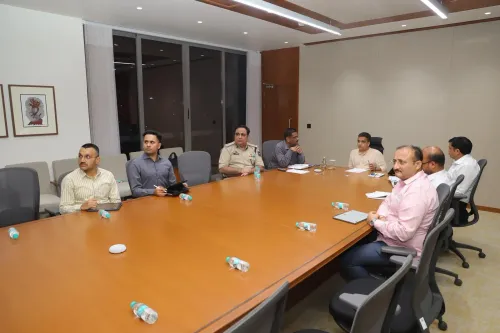
Surat police spent nearly a month preparing for the operation. Specialised teams analysed complaints filed on the National Cyber Crime Reporting Portal (NCCRP) and mapped suspicious accounts across jurisdictions. Coordination meetings were held on 15 May with senior banking officials, fintech companies, telecom operators, and the Department of Telecommunications to tighten information-sharing.
On 16 May, over 500 police personnel received specialised training from cyber experts and chartered accountants on identifying mule accounts and unravelling complex financial crime networks.
Pan-India sweep
Fifty teams from the Cyber Crime Cell and city police stations were deployed nationwide. Using central and state platforms — NCCRP, SAMANVAYA, and SAHYOG — investigators tracked suspects to multiple districts of Gujarat, as well as Delhi, Madhya Pradesh, Maharashtra, and other states. The accounts identified during the operation were linked to 339 complaints registered across the country.
The Cyber Crime Police Station recorded the highest tally, with 18 FIRs, 22 arrests, and uncovered fraud of ₹23.24 crore. Jahangirpura police detected fraud worth over ₹30.10 lakh with three arrests, while Pandesara registered two cases and arrested four.
The frauds behind the accounts
Police said the accused were allegedly involved in a wide spectrum of scams — hotel booking fraud, fake insurance and investment schemes, social media shopping ad scams, work visa fraud, diamond training fraud, driving licence facilitation, APK-based mobile hacking, loan fraud, parcel delivery scams, and job fraud. Once victims transferred money, the funds were rapidly layered through mule accounts to conceal the trail.
Repeat offenders among the accused
Several arrestees have prior records. Keval Tejani, picked up by Ashwinikumar police, was previously booked under Section 318(4) of the Bharatiya Nyaya Sanhita and Section 66(D) of the IT Act. Faizal Sheikh, held by Adajan police, faced an earlier 2025 case under the same provisions. Rahul Chavda, Shiva Makwana, Rajesh Gadhia, and Akshitkumar Katariya were also found to have prior cases ranging from cheating to serious offences under the IPC and the POCSO Act.
Police said analysis of mule account data is continuing, and further offences may be registered as more individuals in the network are identified.
Point of View
But the underlying problem is structural, not local. As long as KYC norms permit account farming on rented Aadhaar-PAN documents from economically vulnerable citizens, every takedown only dents a replaceable layer of the pyramid. The real test is whether banks and fintechs face accountability for repeatedly onboarding suspect accounts — something current RBI frameworks still treat as a compliance lapse rather than a criminal enabler. Until that shifts, Surat's ₹23.85 crore haul will be a snapshot, not a turning point.
NationPress
19 Sept 2026
Frequently Asked Questions
What is Operation Mule Hunt 2.0 in Surat?
It is a three-day special drive conducted by Surat City Police from 31 May to 2 June 2025 to dismantle mule bank account networks used in cyber fraud. The operation led to 77 arrests, 58 FIRs, and the uncovering of ₹23.85 crore in fraudulent transactions.
How much money was frozen during the Surat cyber fraud crackdown?
Police froze over ₹1.04 crore linked to the mule accounts under investigation. The total fraudulent transactions traced across the network amounted to ₹23,85,52,482.
What is a mule account and why is it central to cyber fraud?
A mule account is a bank account rented or sourced from an economically weaker individual that cybercriminals use to receive and layer fraud proceeds. Criminals retain the ATM card, SIM, and UPI credentials while paying the account holder a small commission, making it hard for investigators to trace the real operators.
Which states did the Surat police operate in?
Arrests were made across multiple districts in Gujarat as well as in Delhi, Madhya Pradesh, and Maharashtra, with 50 police teams deployed nationwide. The mule accounts identified were linked to 339 complaints filed across India.
What kinds of cyber frauds were the accused involved in?
The accused were allegedly involved in hotel booking fraud, fake investment and insurance schemes, social media shopping scams, work visa fraud, diamond training fraud, APK-based mobile hacking, loan fraud, parcel delivery scams, and job fraud, among others.