Rock-cut tombs from late New Kingdom era found in Egypt's Nile Delta
Synopsis
Egypt has uncovered rock-cut tombs from the late New Kingdom at Tell el-Yahudiya in the Nile Delta — a region where clay soil makes such stone-carved burials exceptionally rare. Coming just days after a 4,000-year-old Fifth Dynasty mastaba was found at Saqqara, the finds signal an accelerating pace of discovery that is rewriting what we know about ancient Egyptian burial geography.
Key Takeaways
An Egyptian archaeological mission found rock-cut tombs from the late New Kingdom (1550–1069 BC) at Tell el-Yahudiya , Qalyubia province , on 19 September 2026 .
Two tomb types were identified: staircase-entry halls with burial niches , and rectangular shafts leading to two burial chambers .
Rock-cut tombs are rare in the Nile Delta due to its clay-rich soil , making this discovery archaeologically significant.
A separate Egyptian-Spanish mission uncovered a 4,000-year-old mastaba at Saqqara last week, dating to the reign of King Djedkare Isesi .
The Saqqara mastaba contains chapels belonging to senior official Yunmin and his father Ity , with raised reliefs and funerary inscriptions largely intact.
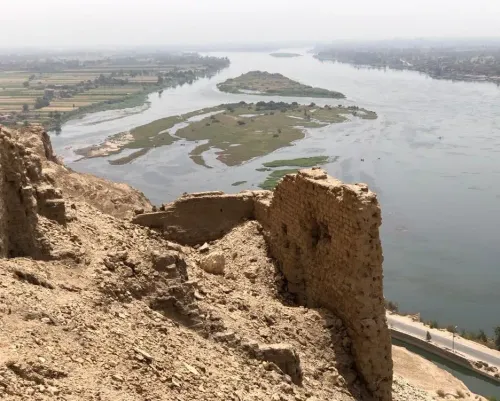
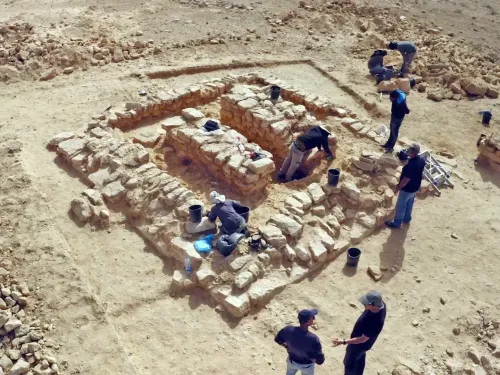
An Egyptian archaeological mission has unearthed a series of rock-cut tombs dating to the late New Kingdom period (1550–1069 BC) at the Tell el-Yahudiya archaeological site in Qalyubia province, north of Cairo. The Egyptian Ministry of Tourism and Antiquities confirmed the find on Saturday, 19 September 2026, describing it as a significant window into ancient burial traditions of the eastern Nile Delta.
Two Distinct Tomb Designs Uncovered
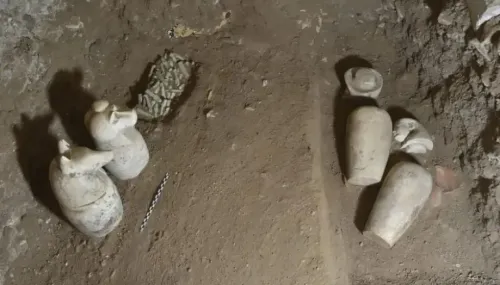
The discovered tombs fall into two principal architectural types. The first category features an entrance approached via a staircase leading into a hall lined with burial niches. The second type is defined by a rectangular shaft that descends into two burial chambers.
According to the ministry's statement, both designs are exceptionally rare in the Delta region. The area's characteristic clay-rich soil makes rock-cut construction technically challenging and historically uncommon, lending the discovery added archaeological importance.
What Experts Say
Hisham El-Leithy, secretary-general of Egypt's Supreme Council of Antiquities, said the find 'provides valuable evidence for understanding burial practices and their development in the eastern Delta across different historical periods.' His remarks underscore the site's potential to reshape scholarly understanding of how funerary customs evolved across Egypt's diverse geographical zones.
A Second Major Discovery Last Week
The Tell el-Yahudiya announcement follows another significant find made just days earlier. A joint Egyptian-Spanish archaeological mission uncovered an over 4,000-year-old tomb dating to the late Fifth Dynasty (2494–2345 BC) at the Mariette Cemetery north of Saqqara in Giza Province, west of Cairo.
That tomb, a medium-sized mastaba, dates to the reign of King Djedkare Isesi and contains two funerary chapels. The first belonged to Yunmin, a senior official who served as judge, court director, and chief of scribes responsible for handling petitions and complaints. Excavations in his chapel revealed a façade inscribed with funerary texts and an offering formula, alongside a formal depiction of the tomb owner. The chapel walls display high-quality raised reliefs depicting agricultural activities and offering processions.
The second chapel belonged to Yunmin's father, Ity, a scribe involved in administering agricultural lands and offerings. It features a false door and colourful wall decorations of offering scenes, though much of the original paint has faded over millennia.
El-Leithy noted that the Saqqara discovery 'provides new archaeological information about the cemetery during the late Fifth Dynasty and sheds further light on the architectural and artistic styles of tombs from the period.'
Egypt's Accelerating Archaeological Momentum
The two announcements within a single week are consistent with Egypt's intensified excavation calendar in recent years, driven partly by the government's strategy to revitalise heritage tourism following a decade of fluctuating visitor numbers. Saqqara and the broader Nile Delta region have emerged as focal points, with multiple international missions operating simultaneously under Egyptian oversight.
Notably, rock-cut tomb discoveries in the Delta remain rare enough to draw specialist attention from Egyptologists worldwide — the clay geology that defines this lowland region typically preserves mudbrick structures rather than stone-carved ones, making the Tell el-Yahudiya find a geological and archaeological anomaly worth close study.
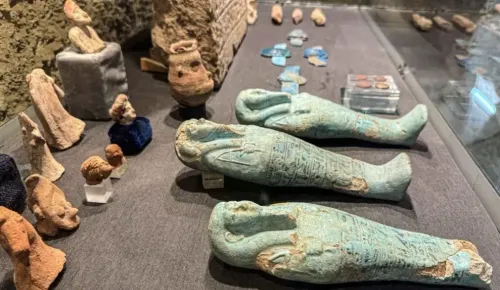
Further analysis of the tomb contents, artefacts, and inscriptions is expected to yield more details in the coming months as the mission completes its excavation season.
Point of View
Which has turned Saqqara and the Delta into the world's most active archaeological corridors. The Tell el-Yahudiya find is particularly notable because it challenges the long-held assumption that the clay Delta was geologically inhospitable to rock-cut tombs; if more such sites exist in the region, the map of New Kingdom burial geography may need revision. What mainstream coverage tends to gloss over is the institutional driver: Egypt's antiquities ecosystem is partly funding itself through high-profile discovery cycles that sustain heritage tourism interest. That creates an incentive structure worth watching — rigorous publication timelines and peer review remain the only checks on announcement-driven archaeology.
NationPress
19 Sept 2026
Frequently Asked Questions
What was discovered at Tell el-Yahudiya in Egypt?
An Egyptian archaeological mission uncovered rock-cut tombs dating to the late New Kingdom period (1550–1069 BC) at the Tell el-Yahudiya site in Qalyubia province, north of Cairo. The tombs come in two architectural designs — staircase-entry halls with burial niches, and rectangular shafts leading to burial chambers.
Why are rock-cut tombs rare in the Nile Delta?
The Nile Delta's soil is predominantly clay-rich, which makes carving stone tombs technically difficult and historically unusual. This geological factor means that rock-cut burials are far more common in Upper Egypt and the plateau regions than in the lowland Delta.
Who confirmed the Tell el-Yahudiya discovery?
Egypt's Ministry of Tourism and Antiquities confirmed the discovery on Saturday, 19 September 2026. Hisham El-Leithy, secretary-general of Egypt's Supreme Council of Antiquities, said the find offers valuable evidence for understanding how burial practices developed in the eastern Delta across different historical periods.
What was found at Saqqara the previous week?
A joint Egyptian-Spanish mission discovered a medium-sized mastaba over 4,000 years old at the Mariette Cemetery north of Saqqara, dating to the late Fifth Dynasty under King Djedkare Isesi. It contained two funerary chapels — one belonging to senior official Yunmin and another to his father Ity — featuring raised reliefs, funerary inscriptions, and colourful offering scenes.
What is the significance of these back-to-back Egyptian discoveries?
The two finds within days of each other reflect Egypt's intensified excavation programme, which has made Saqqara and the Nile Delta among the world's most active archaeological zones. The Tell el-Yahudiya tombs are especially significant because rock-cut burials in the clay-soil Delta are a geological rarity, potentially challenging existing assumptions about New Kingdom burial geography.