Egypt uncovers Late to Graeco-Roman burial complex in Nile Delta
Synopsis
Egypt's archaeologists have unearthed a vaulted burial complex at Tel El-Qweisna in the Nile Delta, complete with 560 faience ushabti figurines and Rhodian imported pottery — the latter offering rare, site-specific proof of ancient Egypt's commercial reach into the Mediterranean during the Late and Graeco-Roman periods.
Key Takeaways
Egypt's Supreme Council of Antiquities uncovered a new burial complex at Tel El-Qweisna necropolis , Menoufia Governorate , announced on 22 July .
The complex features a central hall linked to multiple vaulted burial chambers , dating to the Late and Graeco-Roman periods .
560 faience ushabti figurines were recovered, several inscribed with passages from the Book of the Dead .
Imported pottery from the Greek island of Rhodes , including a handle bearing the potter's name, provides direct evidence of ancient Egypt-Mediterranean trade.
Tel El-Qweisna was first discovered in 1991 and is considered one of Egypt's most significant central Nile Delta burial sites.
The find follows last month's discovery of a Greco-Roman cemetery at Tell Kom Aziza in Beheira Governorate .
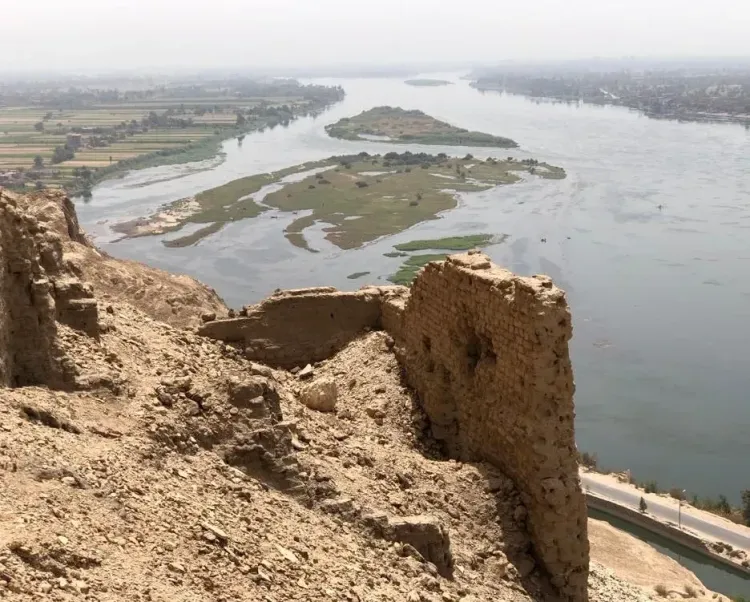
Egypt's Ministry of Tourism and Antiquities on Wednesday, 22 July announced the discovery of a new burial complex at the Tel El-Qweisna necropolis in the Nile Delta, offering researchers fresh evidence of funerary practices and Mediterranean trade links during the Late and Graeco-Roman periods. The find was made by an archaeological mission from Egypt's Supreme Council of Antiquities (SCA) during ongoing excavations at the site in Menoufia Governorate.
Architectural Layout of the Complex
The newly uncovered complex features a well-planned structural design, with a central hall connected to several vaulted burial chambers. Researchers say the layout provides valuable insights into how burial structures were originally conceived and constructed during the Late and Graeco-Roman eras — a period when Egyptian funerary traditions were absorbing significant Hellenistic influence.
Key Finds: Ushabti Figurines and Imported Pottery
Among the most significant artefacts recovered were 560 faience ushabti figurines of varying sizes, several inscribed with passages from the Book of the Dead, the ancient Egyptian funerary text used to guide the deceased through the afterlife. The sheer volume and variety of these figurines point to the site's importance as a burial ground for individuals of some social standing.
Equally notable was the discovery of imported pottery from the Greek island of Rhodes, including a fragment of a vessel handle bearing the potter's name. This find constitutes direct archaeological evidence of active commercial exchange between ancient Egypt and the broader Mediterranean world during this period — a trade network that historians have long theorised but seldom been able to pin to specific sites in the central Nile Delta.
Significance of Tel El-Qweisna
First discovered in 1991, the Tel El-Qweisna necropolis is regarded as one of Egypt's most important burial sites in the central Nile Delta, preserving layered evidence of how funerary customs evolved across successive historical periods. The site has been the subject of ongoing excavations that have progressively revealed its multi-period significance.
Pattern of Discoveries in the Nile Delta
This announcement follows a related discovery last month, when the ministry revealed the unearthing of a portion of a Greco-Roman cemetery at the Tell Kom Aziza site in Beheira Governorate, north of Cairo. That excavation uncovered diverse burial styles — simple pits, mud-brick-lined graves, painted plaster coffins, and barrel-shaped pottery coffins typical of the Ptolemaic period.
Tourism and Antiquities Minister Sherif Fathy said the latest discovery 'offers an integrated view of settlement evolution, daily life, and human-environmental interaction over millennia.' Hisham Elleithy, Secretary-General of the SCA, noted that preliminary studies of human remains revealed 'remarkable diversity in burial rituals, orientations, and positions,' suggesting the necropolis served a heterogeneous population across centuries.
As excavations at Tel El-Qweisna continue, researchers expect further artefacts to sharpen understanding of how Egypt's central Delta functioned as a crossroads of commerce and culture in antiquity.
Point of View
Well-resourced excavation push by Egypt's Supreme Council of Antiquities at a time when the country is aggressively leveraging heritage finds for tourism diplomacy. The Rhodian pottery shard is the more consequential discovery: a named potter's mark on an imported vessel is the kind of granular, verifiable trade evidence that rewrites assumptions about how deeply Greek commercial networks penetrated Egypt's interior during the Late Period. What mainstream coverage tends to underplay is the methodological shift underway — Egyptian missions, rather than foreign-led digs, are now driving these announcements, a quiet but significant assertion of archaeological sovereignty that carries both scientific and political weight.
NationPress
21 Oct 2026
Frequently Asked Questions
What was discovered at Tel El-Qweisna in the Nile Delta?
Archaeologists uncovered a burial complex featuring a central hall connected to vaulted burial chambers, dating to the Late and Graeco-Roman periods. The site yielded 560 faience ushabti figurines and imported pottery from the Greek island of Rhodes.
What are ushabti figurines and why are they significant?
Ushabti figurines are small funerary statuettes placed in ancient Egyptian tombs to serve the deceased in the afterlife. The 560 figurines found at Tel El-Qweisna, some inscribed with passages from the Book of the Dead, indicate the site was used for burials of socially significant individuals.
What does the Rhodian pottery found at the site prove?
A fragment of a vessel handle from the Greek island of Rhodes, bearing the potter's name, provides direct archaeological evidence of active commercial exchange between ancient Egypt and the Mediterranean during the Late and Graeco-Roman periods.
How old is the Tel El-Qweisna necropolis?
The necropolis was first discovered in 1991 and is one of Egypt's most important burial sites in the central Nile Delta. It preserves evidence of funerary traditions spanning multiple historical periods, including the Late and Graeco-Roman eras.
Is this Egypt's only recent archaeological discovery in the Nile Delta?
No. Last month, the Ministry of Tourism and Antiquities announced the discovery of a Greco-Roman cemetery at Tell Kom Aziza in Beheira Governorate, north of Cairo, featuring burial styles ranging from simple pits to Ptolemaic-era barrel-shaped pottery coffins.