KPDCL launches power network revamp across Kashmir Valley in 2026
Synopsis
KPDCL has simultaneously activated receiving-station upgrades, circuit-breaker replacements, conductor overhauls, and feeder segregation across the Kashmir Valley — the most concentrated grid maintenance push in recent memory. But with J&K still heavily dependent on imported electricity and five decades of self-sufficiency pledges unfulfilled, the question isn't whether work is happening; it's whether it's enough.
Key Takeaways
KPDCL has launched a multi-component power infrastructure overhaul across the Kashmir Valley as of 19 September 2026 .
Works include replacement of 11-kV vacuum circuit breaker panels at Sopore division receiving stations and augmentation of the BK Pora receiving station.
The 33-kV Nowbugh–Charar-i-Sharief line and the Bemina–KP Bagh and Bemina Exhibition lines are being stabilised.
Worn-out conductors, rotten poles, and ageing transformers are being replaced under ED-I jurisdiction .
Smart electric meters and new transmission lines are being installed to reduce losses and pilferage.
Jammu and Kashmir has remained significantly power-deficient despite more than five decades of self-sufficiency pledges by successive governments.
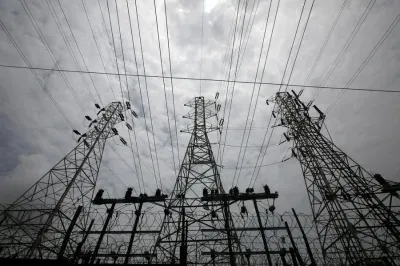
The Kashmir Power Distribution Corporation Limited (KPDCL) has launched a wide-ranging infrastructure overhaul to strengthen the electric power supply network across the Kashmir Valley, officials confirmed on Saturday, 19 September 2026. The programme covers receiving station augmentation, replacement of ageing equipment, feeder improvements, and broader network stabilisation — addressing multiple grid vulnerabilities simultaneously.
Key Works Under Way
Among the most immediate interventions is the replacement of 11-kV vacuum circuit breaker panels at various receiving stations under KPDCL's Sopore division. Separately, the receiving station at BK Pora is being augmented, while the 33-kV Nowbugh–Charar-i-Sharief line is being stabilised and improved. Stabilisation of the Bemina–KP Bagh and Bemina Exhibition lines is also included in the current workload.
KPDCL has additionally initiated the replacement of worn-out conductors and rotten poles under its ED-I jurisdiction. The Hafroo receiving station is being augmented, and distribution transformer capacity is being enhanced in localities including Kauser Colony Palpora and Gassi Mohalla.
What Officials Said
A senior engineer of the corporation noted that the current round of works follows multiple infrastructure tenders issued earlier in the year. Those earlier tenders covered the augmentation of receiving stations at Karanagar, JVC, Hafroo, and BK Pora, as well as the replacement of 33-kV current transformers at several receiving stations and restoration work on multiple 33-kV lines.
'The concentration of works on receiving-station capacity, circuit-breaker panels, transformers, conductors and alternative power sources points to multiple network requirements being addressed simultaneously,' the official said.
One active tender specifically describes the Watalkadal and M.R. Gunj project as the augmentation and segregation of 11-kV feeders to overcome LCP constraints, while the Rakhi Arth works provide for a second source of grid supply — a critical redundancy measure.
The Bigger Picture: A Chronic Deficit
Despite importing electricity, Jammu and Kashmir remains significantly deficient in meeting its daily power requirement, according to officials. Installation of smart electric meters and new transmission and distribution lines are also under way to curb transmission losses and pilferage.
Notably, successive governments in Jammu and Kashmir have pledged to make the Union Territory self-sufficient in electricity for over five decades — a promise that critics argue has remained elusive. The structural gap between generation capacity, distribution efficiency, and peak demand continues to define the power challenge in the region.
What Comes Next
With smart metering, conductor replacements, and receiving-station upgrades progressing in parallel, KPDCL appears to be pursuing a systems-level fix rather than isolated repairs. Whether this multi-pronged approach translates into sustained supply reliability for Valley residents — particularly during peak winter demand — will be the real measure of its success.
Point of View
Transformers, conductors, feeders, and metering in the same cycle — but breadth alone does not resolve Kashmir's structural power deficit. The Valley's dependence on imported electricity is a policy failure stretching back decades, and infrastructure upgrades at the distribution tail cannot substitute for generation and transmission capacity. The real accountability question is whether the Union Territory administration has a credible, time-bound roadmap to close the generation gap, or whether this round of tenders is another cycle of maintenance dressed up as transformation.
NationPress
20 Sept 2026
Frequently Asked Questions
What infrastructure works has KPDCL launched in Kashmir Valley?
KPDCL has initiated a wide-ranging revamp covering receiving station augmentation, replacement of 11-kV vacuum circuit breaker panels, stabilisation of 33-kV lines, conductor and pole replacements, and distribution transformer upgrades. The works span multiple divisions including Sopore, ED-I, and sites such as BK Pora, Hafroo, Watalkadal, and Rakhi Arth.
Why is KPDCL undertaking this power infrastructure overhaul?
The overhaul is aimed at addressing multiple network vulnerabilities simultaneously — including ageing equipment, feeder constraints, and insufficient receiving-station capacity — to improve supply reliability across the Kashmir Valley. Jammu and Kashmir remains significantly power-deficient despite importing electricity, making distribution efficiency a critical priority.
What are LCP constraints and why does the Watalkadal project address them?
LCP (Load Centre Point) constraints refer to bottlenecks in the distribution network where concentrated demand exceeds feeder capacity, causing voltage dips and outages. The Watalkadal and M.R. Gunj project involves augmentation and segregation of 11-kV feeders specifically to overcome these constraints and improve localised supply quality.
How does smart metering feature in KPDCL's current programme?
Installation of smart electric meters is being carried out alongside new transmission and distribution infrastructure as part of efforts to check transmission losses and curb electricity pilferage. Smart meters enable real-time consumption monitoring and are considered essential for loss-reduction in distribution utilities.
Has Jammu and Kashmir achieved electricity self-sufficiency?
No. Despite pledges by successive governments over more than five decades, Jammu and Kashmir continues to rely heavily on imported electricity to meet its daily requirement. The gap between local generation capacity and peak demand remains a longstanding policy challenge for the Union Territory.